
Empire State antenna “power of love” proposal ends with two arrests Wednesday
A masked couple climbed the Empire State Building antenna, staged a proposal, and were arrested. Here is what it signals.
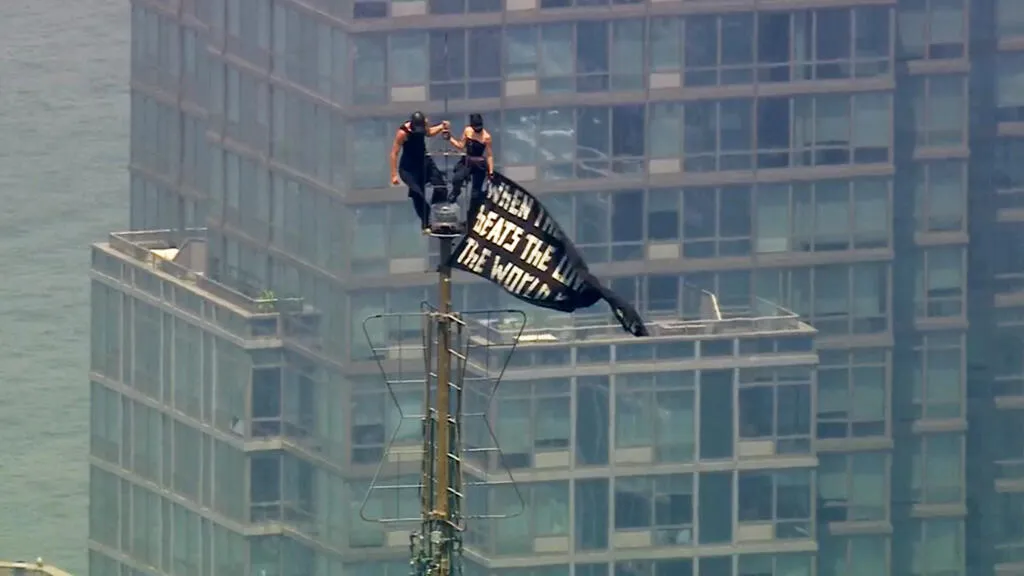
Two people climbed the Empire State Building antenna on Wednesday, unfurled a banner reading “the power of love,” and appeared to stage a marriage proposal before being arrested. The incident is a reminder that high-profile stunts can collide fast with serious safety and legal enforcement.
Two people climbed the antenna of New York's Empire State Building on Wednesday, unfurled a banner promoting “the power of love,” and appeared to stage a marriage proposal before being arrested. News footage showed the masked pair kissing atop the skyscraper before one knelt and the other appeared to display a ring.
That quick pivot from romance to arrest is the whole story, and it matters because it shows how the “spectacle first” playbook can get met immediately by the “liability and enforcement first” reality of major landmarks. The Empire State Building is not a random rooftop. It is a tightly managed piece of infrastructure in a high-visibility city, and anything involving access to critical exterior structures raises safety risks even if the intent is theatrical.
For executives, the relevant lesson is not about marriage. It is about how quickly an incident can turn from brand-adjacent content into a legal and operational problem. This kind of stunt creates a chain reaction: security teams have to respond, property managers have to assess exposure, and authorities have to determine what happened and whether any charges apply. Even when the stunt is brief, the aftermath is not. Large buildings run on risk systems. They assume the public will behave within safe boundaries, and they build procedures for what happens when they do not.
There is also the public-safety angle. An antenna is not just a photo backdrop. It is part of a communications and structural system. Climbing it, even for a short moment, can create hazards for the climbers, people nearby, and potentially others who rely on the building's operations. The footage described in the source is dramatic, but the practical concern is straightforward: unauthorized access to elevated building components is inherently unpredictable. Weather, footing, and response time can turn a “proposal” into an emergency.
From a governance and compliance perspective, incidents like this put pressure on the playbook for event management and security posture. Buildings that function as iconic tourist draws and media landmarks typically coordinate with local authorities and security personnel to cover perimeter access, observation points, and response escalation. When something bypasses those controls, boards and senior operators tend to ask hard questions: What layer failed? Was it detection, deterrence, or physical access control? Were resources adequate for the threat model? Those questions are uncomfortable, but they are also how organizations prevent the next attempt from being more dangerous or more costly.
Then there is the communications problem. Stunts go viral fast, and the narrative can outrun the facts. In this case, the source describes the banner and the apparent proposal, followed by the arrests. That sequencing matters: it frames the event as an attempted performance that did not remain a spectacle. For leaders managing reputational risk, the challenge is balancing empathy, public safety, and clarity without amplifying reckless behavior. The safest approach is to let confirmed facts do the talking, and to avoid turning unauthorized climbing into a marketing lesson.
For peers across real estate, venues, and high-traffic public infrastructure, the second-order implication is that “creative” trespassing is not treated as harmless. Even romantic stunts can trigger criminal justice activity, insurance claims, internal investigations, and review cycles that distract management teams. It can also lead to tightened security measures, which have a cost and can affect customer experience. And because the Empire State Building is globally recognizable, any operational lapse gets more scrutiny than it would for a less famous site.
So the strategic stake is this: in iconic settings, the margin for improvisation is thin. A rooftop moment can become an enforcement moment in minutes, with consequences that extend well beyond the original participants. If you run a landmark, a major venue, or any asset with critical infrastructure elements, this is a reminder to invest in layered defenses, response readiness, and clear post-incident communications. The world will always try to turn space into theater. Your job is to make sure it never turns theater into catastrophe.
This story's Key Insights and Take-aways are locked.
Create a free account to unlock Executive Actions for one credit.
Register to UnlockAlways free for Executives Club members. Join the Club
More in Politics

Glacial collapse, not rain, killed 180 in Nepal's Himalayan flood
The Himalaya's extreme geography hid the true cause of Nepal's catastrophic flood, a glacial collapse that turned a geological battleground into a mass-casualty zone.

Iran’s Esmail Baghaei says Oman talks start shipping via Hormuz, not US talks yet
Temporary route plans with Oman aim to restart commerce while Tehran says Washington dialogue is not on the table.

Standards watchdog opens probe into Reform UK deputy leader Richard Tice over interests
The parliamentary standards commissioner says it began an investigation on 28 July into a possible undeclared interest.