

Trans-athlete ruling gives Republicans momentum as many Democrats quietly disengage
A court decision energizes the GOP, but Democrats largely avoid a fight they helped intensify last election cycle.
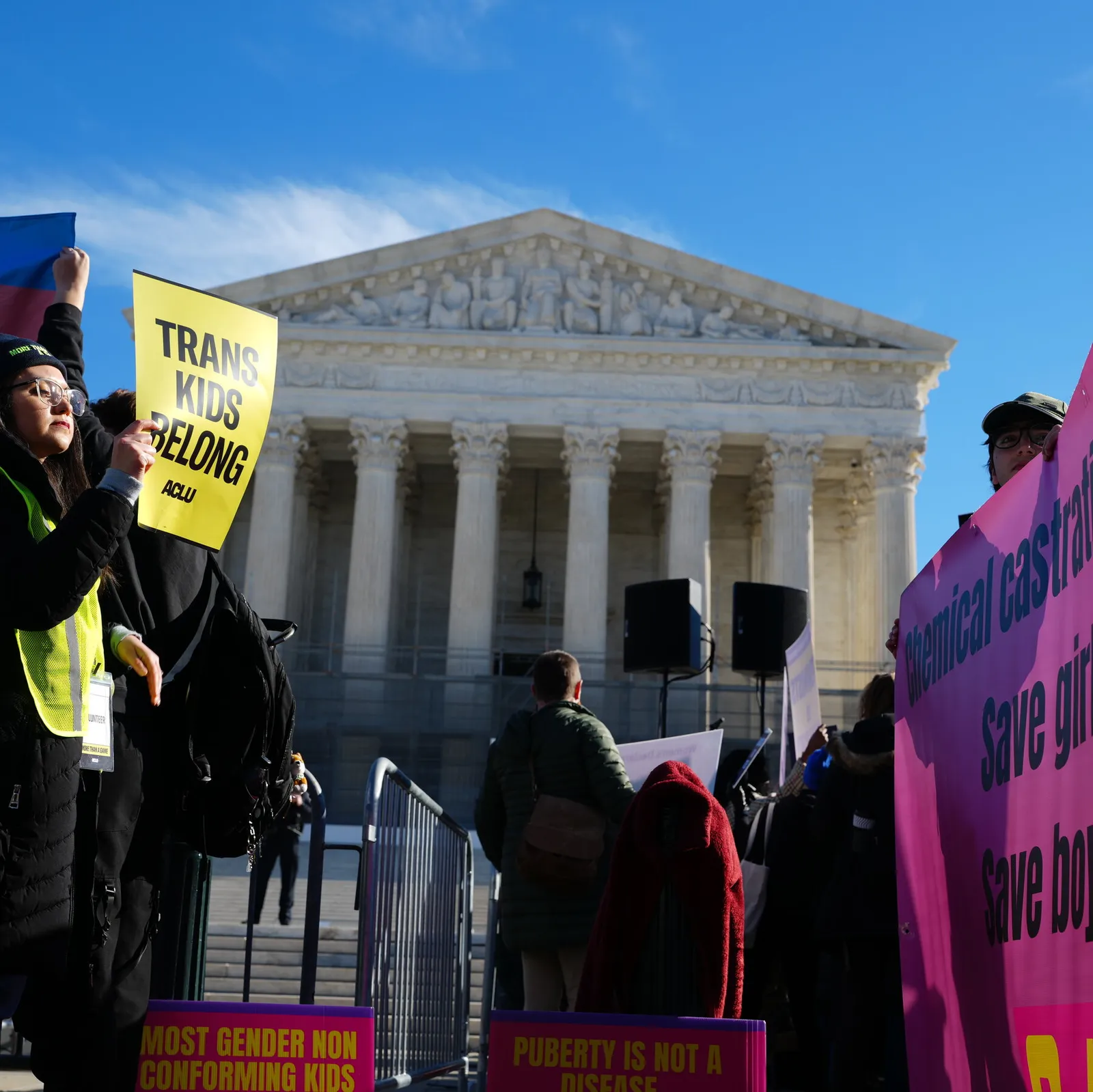
The ruling on trans athletes became a win for Republicans, while many Democrats stayed quiet on a policy fight that proved divisive in the last election. The consequence is clear: leaders now have to decide whether to spend political capital on an issue that can polarize quickly.
A ruling on trans athletes delivered a real political win for the GOP, and it did not require a long campaign or a complicated message discipline. Republicans celebrated the decision, while many Democrats stayed quiet on an issue that had proved divisive in the last election.
That contrast is the story. In politics, silence is rarely neutral. Here, the Democrats' quiet stance signals a strategic calculation: when an issue has already inflamed elections before, some elected officials decide not to pick up the megaphone again, even if they disagree with how the ruling lands. Republicans, on the other hand, treated the ruling like fresh leverage, using it to reinforce their broader narrative and rally their base.
To understand why this matters beyond the immediate headlines, zoom out to how sports policy becomes politics policy. Trans athletes sit at the intersection of education, health and safety narratives, civil rights debates, and federal or state regulation of school and amateur sports. Those debates are rarely confined to fields or courtrooms. They spill into fundraising, voter turnout, and party identity because they force candidates to signal where they stand on fairness, inclusion, and the meaning of categories in competition.
Regulation is also part of the pressure. In the real world, sports eligibility rules do not implement themselves. They get written, interpreted, challenged, and then enforced, often through a patchwork of governing bodies and court decisions. When a court ruling shifts what is permitted or how eligibility should be evaluated, it changes more than policy text. It changes what school districts and athletic programs can do tomorrow, what athletes can expect, and what administrators risk if they choose one interpretation over another.
So even though the source frames the immediate political reaction, the second-order implications are operational. Athletic directors, school boards, and compliance teams typically have to translate legal and regulatory developments into eligibility processes, paperwork, privacy practices, and training guidance. Every time the political heat spikes, decision-makers in education and youth sports face added incentives to be risk-averse. That can mean delaying implementation, adopting conservative rules, or pushing the burden onto legal review and administrative procedure. None of this is “just politics,” because it lands in day-to-day governance.
Boards and executives in adjacent sectors have a similar dilemma. Media coverage and sponsorship decisions increasingly hinge on whether issues become flashpoints. Corporate partners, leagues, and community organizations often try to avoid being pulled into partisan storms. But when a ruling becomes a GOP win, the question becomes how quickly a controversy can harden into a brand signal. Silence by one party can be interpreted as indifference, while aggressive campaigning by another can force the issue into mainstream attention. That creates a feedback loop where organizations respond not only to law, but to the political narrative around the law.
For Democrats, the choice to stay quiet is a wager about cost and benefit. The issue was divisive in the last election. That means public argument about trans athletes already produced polarization that did not cleanly map onto party lines for every voter segment. When leaders keep their distance, they are often trying to avoid tying the broader Democratic agenda to a single, emotionally charged topic. For Republicans, highlighting the ruling helps them convert legal developments into political momentum, especially with voters who want cultural issues to be front and center.
In other words, the strategic stake is not only who celebrates a ruling. It is who controls the conversation after the legal dust settles. Republicans are using the decision to claim narrative space. Democrats, by staying quiet, are trying to limit exposure and prevent the issue from dominating the next political cycle.
Executives and operators should take note because the logic maps to business too: when a topic is divisive and already consumed attention before, leaders must decide whether to engage loudly, manage the risk behind the scenes, or keep messaging minimal. The political version is the same risk calculus. If you amplify, you may energize supporters but also intensify opposition. If you do not, you may dampen backlash but also cede control of the storyline. This ruling is now part of that equation, and the reactions show how quickly an election-shaped issue can become a long-running governance problem.
This story's Key Insights and Take-aways are locked.
Create a free account to unlock Executive Actions for one credit.
Register to UnlockAlways free for Executives Club members. Join the Club
More in Politics

Glacial collapse, not rain, killed 180 in Nepal's Himalayan flood
The Himalaya's extreme geography hid the true cause of Nepal's catastrophic flood, a glacial collapse that turned a geological battleground into a mass-casualty zone.

Iran’s Esmail Baghaei says Oman talks start shipping via Hormuz, not US talks yet
Temporary route plans with Oman aim to restart commerce while Tehran says Washington dialogue is not on the table.

Standards watchdog opens probe into Reform UK deputy leader Richard Tice over interests
The parliamentary standards commissioner says it began an investigation on 28 July into a possible undeclared interest.