
Empyriangaming spawns 2,000 skeletons in PoE 2, then tanks dodge-roll and boss fights
A six-player experiment turns minion min-maxing into a measurable performance disaster, then weaponizes it with bots.
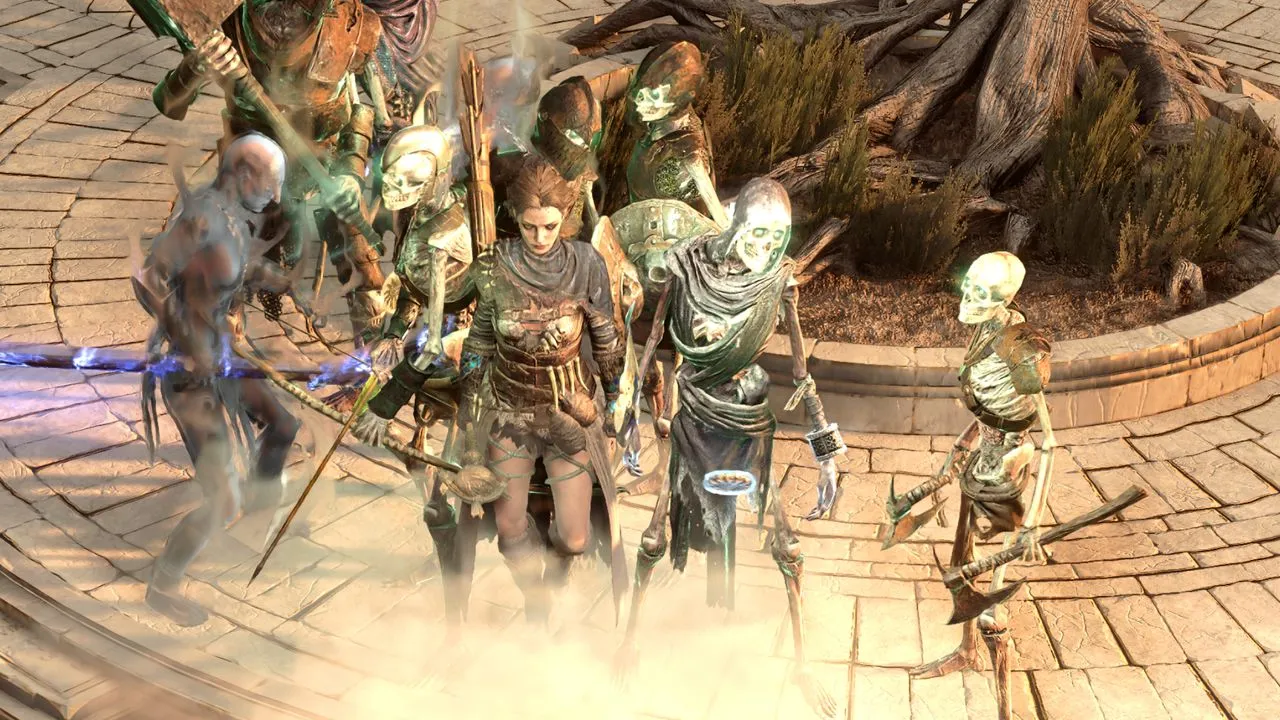
Path of Exile 2 streamer Empyriangaming built “the most expensive minion builds” and teamed up with friends to summon up to 2,000 skeletons. The result: extreme lag, unusable combat, and a hideout trap that pulled in bot accounts and unsuspecting players.
Most people tap out of a new Path of Exile 2 league and log off. Empyriangaming did the opposite. The streamer used six-player min-maxing to summon a literal army of skeletons, including a run where the group hit 2,000 minions total, and the game broke in ways that are hard to unsee.
Here is the “how bad is it” part. In normal play, PoE 2 minion builds typically have around 10 to 15 skeletons accompanying them. Empyriangaming’s crew engineered builds to squeeze minion resource costs into single digits and stack resources as far as possible. But the game hard-limits summons per minion type: it refuses to let you summon more than 255 of each minion type before deleting them and resetting the counter back to zero. So Empyriangaming recruited friends to bring their own armies, then used a Trial of the Sekhemas run to multiply the chaos.
When Empyriangaming summoned 255 Skeletal Priests, PoE 2 slowed to a crawl. It didn’t just drop frames in a mild way. It ran like stop-motion. Every few seconds, skeletons shifted from the sky as the server caught up with inputs. The group learned quickly that the first-order problem was performance, and performance was not negotiable. Even dodge rolling became functionally unusable: during the 2,000-minion spawn, dodge rolling took about a minute to actually happen on screen. That is not “this build is strong.” That is the game becoming a slideshow with artillery.
The trial run is also where the mechanics turned into an engineering problem. The group went to PoE 2’s roguelike Trial of the Sekhemas mode, which offers powerful bonuses that only work while playing it. One of the bonuses basically doubles the amount of minions each player can summon. As Empyriangaming watched, the frame rate graph jumped up and down like a heart rate monitor as everyone spawned in total 2,000 minions. The textbook lesson for operators and product teams is that “fun” and “load” are tightly coupled in modern online games: increase entity count, increase server and client work, and you can turn an otherwise responsive action RPG into a lag test you cannot pass.
Then they tried to stress the combat loop. In an actual map, they looked at how their skeleton swarm performed against a boss. The frame rate continued to stand in their way. The practical implication was blunt: it’s hard to kill a boss when you’re waiting minutes to walk forward five feet. In an action RPG, pacing is everything. When movement, targeting, and hit registration feel delayed, the game stops being a game and starts being a queue.
After confirming that the performance wall wasn’t just “in a hideout scenario,” Empyriangaming escalated the experiment into something uglier: a trap built around trade UI incentives. He called for everyone to spam skeletons while he listed an extremely valuable item for an absurdly low price on the game’s trade website. The plan was to lure automated bot accounts and unlucky players into the trap. It worked fast. People flooded in expecting a deal of a lifetime, stepped into the hideout, and found themselves in rooms “with more skeletons than Hades will haunt them for far longer” than they would bother with the item.
One player wrote “Wtf is this” in chat as they entered the skeleton pit. Others joined and immediately left before someone managed to swipe the item and make it out alive. But the broader point for decision-makers is not just that a streamer found a loophole. It is that the same systems that drive revenue in games, marketplaces, and engagement can be used to amplify negative experiences at scale: entity-spam that crushes performance, plus automated demand that makes the trap repeatable.
For executives in gaming, this sits at the intersection of live ops, anti-abuse, and technical constraints. The game already enforces a summon cap per minion type (255) and resets the counter, which suggests the developer expected performance to degrade if players pushed entity counts too far. Yet the community found a collaborative path around the practical limit by recruiting multiple players. That is a common pattern in online ecosystems: safeguards that work for a single user can still fail when the attack or exploit becomes social.
Second-order implications matter. If hideouts and trial modifiers can be used as performance weapons, you do not just have a “bug.” You have a reputational risk, a customer support burden, and a trust problem for the marketplace. And the more bots are involved, the less this looks like a one-off stunt and the more it starts to resemble an abuse workflow. If you run product for an action game, the question is simple and urgent: how do you stop “legit” min-maxing from turning into “system griefing” that automated accounts can farm and regular players can stumble into?
Empyriangaming’s experiment ended with a kind of nightmare logic: even though PoE 2 isn’t tagged as a horror game on Steam, the scenario is scary enough to make people ask for the genre to be added. That should be a warning label for anyone building live game economies and real-time combat systems: if you can break the frame rate with 2,000 minions and then hide a trap behind a low-price listing, you can break trust just as easily as you break performance.
This story's Key Insights and Take-aways are locked.
Create a free account to unlock Executive Actions for one credit.
Register to UnlockAlways free for Executives Club members. Join the Club
More in Entertainment
12TB Steam 'teraleak' goes beyond Valve: GTA 3, Mafia 2 prototypes exposed
A 12-terabyte dump of Steam data reveals prototypes and builds of third-party classics like GTA 3 and Mafia 2, plus unreleased Valve content, rewriting game history.

LinkedIn's romance problem: 1 in 4 workers say dating on it is fair game
A new survey shows a quarter of U.S. employees treat the professional network as fair game for romance, even as LinkedIn bans it and removes hundreds of thousands of offending posts.

Enhypen's first No. 1 album breaks K-pop's Billboard 200 streak
The K-pop group's 98,000-unit debut tops the chart while Dolly Parton's catalog reentry shows how death reshapes streaming.