

England nature plan by 2030 leaves legal protections optional, critics call it ‘completely insufficient’
Ministers’ long-awaited 2030 plan relies on voluntary action by private landowners, drawing sharp backlash from critics.
England’s long-awaited nature protection and restoration plan published Monday has been condemned by critics as “pathetic” and “completely insufficient.” The plan emphasizes voluntary opt-ins by landowners instead of creating wider legal protections, raising governance and compliance questions for decision-makers.
England’s long-awaited nature protection and restoration plan, published Monday, is already getting dragged by critics who say the approach is “pathetic” and “completely insufficient.” Their core complaint is brutally simple: ministers are not creating legal protections broadly across England’s land. Instead, the plan asks private landowners to voluntarily opt to protect and enhance nature.
So the headline stake for anyone who cares about how policy turns into real-world outcomes is this: if the mechanism is voluntary, implementation depends on incentives, goodwill, and capacity. Critics argue that letting nature crisis management hinge on voluntary landowner action rather than enforceable rules is the wrong lever, given the environmental crisis is described as spiralling.
This matters because “nature protection” is not just a feel-good banner. It translates into land use decisions that involve real tradeoffs. Private landowners typically control whether habitats are preserved, restored, or altered. If ministers do not convert their objectives into legal protections with enforceable requirements, then the plan becomes closer to an invitation than a mandate. In policy terms, that can mean patchy uptake. In practical terms, it can mean some places move faster than others, and the overall landscape still fails to meet the kind of nationwide restoration targets governments and societies expect.
The Guardian’s account highlights the structure of the government plan. It calls for landowners to voluntarily opt to protect and enhance nature, rather than establishing legal protections for nature across more of the country’s land, critics say. That framing is where the backlash is coming from. Critics are essentially arguing that ministers are trying to manage a systemic problem through individualized choices.
There is also a governance angle. When a government leans on voluntary participation, the burden shifts from regulators to stakeholders. Stakeholders must interpret the goals, decide whether participation is worth it, and navigate whatever administrative or compliance pathways exist. That creates room for uneven implementation. It also risks turning what should be a coordinated public policy response into a series of negotiated or discretionary actions. For executives and boards watching regulated ESG and environmental expectations, the second-order effect is familiar: when oversight is soft, strategy and reporting obligations often still get hard.
Even without additional detail in the source, the incentive logic is straightforward. Voluntary plans typically work best when participants expect clear benefits, manageable costs, and reputational value. Critics apparently do not believe that is enough to address a spiralling nature crisis. If ministers are accused of “failing to take control of the nature crisis,” it implies that the plan lacks the control points needed to drive consistent outcomes. In other words, the plan may be better at signaling than at steering.
Second-order implications land on multiple fronts. First, voluntary frameworks can complicate measurement and accountability. If land protection and enhancement is opt-in, then baseline conditions and progress can vary widely across regions and land types. That can make it harder for government to demonstrate that it is on track by 2030, especially if critics frame the approach as insufficient from the start.
Second, companies and land-adjacent businesses may face a confusing mix of expectations. On one hand, if legal protections are limited, compliance risk may be lower in the narrow regulatory sense. On the other hand, public scrutiny and reputational pressure can still rise. When the public debate turns to whether a government plan is “completely insufficient,” businesses that depend on land, water, biodiversity, or ecosystem services do not get to hide behind “it is voluntary.” External stakeholders often treat voluntary policy design as a signal of political weakness, not as an excuse for inaction.
Third, voluntary approaches can increase the importance of alliances. If progress depends on private landowners opting in, then advocacy, coordination, and partnerships with land trusts or environmental programs become more influential than formal rulemaking. For executives, that means the center of gravity shifts from regulatory certainty to stakeholder networks. That can create both opportunity and risk, depending on how well an organization can secure alignment.
For boards and senior leaders in other regulated sectors, the lesson is not that nature restoration is uniquely complex. It is that policy architecture drives outcomes. A 2030 plan built around voluntary opt-ins, critics say, can invite charges of insufficient control even before implementation begins. If you run operations that touch land or impact ecosystems, you may want to assume that the market and regulator scrutiny will not wait for perfect enforcement. When critics publicly declare a plan “pathetic” or “completely insufficient,” it signals that expectations are likely to intensify, not relax.
In the end, this is a story about who carries the weight. The government’s plan published Monday points toward a voluntary model for landowners. Critics respond by saying ministers are not taking control of the nature crisis and that the approach is inadequate. For decision-makers, that is a warning about how quickly political accountability becomes corporate pressure, especially when the incentives are optional and the stakes are not.
This story's Key Insights and Take-aways are locked.
Create a free account to unlock Executive Actions for one credit.
Register to UnlockAlways free for Executives Club members. Join the Club
More in Politics
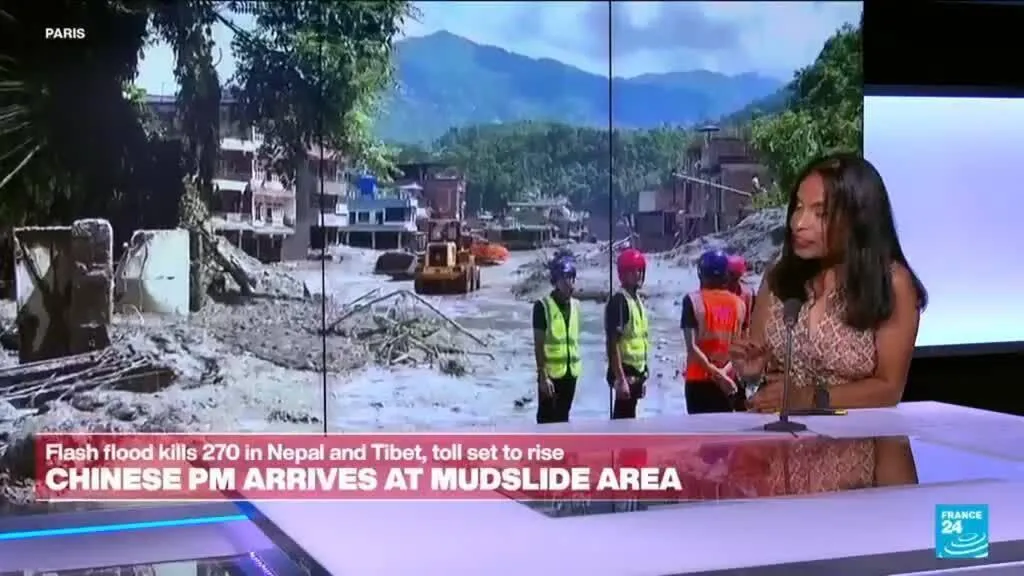
Glacial collapse, not rain, killed 180 in Nepal's Himalayan flood
The Himalaya's extreme geography hid the true cause of Nepal's catastrophic flood, a glacial collapse that turned a geological battleground into a mass-casualty zone.

Iran’s Esmail Baghaei says Oman talks start shipping via Hormuz, not US talks yet
Temporary route plans with Oman aim to restart commerce while Tehran says Washington dialogue is not on the table.

Standards watchdog opens probe into Reform UK deputy leader Richard Tice over interests
The parliamentary standards commissioner says it began an investigation on 28 July into a possible undeclared interest.