
ERC System’s Victor cargo eVTOL promises 250kg payload over 300km, targets 2028 deliveries
A Munich-area startup just showed a defense and logistics drone-aircraft hybrid with hybrid-electric flight ambitions and a tight timeline.
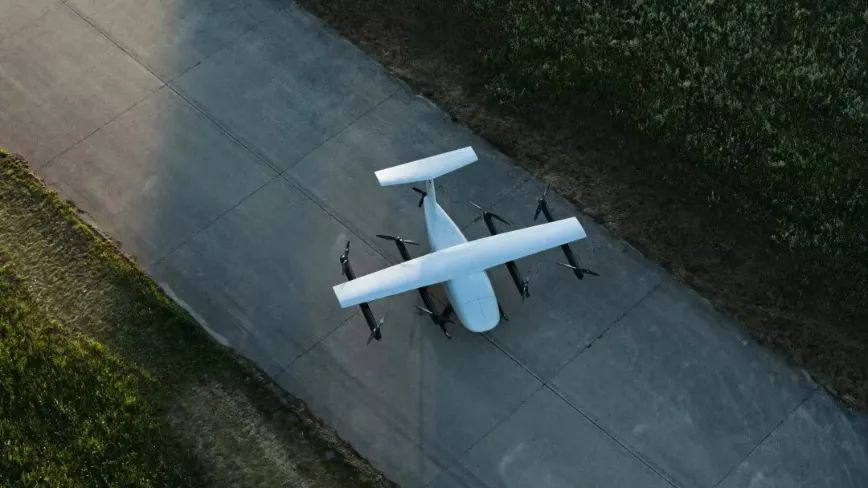
ERC System, a Munich-area startup, unveiled Victor at ILA Berlin 2026, a uncrewed hybrid-electric cargo eVTOL aimed at defense, logistics, and disaster response. The payload-range-speed figures and a stated 2028 first-delivery target set a clear benchmark for operators and investors watching the cargo eVTOL race.
At ILA Berlin 2026, Munich-area startup ERC System unveiled Victor, its uncrewed hybrid-electric cargo eVTOL designed for defense, logistics, and disaster response. The pitch is precise, and it is the kind that matters when procurement timelines do not care about hype: ERC System says Victor can carry a 250kg payload over a 300km range at a cruise speed of 250km/h.
Even more important for decision-makers than the specs is the timeline. ERC System is targeting first deliveries in 2028. That puts Victor in the same planning horizon as other players trying to turn “advanced air mobility” from a concept into something you can actually contract, insure, and deploy.
Victor is not being positioned as a passenger air taxi. It is a heavy-lift cargo vehicle, which changes both the use cases and the business logic. For defense organizations and logistics operators, the value proposition usually hinges on repeatable missions and predictable performance: get a defined payload from point A to point B with enough range headroom to reduce mission risk. For disaster response, the value shifts toward speed of deployment and the ability to operate where ground logistics are degraded. In other words, a cargo eVTOL is less about passenger experience and more about mission outcomes.
ERC System’s hybrid-electric approach is also worth attention. Hybrid-electric is often discussed as a bridge between conventional power and fully electric architectures, because it can balance energy density constraints with operational goals. For boards and investors, the second-order question is not “is it green?” It is whether hybrid-electric can actually support the kind of duty cycle cargo missions require, without pushing maintenance burdens or operational complexity into the red. The moment a company claims a payload and range that sound like commercial feasibility, that immediately invites scrutiny from logistics buyers and military procurement teams, who will compare it to existing cargo options on cost, reliability, and turnaround.
There is also a regulatory reality check baked into every 2028 target. Uncrewed eVTOL systems have to navigate airworthiness and operational rules that differ from manned aircraft, especially when missions may involve beyond-visual-line-of-sight scenarios, changing flight paths, and operations that can intersect controlled airspace. While the source does not spell out Victor’s certification path, the stated performance and deployment intent implicitly raises the stakes: the company is signaling that it believes it can work through the certification and operational approvals needed to deliver real hardware on the 2028 timeline.
The “defense, logistics, and disaster response” framing is not random either. Defense and disaster work are often where early adoption can happen, because needs can be urgent and mission risk tolerance can be different from pure consumer services. Defense programs can also accelerate timelines through dedicated procurement channels, while disaster response tends to reward rapid capability demonstration. That matters because the early years for new aircraft architectures are usually where companies either prove reliability or get stuck in long loops of redesign and testing.
From an industry perspective, Victor contributes to the emerging cargo eVTOL benchmarking game. Many announcements in the space float performance numbers, but cargo buyers and ecosystem players care about how those numbers translate into operational reality: a 250kg payload class is a specific category, and a 300km range at 250km/h is a performance envelope that, if sustained in real-world operations, could support a meaningful set of regional missions. Even if you are not buying Victor, you are watching because performance targets become the reference points competitors and regulators will compare against.
Strategically, ERC System’s stated first deliveries in 2028 effectively asks the market to take the company seriously now. If Victor arrives on schedule with the claimed payload, range, and cruise speed, it could move the conversation from “how close is the tech?” to “who can field systems safely and economically at scale?” If it slips, the setback will ripple through partner planning, investment cycles, and the broader confidence that cargo eVTOL can meet near-term operational expectations. Either way, Victor is a signal flare: the heavy-lift uncrewed eVTOL race is moving from slides to schedules, and the 2028 milestone is the line executives will be watching.
This story's Key Insights and Take-aways are locked.
Create a free account to unlock Executive Actions for one credit.
Register to UnlockAlways free for Executives Club members. Join the Club
More in Technology

OpenAI says 10,000 agents cracked a 90-year math problem in 88 hours
The company's claim is audacious, but one mathematician is pushing back. Here's what it means for AI-driven discovery.

Meta still serves child sexual abuse ads on Instagram in India - BBC report
A new report following the BBC Eye investigation says the ads are still there - what it signals for every platform with a self-serve ad engine.

White House yanks 'Build the Wall' game after Tetris Company copyright warning
The administration's arcade game vanished in hours - and the takedown playbook every brand can learn from.