
Erythrulose found in interstellar space: the first true sugar, Nature Astronomy study says
A raspberry-like molecule in a molecular cloud could reshape origin-of-life chemistry, even if Earth never makes cosmic candy.
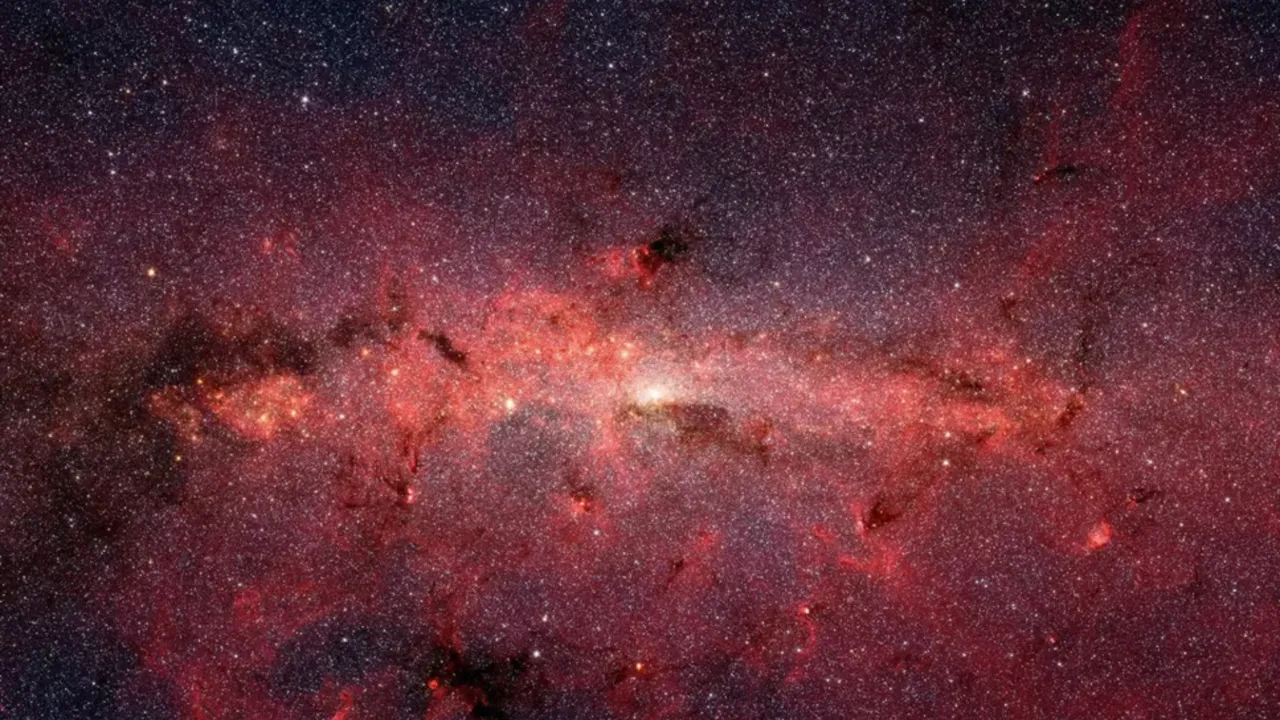
Izaskun Jiménez-Serra and Carlos Briones report detecting erythrulose, a “true sugar” with a four-carbon backbone, in interstellar space. For decision-makers watching science and space, it upgrades the plausibility of sugar-driven pathways toward nucleic acids.
Space has a sweet tooth, according to a new Nature Astronomy study. Astronomers detected erythrulose, a sugar compound that is also found in raspberries and self-tanners, in a molecular cloud in the interstellar medium, the space between star systems in a galaxy. The catch that makes this more than a fun headline: the researchers say this is the first “true sugar” found in interstellar space.
Lead author Izaskun Jiménez-Serra, an astronomer at the Center for Astrobiology in Madrid and the Spanish National Research Council, and co-author Carlos Briones frame the significance plainly. “Our work shows that sugars can form naturally in space,” Jiménez-Serra said in a statement. Briones added, “The detection of erythrulose is very exciting because it opens up the possibility of discovering in space other sugars such as ribose, which is part of RNA, and other important molecules for the origin of life.” In other words, it is not just that sugar exists out there. It is that a pathway starts to look chemically reasonable.
This matters because origin-of-life research has always lived in a tension between “chemistry can happen” and “could it actually get to biology’s building blocks.” The study’s emphasis on “true” sugar is the key technical distinction. The researchers explain that while some sugar-like compounds have been detected in space, “true” sugars have a spine of at least three carbon atoms. Erythrulose has four. That detail is what turns this from an interesting molecule spotting into a potential stepping stone.
Why the stepping stone? Erythrulose can change into ingredients that create nucleic acids. Nucleic acids are essential to life as we know it, carrying information in cells. DNA and RNA are types of nucleic acids. Jiménez-Serra also said in the statement that erythrulose could have “provided the feedstock for the first nucleic acids,” and that is why the detection is “so relevant for the origins of life.” Think of it like this: if you can find not just random organic stuff, but a molecule with a credible route into information-carrying chemistry, then the early-universe storyline gets firmer.
The discovery also plugs into a broader, ongoing search for how complex molecules travel across space and end up where planets form. Stars and planets are born in massive molecular clouds of dust and gas. If sugars like erythrulose are present in those clouds, they could end up on asteroids and comets or other small bodies. Those objects can collide with young planets. Some scientists think Earth’s early environment may have been jump-started by such impacts, during an era when the planet was heavily bombarded by objects around four billion years ago. In that scenario, the question becomes direct: could space rocks have delivered sugar from interstellar space, supporting the earliest iterations of life as we know it?
If that idea sounds familiar, it is because it has been tested in pieces. The source notes that it is not the first time sugar has been found in space. NASA’s OSIRIS-REx mission visited the asteroid Bennu and returned samples to Earth in 2023. An analysis of those samples revealed “strange black grains” of material that contained sugars. Sugars have also been detected in meteorite samples, and a study from over 25 years ago reportedly found sugar at the center of the Milky Way. Still, the researchers call out what makes this study a first: this is the first time sugar has been found in the interstellar medium, and the first true sugar found in interstellar space.
For executives and boards, the second-order implication is not that your supply chain needs more cosmic cotton candy. It is that the scientific risk profile shifts. Origin-of-life work often depends on assumptions about which molecules can form and persist under space conditions, and this detection strengthens the case that at least some of the needed chemistry can start before planets even exist. That can influence how science leaders, space institutions, and investors think about the “likelihood” of certain discovery narratives, including future missions and lab programs aimed at detecting sugars, related compounds, and even downstream precursors. The study itself was described in a publication dated July 13 in the journal Nature Astronomy.
At the strategic level, the headline promise here is a roadmap update: if erythrulose can form naturally in interstellar space, then the next targets are ribose and other important molecules for the origin of life. That does not guarantee biology will be found. But it does make the path from dust and gas to nucleic-acid chemistry feel less like a moonshot and more like a sequence that could be searched for, one molecular detection at a time.
This story's Key Insights and Take-aways are locked.
Create a free account to unlock Executive Actions for one credit.
Register to UnlockAlways free for Executives Club members. Join the Club
More in Science

Alaska's 1,580-foot tsunami had warning signs. Scientists just found them.
Rapid glacier retreat, heavy rainfall, and thousands of tiny tremors preceded Alaska's 1,580-foot tsunami, a warning for every coastal community in a warming world.

The rare mutation that lets high-risk brains dodge Alzheimer's
Scientists found a natural defense against protein buildup, opening a new path to preventive treatments.

3,000 steps a day may halve Alzheimer's decline, study finds
New research links a modest daily walk to less tau buildup and nearly half the cognitive and functional decline, even for those with early signs.