
ESA VP Jennifer Gibbons calls private Minecraft servers 'illegal,' citing piracy lawsuits
At California's Stop Killing Games hearing, the ESA framed community servers as piracy while the bill failed anyway.
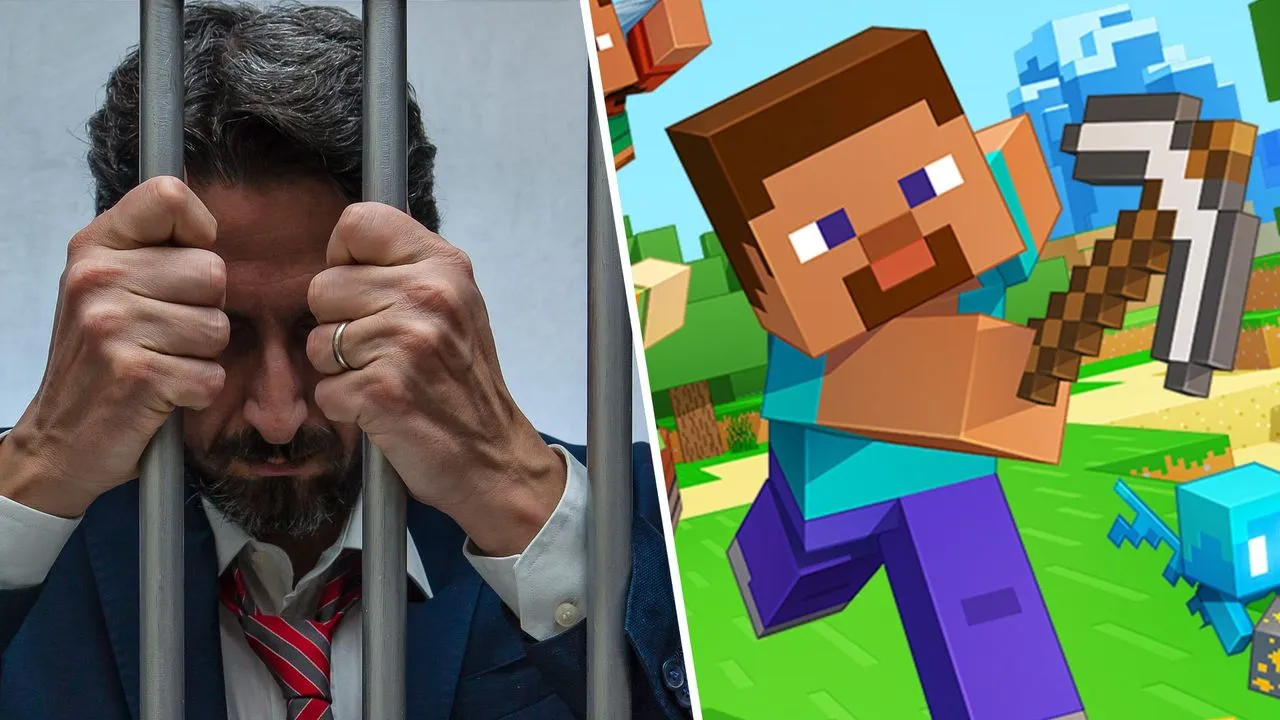
Jennifer Gibbons, vice president for state government affairs at the Entertainment Software Association, told a California State Senate hearing that private Minecraft and other game servers are 'illegal,' calling them piracy and pointing to pending lawsuits. For decision-makers, the consequence is a live policy risk: regulators are being asked to treat community server preservation like infringement, even as the bill stalls and reappears.
Jennifer Gibbons, the Entertainment Software Association's vice president for state government affairs, used a California State Senate hearing on the Protect Our Games Act (AB 1921) to make a blunt claim: private servers for games like Minecraft and Call of Duty are “illegal,” and the ESA “consider[s] it piracy.” She added that the ESA has “lawsuits, two pending lawsuits, against private servers right now,” and referenced the United States Trade Representative (USTR) Notorious Markets Reports on counterfeiting and piracy, which have named “some of these big private servers as a notorious market.”
That is the kind of statement that changes how legislators, lawyers, and publishers think about “keeping games alive.” And it also ran into an immediate reality check. Gibbons' claim was met with the counterpoint that this is not some theoretical underground activity: you can download a.jar file from the official Minecraft website to run a private server. The source describes what she said as “nonsense,” specifically because private server hosting for Minecraft is a documented, user-accessible option.
So what exactly did Gibbons respond to, and why does it matter? The hearing was centered on AB 1921, California's Stop Killing Games-endorsed bill intended to compel publishers to provide ways to keep playing discontinued games. Assemblymember Chris Ward, who introduced the bill, referenced what already exists today, saying “Minecraft is currently hosted by community servers, Call of Duty [has] community servers, so it's an option that is out there, in existence here today.” In other words, lawmakers were discussing practical preservation mechanisms rather than abstract rights.
Gibbons cut in with the ESA's framing. She said the community servers are “illegal” because they are “not in any way affiliated with Microsoft,” and that Microsoft has faced criticism for these community servers not meeting the same safety standards as Microsoft’s own Minecraft servers. When a senator asked whether this was “like the black market of videogames?” she answered “Yes. In fact, we consider it piracy.” She then tied that characterization to the ESA’s enforcement posture (two pending lawsuits) and to the USTR's Notorious Markets Reports.
The important nuance, buried in how policy arguments get built, is that “notorious markets” are not automatically the same thing as “private servers exist.” The source notes that while the USTR has named particular private servers in Notorious Markets Reports in years gone by, it has not generally done so “for the simple fact of existing as private servers.” The 2018 report, for example, cited Warmane and Firestorm Servers as examples of notorious markets because they enabled play of World of Warcraft without paying a subscription to Blizzard. That’s a materially different fact pattern from the private Minecraft server you run with friends, or a community server for an old COD that no one maintains anymore, according to the source.
From an executive and board perspective, this is where the policy fight gets expensive, fast. The hearing was not merely about whether community servers are morally acceptable. It was about how regulators might classify preservation behavior when publishers and rights holders argue it overlaps with piracy. If that framing hardens into statute or enforcement priorities, then “ways to keep playing discontinued games” could become a legal minefield: even legitimate technical continuity (like running a server for your own use) risks being treated as the same category as infringement networks.
And the bill itself did not pass on this round. With four aye votes, three noes, and four abstentions, AB 1921 failed to accrue the majority of ayes necessary to pass. However, it was granted a reconsideration, so it’s “not the end.” That matters because the legislative process here is essentially staged in innings, not in one swing. The ESA’s position can still travel forward through amendments, future hearings, and expanded lobbying efforts.
The source also reports that it reached out to the ESA for comment and will update if it hears back, which is a reminder that what is said in a hearing can become the factual scaffolding for later negotiations. Meanwhile, a Stop Killing Games campaign volunteer commented on the proceedings via Reddit, claiming the ESA's claims were “designed to scare a busy legislator who does not have time to fact-check a well-dressed lobbyist in real time.” The volunteer said it “worked just well enough this round,” but argued that it “will not work when we are standing in the same room… with developers and players beside us, ready to answer every single claim as it happens.” They also said next session the group plans an in-person lobbying presence, funding to do “this properly,” and a wider set of organizations and developers signed on in support, with intentions to introduce versions of this in other state legislatures and to look seriously at the federal level.
Put all of this together and you get a clear strategic stake for decision-makers: the dispute is not only about servers. It is about control of the narrative and the legal category. The ESA is trying to define community and private server activity as piracy, backed by pending lawsuits and the USTR's Notorious Markets Reports framing. Preservation advocates are pushing back with concrete examples, including Minecraft's user-accessible server tooling, and promising more direct, real-time contestation in future legislative sessions. Even though AB 1921 failed for now, the reconsideration keeps the conflict alive, and the same talking points are likely to resurface elsewhere.
Executives in games, platforms, and adjacent legal and policy teams should treat this as an early warning system. The next iteration of “keeping games playable” may not be decided by engineering teams or community groups. It will be decided by how regulators draw lines between legitimate continuity, safety standards, and piracy, and by which side can make those lines stick in public records and legislative text.
This story's Key Insights and Take-aways are locked.
Create a free account to unlock Executive Actions for one credit.
Register to UnlockAlways free for Executives Club members. Join the Club
More in Business

Comcast shares jump 25% as it plans to split NBCUniversal and Sky
The tax-free spin-off could reshape focus, funding, and competition across media and tech for years.

Bungie cuts most Destiny 2 staff as Sony says Marathon still matters
Herman Hulst confirms layoffs affecting most Destiny and some Marathon teams after Bungie admits Destiny fell short.

SK Hynix jumps 11% after seeking up to $29.4B in Nasdaq listing
The chip giant filed for a Nasdaq listing plan that could raise $29.4 billion, instantly reshaping investor expectations.