
Esports Nations Cup Riyadh in November: Philippines qualifies for League of Legends and Valorant
A $20 million inaugural event will test whether Southeast Asia’s mobile-first edge shows up on the world stage.
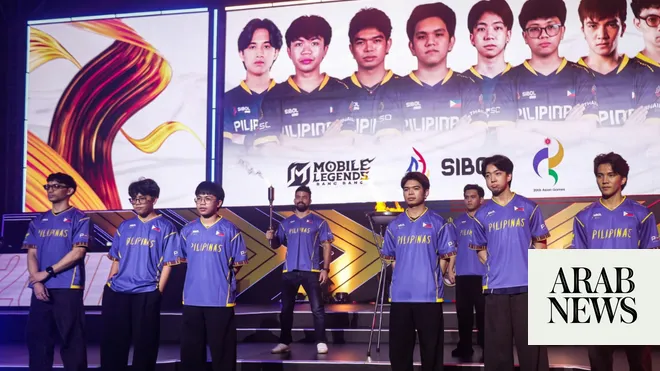
Marlon Marcelo, executive director of the Philippine Esports Organization (established in 2011), says Filipino teams have qualified for at least two titles at the inaugural Esports Nations Cup (ENC) in Riyadh. For decision-makers, the November, $20 million, nation-based format is a near-term signal of where esports competition, sponsorship attention, and talent pipelines are concentrating.
MANILA: The Philippines is heading to Riyadh this November with qualified teams in two major esports titles at the inaugural Esports Nations Cup (ENC). The qualification matters because the ENC is not just another tournament. It is a nation-based competition designed to run biannually, and it is structured to attract large fields of elite players from across the world, not only from a single region.
Saudi Arabia will host the inaugural ENC in November, with a prize pool of $20 million for players and coaches this year. Over four weeks, the cup is set to become a recurring event where hundreds of players from more than 100 countries compete for 16 esports titles. In other words, the Philippines is not just “participating.” It is stepping into a high-budget, global stage with a format built to reward countries that can consistently field top talent.
A five-member Philippine team has qualified for the ENC’s League of Legends tournament. Separately, another Philippine team secured a direct invitation to compete in the Valorant tournament after placing among the top 10 in the game’s official rankings. That combination is important for the Philippines’ strategy going into Riyadh. League of Legends is widely recognized as one of the most popular games in the world, with over 117 million active users playing monthly, while Valorant has also gained immense popularity in Southeast Asia in recent years.
For Marcelo, the ENC’s global, multi-region draw is the point. He told Arab News on Saturday that the event is “the biggest competition aside from the Olympics because there are countries from all over.” His framing is more than hype. It is a reminder that esports is increasingly aligning with how traditional sports think about prestige and audience reach: not just individual teams, but countries, national representation, and a fan base that can travel or rally from abroad. In the Philippines’ case, there is a practical audience angle too. Marcelo said Saudi Arabia is home to hundreds of thousands of overseas Filipino workers, and the Philippine Esports Organization is hoping Filipinos will support on-site during Riyadh runs, especially in later matches.
The Philippines’ momentum extends beyond Riyadh. The national esports team, Sibol, recently qualified for the Mobile Legends: Bang Bang competition at the 2026 Asian Games in Japan, which will take place before the Riyadh tournament. This matters because it suggests a pipeline, not a one-off qualification. If you are watching talent development and organizational capacity, the presence of national teams in multi-sport or high-profile events typically signals that esports organizations are maturing, and that game ecosystems are being treated like serious sports infrastructure rather than hobby leagues.
There is also a structural reason the Philippines may look competitive in Riyadh. Marcelo pointed to an advantage in mobile games, and he tied the broader success to changing consumer behavior across Southeast Asia over the past decade, where mobile play has generally outpaced console play. The ENC itself includes mobile-friendly titles in its broader ecosystem, and the Philippines is still trying to qualify to compete in other games, including MLBB, DOTA 2, Honor of Kings, and PUBG Mobile. Qualifying rounds for PUBG Mobile have yet to conclude, so the country’s final roster is still in motion.
From a market perspective, Saudi Arabia’s hosting role is not a footnote. Marcelo described the Kingdom as becoming the “main hub” for esports events and said there are “no major flaws” when it hosts big events. Even if you ignore the commentary, the investment level tells you something: a $20 million prize pool, 16 esports titles, and a four-week schedule is the kind of commitment that tends to pull media attention, sponsorship interest, and future event planning toward the host country. For boards and investors, the second-order question is simple: if Saudi Arabia is building a repeatable nation-based esports stage, which national ecosystems show up with repeatable results, and how will that affect where brands choose to spend?
For peers managing esports organizations, national teams, or partner programs, the stakes are immediate. The ENC is scheduled for November, meaning athletes, sponsors, and broadcasters have a fixed window to prepare and capitalize. The Philippines’ qualifications in League of Legends and Valorant provide an early proof of capability, but the bigger test will be performance across the full event cadence as it turns biannual. In a world where esports competition formats increasingly look like country-versus-country sports, nations that build consistent qualification pathways can convert attention into long-term sponsorship leverage, talent recruitment, and fan growth. The Philippines is already on the runway. Now it has to make the most of the global audience Riyadh is bringing.
This story's Key Insights and Take-aways are locked.
Create a free account to unlock Executive Actions for one credit.
Register to UnlockAlways free for Executives Club members. Join the Club
More in Entertainment

Russell Brand's accuser 'bewildered and confused' as he denies 7 sex charges
The criminal case against the comedian is a live test of how media companies manage talent risk when serious allegations go public.

'It's a Magic Trick': Ballet Experts Say Rosalía's SNL Pose Is Impossible
Three ballet experts tell Rolling Stone Rosalía's gravity-defying SNL stillness shouldn't be possible - and why the debate is now part of the show.

Activision CMO: GTA 6 Will Boost Call of Duty, Not Bury It
Activision's top marketer says Rockstar's blockbuster will drive players back to consoles and into Modern Warfare 4, even as the company admits its recent strategy failed.