
Face ID pioneer’s Hemispheric raises $52M for a “brain test,” not a face scan
A stealth NeuroAI startup backed with $52M aims to bring AI-style screening to the brain, with big clinical and regulatory implications.
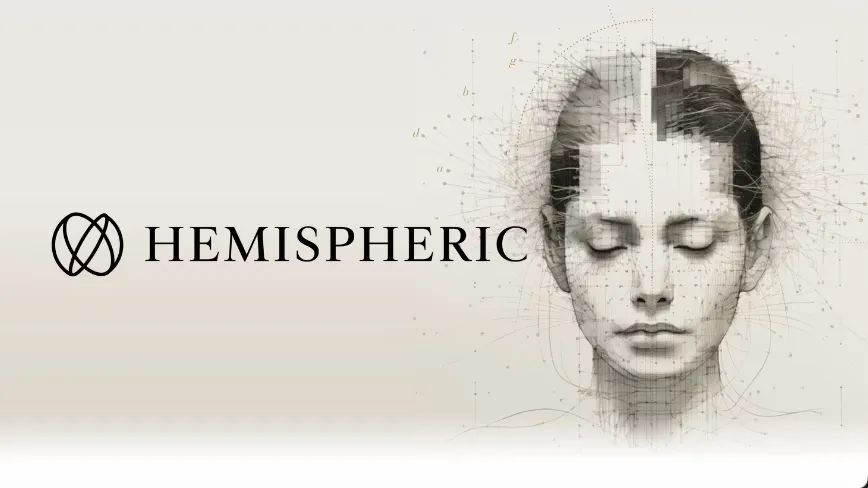
Hemispheric, a Tel Aviv NeuroAI startup tied to a mind behind Apple’s Face ID, has emerged from stealth with $52M in funding. The company’s stated goal is to move AI beyond faces toward reading the brain, effectively pitching a brain test.
A Face ID pioneer is trying to make “reading the room” feel quaint. Hemispheric, a Tel Aviv NeuroAI startup, has come out of stealth with $52M and wants to point AI at something harder than a face: the brain.
In other words, this is not just another “better camera” story. Hemispheric’s pitch is a brain test, according to The Next Web, and it frames the effort as a NeuroAI company that wants to use AI to interpret brain signals the way Face ID uses signals to authenticate a person. That framing matters because it immediately raises the stakes: once you move from consumer identification toward something that looks like biological testing, you are no longer just competing on model performance. You are stepping into clinical validation, patient safety expectations, and the regulatory gravity that comes with anything resembling a medical test.
To understand why $52M is meaningful here, look at what the startup is actually attempting. Face ID is an engineering-led product category: capture a face, compare features, and decide. Hemispheric is implicitly proposing a different kind of product category, one that treats brain data like an input that can be read, interpreted, and tested against a meaningful outcome. That is a tall hill. Brain data is typically more complex than facial features. And “it works on data” is not the same thing as “it works as a test,” which usually requires rigorous evidence, careful study design, and a clear claim about what the test is intended to do.
There is also the incentives question, the one boards obsess over when a deck talks big. Hemispheric’s emergence with $52M suggests it has already crossed early technical and business-development hurdles: enough belief from investors that the company can get from concept to measurable prototypes and then toward a definable path to commercialization. But investors do not only fund novelty. They fund optionality. In NeuroAI, optionality usually comes from multiple potential application lanes. Even the term “brain test” is broad enough to hint at several directions, though the specific target is not detailed in the provided source. What is clear is that Hemispheric is positioning itself to own a category: the interface between AI and brain-related diagnostics or screening.
Regulatory background is the second-order force that can either accelerate or freeze a timeline. Medical testing and diagnostic claims are regulated differently from consumer authentication and from wellness tools. Once an AI system is positioned as a test, especially one intended to inform health-related decisions, it typically triggers requirements around evidence, performance evaluation, safety monitoring, and transparency. Even if Hemispheric is not yet making specific regulatory claims in the source, the “brain test” framing is a near-term signal to investors and partners that the company will have to navigate these expectations sooner rather than later.
This is where the board-level dynamics become important. Raising $52M out of stealth means Hemispheric can fund more than experimentation. It can staff up and move faster on the work that is hardest to compress: validation planning, data governance, study orchestration, and the creation of a credible testing narrative. It is also a signal to other players. When a startup with a direct line to an Apple Face ID mind fundraises at this scale, it tells the market that the team believes the path is real. Competitors in biometrics and AI will have to decide whether to treat Hemispheric as a research prototype or as a future product contender.
Finally, there is a strategic implication for anyone building AI products that touch biology, behavior, or health. The world is shifting from “AI that predicts” to “AI that decides,” and decisions are where accountability lives. Hemispheric is trying to turn AI into a brain test, which puts it on the dangerous edge of promise. If it succeeds, it could help establish new norms for how brain data is processed and interpreted. If it stumbles, it could also become an early warning example of how hard it is to convert brain-reading ideas into validated, regulated, and trusted testing tools. Either way, with $52M in the bank and a NeuroAI identity already on the record, Hemispheric is asking the market to take its “brain test” seriously now, not later.
This story's Key Insights and Take-aways are locked.
Create a free account to unlock Executive Actions for one credit.
Register to UnlockAlways free for Executives Club members. Join the Club
More in Technology

Google quietly links your phone number to every Android account on your SIM
Adding a SIM now ties your phone number to all Google accounts - and future accounts inherit it. Here's the security and privacy stakes.

Hijacker AI 'Skynet mode' runs 100,000 attack steps against exposed models
Symantec caught a criminal AI agent that borrows other models, steals data, and mines crypto; the only relief is no confirmed victims yet.

Nvidia's AI-financier shift faces its first big test as neoclouds stumble
A rout in neocloud stocks is forcing investors to weigh Nvidia's hidden exposure as both supplier and lender to the AI buildout.