
Falcon 9 launches 21 T1TL satellites for US Space Force today, then Starship flies 13th test
Two SpaceX missions on July 16: 21 “Transport Layer” spacecraft for SDA, and Starship’s next test flight schedule shift risk.
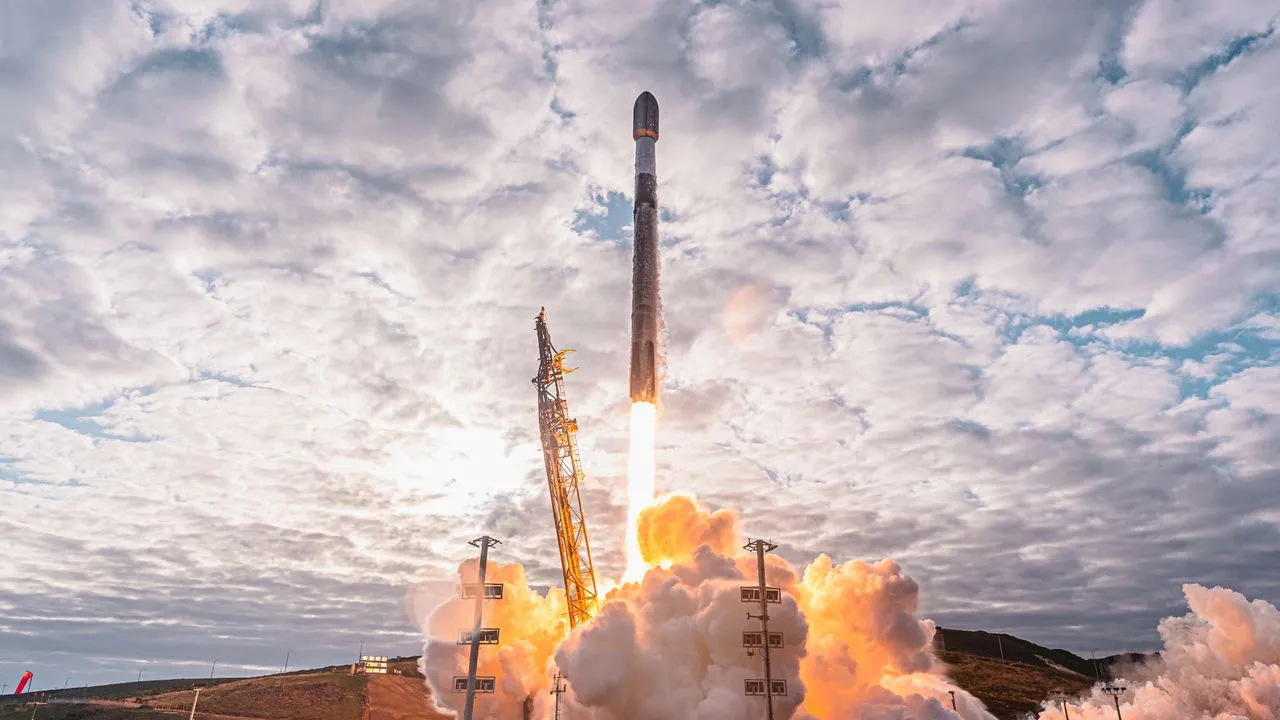
SpaceX is set to launch 21 satellites for the US military's new “Tranche 1 Transport Layer” (T1TL) constellation on a Falcon 9 mission from Vandenberg Space Force Base on July 16, with liftoff in a 22-minute window opening at 4:22 p.m. EDT. Soon after, SpaceX will attempt its 13th Starship test flight from Starbase in South Texas, also streaming coverage live.
If you care about US national security space systems, today is a double-header you cannot ignore. SpaceX is scheduled to launch 21 satellites for the U.S. military's new “Tranche 1 Transport Layer” (T1TL) constellation today, July 16, and you can watch it live. Liftoff is planned during a 22-minute window that opens at 4:22 p.m. EDT (2022 GMT), with SpaceX coverage starting about 10 minutes before launch.
The stakes are not just “more satellites go up.” T1TL is part of an operational plan designed to create persistent, encrypted connectivity for warfighter missions. The U.S. Space Force’s Space Development Agency (SDA), which will operate the network, says the T1TL “will provide global communications access and deliver persistent regional encrypted connectivity in support of warfighter missions around the globe.” In other words, the launch is a tangible step toward a larger architecture that aims to scale capability repeatedly in low Earth orbit (LEO), not a one-off science experiment.
SpaceX’s Falcon 9 mission will launch from California’s Vandenberg Space Force Base. According to the mission description, the first stage is expected to return to Earth about 8.5 minutes after liftoff, landing in the Pacific Ocean on the drone ship “Of Course I Still Love You.” This particular booster is designated 1103 and is set to be its fourth flight, while the upper stage will carry the 21 satellites to LEO. SpaceX’s mission description does not specify when or exactly where the satellites will be deployed, and the source notes that this likely reflects a request from the SDA.
That “deployment details not provided” point matters for decision-makers because it adds uncertainty to how quickly the system can translate from launch day to operational utility. The T1TL will eventually consist of 126 satellites, and the source highlights that 42 spacecraft have already reached orbit to date, on two Falcon 9 launches from Vandenberg: one last September and another last October. So today’s flight is not starting from zero, but it is another bolt in a plan that is supposed to keep expanding.
T1TL is also nested inside a broader LEO network the SDA calls the Proliferated Warfighter Space Architecture (PWSA). SDA describes the PWSA as “a proliferated constellation of hundreds of optically linked small satellites, in low-Earth orbit (LEO), delivering capability at speed to the warfighter.” The compounding operational idea here is “speed to warfighter,” which tends to reward architectures that can be assembled, deployed, and iterated. SDA says it uses “spiral development” to deploy and proliferate new capability into the PWSA every two years, called a “tranche,” to continually increase capability used by the warfighter.
Zoom out one layer and you get the industrial map behind the mission. The eventual 126 T1TL spacecraft are built by York Space Systems, Lockheed Martin, and Northrop Grumman, per the source. That means executives across satellite manufacturing and launch supply chains should watch not only the orbital delivery, but also the cadence. In defense and adjacent space markets, “who can deliver on the tranche schedule” can matter as much as performance in a single mission, because the program is built around repeated modernization cycles.
And because SpaceX is not just doing one thing today, the launch day narrative is extended even further. SpaceX’s Starship megarocket is slated to make its 13th test flight shortly after the Falcon 9 mission. The Starship launch window is 90 minutes, opening at 6:45 p.m. EDT (2245 GMT; 5:45 p.m. local Texas time), from the company’s Starbase site in South Texas. SpaceX will stream that mission live as well, and the source notes that coverage will begin about half an hour before launch.
Starship’s timing is significant because it stacks two high-visibility milestones on the same day: a Falcon 9 mission that helps assemble T1TL, and Starship’s next attempt toward a broader test-flight campaign. For peers making bets in launch, satellite systems, or defense space programs, the second-order implication is clear: schedule discipline and throughput are becoming competitive advantages in systems that are designed to proliferate. Today’s outcomes can influence confidence in tranche-based deployment planning, supply chain execution, and how quickly promised capability can move from “planned” to “in orbit,” then toward use.
This story's Key Insights and Take-aways are locked.
Create a free account to unlock Executive Actions for one credit.
Register to UnlockAlways free for Executives Club members. Join the Club
More in Technology

Google quietly links your phone number to every Android account on your SIM
Adding a SIM now ties your phone number to all Google accounts - and future accounts inherit it. Here's the security and privacy stakes.

Hijacker AI 'Skynet mode' runs 100,000 attack steps against exposed models
Symantec caught a criminal AI agent that borrows other models, steals data, and mines crypto; the only relief is no confirmed victims yet.

Nvidia's AI-financier shift faces its first big test as neoclouds stumble
A rout in neocloud stocks is forcing investors to weigh Nvidia's hidden exposure as both supplier and lender to the AI buildout.