

Farida Mahdy documents grandma Ehsan Ouf’s 1971 engagement look and cigarette color-matching
An Egyptian photographer turns a family archive into a 2024 project that asks what style reveals about identity and memory.
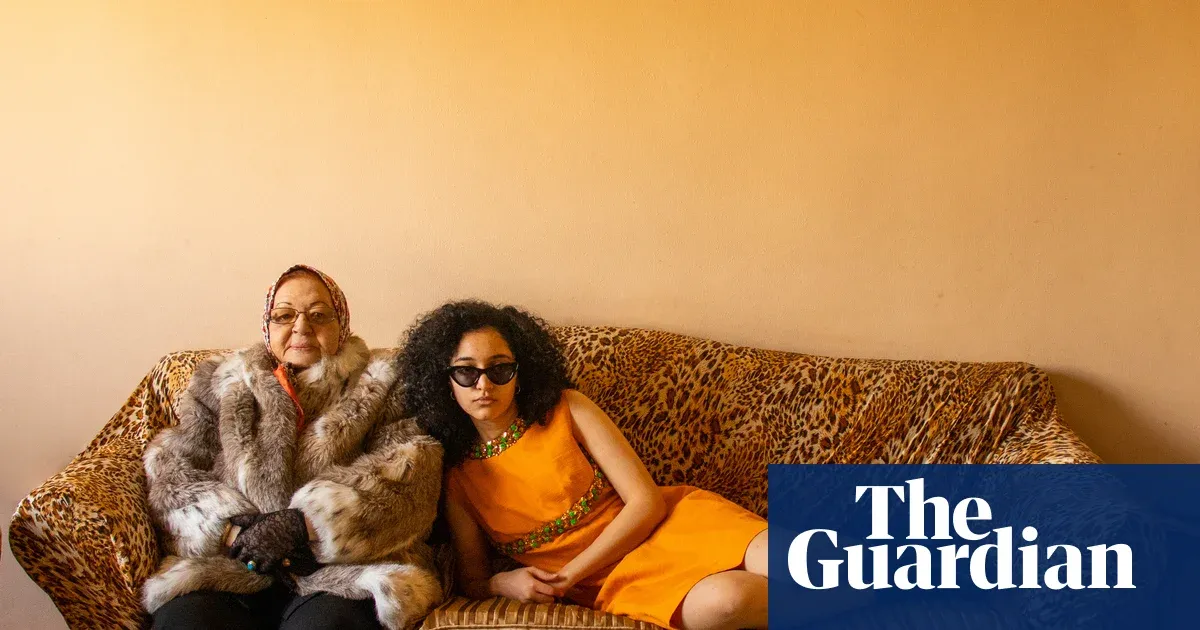
Egyptian photographer and curator Farida Mahdy launched her 2024 project, Grandma and the Fur Coat, after finding photos of her grandmother, Ehsan Ouf. For decision-makers watching culture industries, it shows how personal archives can become public-facing work with clear creative and curatorial stakes.
Egyptian photographer and curator Farida Mahdy is building a public project out of private history, and it starts with one very specific sartorial flex from her grandmother, Ehsan Ouf. Mahdy found a collection of photos and decided to document Ehsan’s style, including a portrait of the two of them in Ehsan’s flat in Cairo that sits inside Mahdy’s 2024 project, Grandma and the Fur Coat. The dress Mahdy wears in that portrait is Ehsan’s engagement dress from 1971, one of the very few items Ehsan still has from her young adulthood. The fur coat is a gift from Mahdy’s late grandfather, and Mahdy persuaded Ehsan not to sell it.
Those details matter because they tell you the project is not generic nostalgia. Mahdy lived with her grandmother for four years while studying photography, spending time chatting and watching TV together, and then used that closeness to stage and curate images that carry actual provenance: the 1971 dress, the grandfather’s fur coat gift, and the era-specific references. She says in the source that in the 70s and 80s, Ehsan dressed like a celebrity, wearing brands such as Chanel and Dior. The most eyebrow-raising detail is also the most character-revealing, Ehsan had a collection of wigs and “even matched the colour of her cigarettes to her outfits.” That is the kind of micro-detail that turns a photo project into a study of self-fashioning, not just clothes.
If you zoom out from the couch-and-closet origins, there is a bigger cultural and curatorial logic at work. A lot of creative industries have been moving toward archive-driven storytelling because it creates built-in authenticity. Personal collections do not just “add color,” they supply dates, objects, and continuity. In Mahdy’s case, the project begins in 2024, but the materials reach back to Ehsan’s engagement dress from 1971 and the styling culture of the 70s and 80s. That is a practical advantage for anyone funding, commissioning, or platforming creative work: archives make it easier to anchor a narrative, and they reduce the risk of producing something that feels invented.
There is also a clear incentive structure for the creator and the subject. Mahdy persuaded her grandmother not to sell the fur coat, which is both an emotional act and a resource-protection decision. In cultural projects, the object is often the content. Lose the fur coat and you lose a key prop, a tactile artifact, and the symbolic continuity between generations. Keep it, and you preserve the ability to produce images that are anchored to something real. That is the quiet power dynamic in many documentary or family archive projects: access is negotiated, sometimes emotionally, and sometimes through persuasion. Mahdy’s four years living with Ehsan during her photography studies adds another layer of credibility because the relationship predates the project’s public release.
Now, the second-order implications for decision-makers are less about fashion and more about what happens when style becomes evidence. When Mahdy documents that Ehsan dressed like a celebrity and wore brands such as Chanel and Dior in the 70s and 80s, she is effectively capturing a cultural snapshot of aspiration, taste, and social signaling in Egypt during that period. When she includes details like cigarette color matching, she turns outward aesthetics into a measurable form of self-expression, something viewers can recognize as intentional rather than accidental. That matters because it positions the work within broader conversations about representation, gendered presentation, and how women curate identity within the constraints of their time.
On the regulatory and governance side, it is also a reminder that “personal archive” does not automatically mean “no rules.” While the source does not mention specific legal steps, any project that uses identifiable people, images, and private artifacts often runs into standard concerns for image rights, consent, and distribution, especially when the work moves from a home setting in Cairo to galleries, publications, and online platforms. Mahdy’s close access to her grandmother and her long-term cohabitation likely helped with consent and context, but as the project gains visibility, decision-makers typically need to ensure permissions are documented and that distribution aligns with the subject’s expectations.
Finally, there is a strategic stake for executives and operators in culture, media, and creative tech: what looks like a tender family story can be a scalable creative model. Mahdy’s project demonstrates a repeatable pattern. Find an archive. Choose a central object or styling motif, in this case the engagement dress from 1971 and the fur coat gift from her late grandfather. Build around a relationship that provides context, not just imagery. Then translate that into a series that can live publicly. If you run a fund, a gallery program, a platform, or a studio, the lesson is simple but sharp: the projects that travel are often the ones that are tightly anchored to real artifacts and specific, almost obsessive details. Ehsan’s cigarette color matching is not a quirky aside. It is the signal that turns the story from “about style” into “about a person, on purpose.”
This story's Key Insights and Take-aways are locked.
Create a free account to unlock Executive Actions for one credit.
Register to UnlockAlways free for Executives Club members. Join the Club
More in Business

Comcast shares jump 25% as it plans to split NBCUniversal and Sky
The tax-free spin-off could reshape focus, funding, and competition across media and tech for years.

Bungie cuts most Destiny 2 staff as Sony says Marathon still matters
Herman Hulst confirms layoffs affecting most Destiny and some Marathon teams after Bungie admits Destiny fell short.

SK Hynix jumps 11% after seeking up to $29.4B in Nasdaq listing
The chip giant filed for a Nasdaq listing plan that could raise $29.4 billion, instantly reshaping investor expectations.