
FCC licenses Reflect Orbital to launch Eärendil-1, and 50,000 mirror satellites may follow
A July 10 approval clears Reflect Orbital's first 60-foot light mirror. The regulatory greenlight could unlock a massive low-Earth-orbit project.
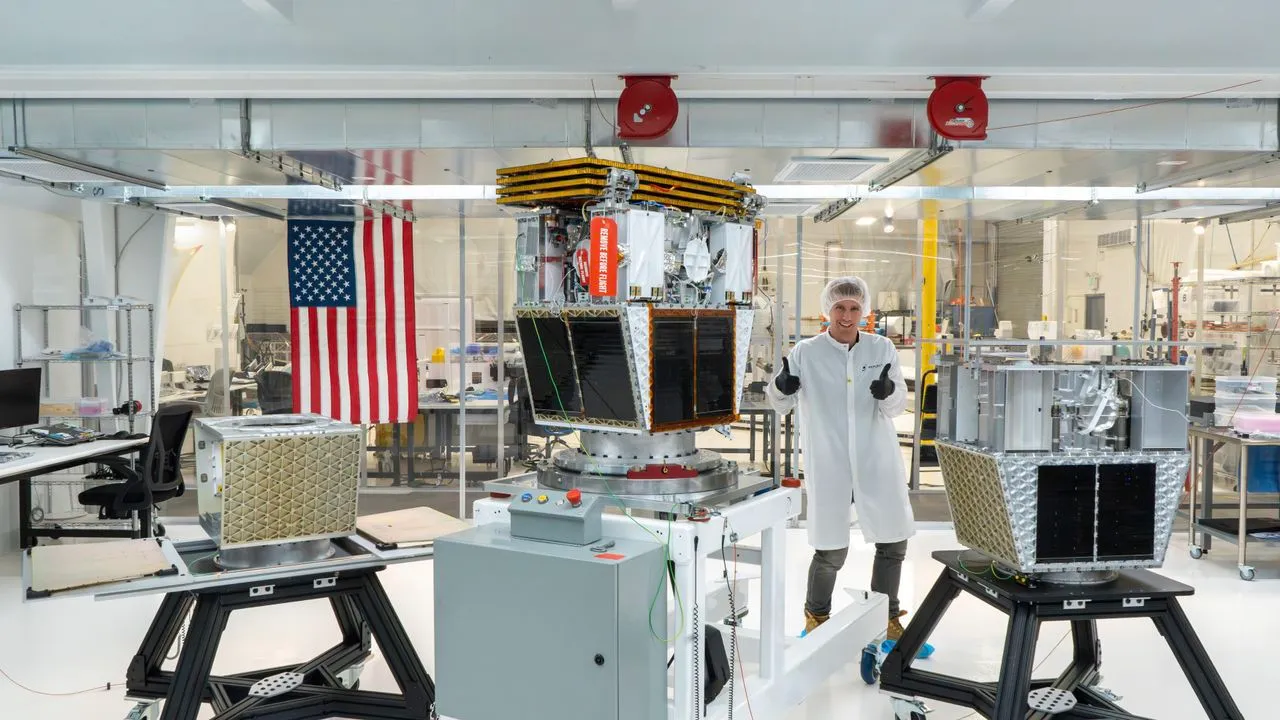
Reflect Orbital, a California startup, received an FCC license to launch and operate its first demonstration satellite, Eärendil-1, targeted to fly later this year. The company says it plans to run 50,000 or more sunlight-directing space mirrors in low Earth orbit by 2035, which could reshape both satellite lighting markets and Earth power economics.
Reflect Orbital just got a regulatory “go” that can turn a science project into a constellation business. On July 10, the company received an FCC license to launch and operate its first demonstration satellite, Eärendil-1, which it targets to fly later this year. Eärendil-1 will unfurl a reflective surface about 60 feet (18 meters) on a side. That single approval matters because Reflect Orbital’s longer plan is not a one-off mission. The company aims to operate 50,000 or more mirror-craft in low Earth orbit by 2035, beaming reflected sunlight down to customers on the ground.
If you are an operator, investor, or board member tracking satellite infrastructure risk, this is the part to watch: a license for a first test often becomes the opening move for scale. Reflect Orbital’s co-founder and CEO, Ben Nowack, said in an emailed statement that the FCC recognizing “the importance of testing novel technologies in space” is “the first step” toward “rigorously testing” both the technology’s efficacy and the safeguards the company says it has developed. In other words, this is not just about permission to launch. It is about validating a system concept that, if it works, could be deployed in numbers that resemble modern mega-constellation thinking.
So what are these mirrors actually supposed to do? Reflect Orbital describes “sunlight-directing space mirrors” that can make sunlight usable beyond geography and time of day. The company’s website frames use cases with immediacy: a search-and-rescue team locating a missing person in minutes; safer, more evenly lit streets without carbon emissions; and construction projects finishing in half the time because teams could work through the night safely. The mirror constellation would also, according to Reflect Orbital, boost the productivity of solar arrays on Earth. The logic is straightforward in plain terms: if mirrors increase how much usable light reaches a solar site when Earth conditions would otherwise limit output, then solar arrays can take on more of the electricity load currently supplied by polluting options such as fossil fuels.
That last part is important because it positions Reflect Orbital at the intersection of space hardware and terrestrial energy economics. Solar farms, after all, are constrained by time of day and weather, not just by panel efficiency. In the source, the Topaz Solar Farm in California is referenced as an example of large-scale solar infrastructure, covering 9.5 square miles (25.6 square kilometers). Reflect Orbital argues that its planned space-mirror constellation could make such arrays more productive, potentially improving how much generation they can deliver and when. For decision-makers, the interest is not whether the mirrors look cool, it is whether the business case pencil-meets the regulatory and operational constraints of launching, controlling, and maintaining tens of thousands of objects in low Earth orbit.
And constraints are the whole story here, because not everybody is celebrating. Satellite megaconstellations are controversial in general. Some concerns focus on how constellations change the night sky. Others focus on end-of-life risks, including worries about deorbiting huge numbers of satellites and the potential for heavy metals to pollute Earth’s atmosphere. Reflect Orbital’s specific plan adds a new category of worry: light pollution that could affect people and ecosystems. The source cites concerns raised by John Barentine, an astronomer at the Silverado Hills Observatory in Tucson, Arizona and a consultant at Dark Sky Consulting. Barentine previously told Space.com that the reflected beam would be “very intense,” four times brighter than the full moon, and that Reflect Orbital’s satellites would fly multiple craft in a formation. He warned this could affect wildlife in the illuminated area and, through atmospheric scattering, in surrounding regions as well.
Reflect Orbital’s response is to argue that it is designing the system to limit impact. The company says it designs for safety in three ways: 1) the light is contained within the spot, 2) the light can be turned off quickly and at any time so that none reaches Earth, and 3) it can intentionally avoid sensitive areas like research observatories or protected habitats. The company also states that the light is not bright enough to start fires or harm eyes, even when viewed through a telescope, and that it cannot be concentrated past maximum natural sunlight irradiance. For boards and risk committees, this is the point where strategy meets engineering evidence: the FCC license clears a path to demonstrate, but long-term scale will depend on whether these safeguards hold up under real observation and real operational conditions.
The second-order implication for similar companies is that “first license” often signals a regulatory learning curve for everyone involved. If Reflect Orbital can successfully test Eärendil-1, it could accelerate the feasibility narrative for larger mirror constellations, including the claim of up to 50,000 or more spacecraft in low Earth orbit by 2035. That would intensify competition for customers who want more reliable lighting or higher-output solar generation, and it would also raise the bar for mitigation plans around atmospheric and ecological effects. In short, this is a test satellite approval today, and it could become a market-shaping benchmark tomorrow, for both space infrastructure operators and the energy and optics ecosystems watching from Earth.
This story's Key Insights and Take-aways are locked.
Create a free account to unlock Executive Actions for one credit.
Register to UnlockAlways free for Executives Club members. Join the Club
More in Science

Alaska's 1,580-foot tsunami had warning signs. Scientists just found them.
Rapid glacier retreat, heavy rainfall, and thousands of tiny tremors preceded Alaska's 1,580-foot tsunami, a warning for every coastal community in a warming world.

The rare mutation that lets high-risk brains dodge Alzheimer's
Scientists found a natural defense against protein buildup, opening a new path to preventive treatments.

3,000 steps a day may halve Alzheimer's decline, study finds
New research links a modest daily walk to less tau buildup and nearly half the cognitive and functional decline, even for those with early signs.