
FCC OKs night-to-day space mirror test over outcry, letting a start-up light a 3-mile patch
Despite public pushback, the FCC authorizes a space-based solar “mirror” test that aims to turn night into daylight for miles.
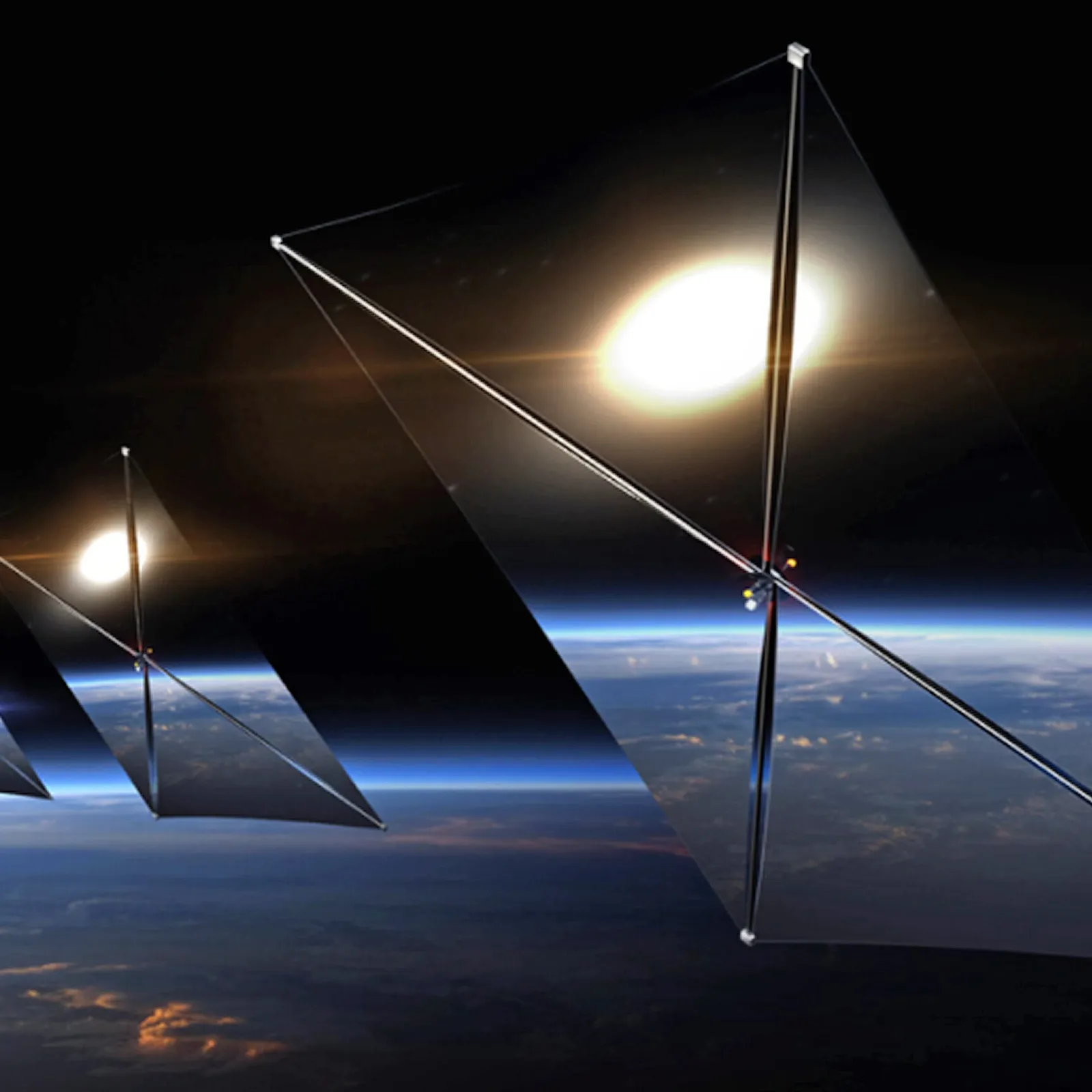
A start-up received FCC permission to test a plan to bounce solar rays onto Earth’s dark side, creating daylight for a three-mile-wide area. For decision-makers, this is a live case study in how space tech gets regulated when optics, safety, and public reaction collide.
The FCC has approved a test of a “space mirror” concept that the regulator says can bounce solar rays onto Earth’s dark side, turning night into day for a three-mile-wide patch. A start-up company is now permitted to try its plan despite outcry, setting up a real-world stress test for how quickly new space-adjacent ideas move from concept to regulated experiment.
The key detail is scale and intent: the company’s objective is not to send a signal, map terrain, or carry passengers, but to use sunlight itself, reflected from space, to illuminate an area on the ground. The test is designed to illuminate a three-mile-wide patch of darkness. Even if the exposure is limited compared with a citywide power project, it still matters because it treats the night sky as something you can alter on purpose.
To understand why the FCC’s decision is noteworthy, zoom out to what the agency regulates and what it usually worries about. The FCC oversees communications and related technology where electromagnetic effects and interference can ripple across systems. Space-based experiments often land in a gray zone between “engineering demo” and “potential externality.” Even when the underlying physics is straightforward, the second-order questions are not: will it create harmful glare, affect sensors or aircraft operations, or interfere with other space or ground activities? The fact that the FCC approved a test after outcry signals that, in this case, the permission process likely determined the experiment could proceed under defined constraints.
There is also the classic regulatory tension here: public reaction versus technical permission. Outcry is mentioned directly, which tells you this was not a low-profile, purely internal R and D effort. When the public objects to something, the concern is often less about the exact mechanisms and more about the precedent. If a space mirror can be approved, what is next? More illumination tests? Bigger patches? More frequent trials? Decision-makers in adjacent industries should treat the FCC action as a marker for how the agency balances innovation pressure against reputational and safety risk.
For the start-up, the approval changes the company’s timeline and leverage. Permission to test is a gate that many space concepts hit early, because you cannot fully validate hardware performance in real conditions with only simulations. Turning sunlight into usable illumination on the ground requires precise aiming, stable geometry, and an understanding of how the reflected energy behaves through the atmosphere. A three-mile-wide target implies the company believes it can control the beam well enough to create a visible effect at scale. In other words, this is not only regulatory permission, it is a near-term path to proof, which can be crucial for follow-on financing and partnerships.
For investors and board members looking at similar companies, the story also highlights how “space” is increasingly treated as an ecosystem, not a frontier. The frontier framing made sense when space was rare and expensive. Now, a start-up can be granted permission to run a controlled experiment that visibly changes the night sky for miles. That shift means governance becomes as important as hardware. Boards need to watch not just whether the technology works, but whether it can survive the permission process and manage public scrutiny. The FCC approval suggests the concept can clear regulatory review, but outcry reminds everyone that social license can lag behind technical clearance.
Second-order implications go beyond this single test. If the experiment demonstrates controllable, repeatable ground illumination, it could influence how other actors think about space-derived services. Illumination has obvious potential uses in theory, but the more immediate board-level question is risk management. A project that turns night into day raises visibility and impact questions, even if the intended effects are temporary. Executives should expect more scrutiny for future iterations, particularly if the company expands the duration, size of the illuminated area, or frequency of operations.
The strategic stakes are simple: when regulators approve a high-visibility experiment, it reduces uncertainty for innovators, but it also increases expectations. Other space-adjacent startups will study what got approved and what objections were overcome. And decision-makers in media, aviation-adjacent operations, defense contractors, and satellite communications will take note, because any space-based technology that changes the ground environment can create cross-industry ripple effects. For now, the FCC has allowed a start-up to run a test that aims to transform a three-mile patch of night into daylight, and that is exactly the kind of precedent that turns a science project into an industry signal.
This story's Key Insights and Take-aways are locked.
Create a free account to unlock Executive Actions for one credit.
Register to UnlockAlways free for Executives Club members. Join the Club
More in Science

Alaska's 1,580-foot tsunami had warning signs. Scientists just found them.
Rapid glacier retreat, heavy rainfall, and thousands of tiny tremors preceded Alaska's 1,580-foot tsunami, a warning for every coastal community in a warming world.

The rare mutation that lets high-risk brains dodge Alzheimer's
Scientists found a natural defense against protein buildup, opening a new path to preventive treatments.

3,000 steps a day may halve Alzheimer's decline, study finds
New research links a modest daily walk to less tau buildup and nearly half the cognitive and functional decline, even for those with early signs.