
Fenix Flexin’s “Rubberz” hits No. 58, but AI cover art doubts are sticking
Billboard success for the Shoreline Mafia rapper is colliding with questions about whether his track, and its art, are AI-made.
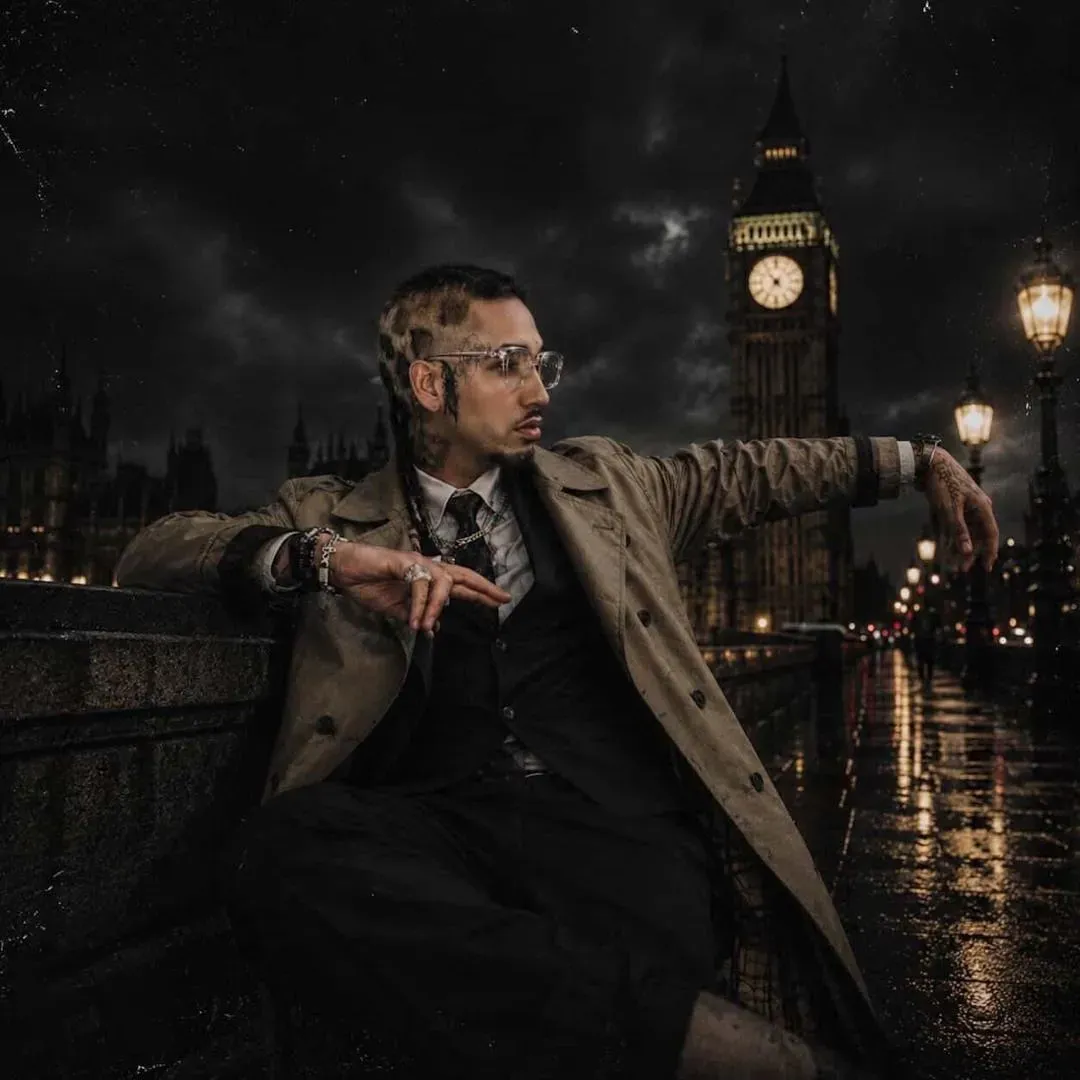
Fenix Flexin, known from Los Angeles rap duo Shoreline Mafia, has found solo traction with “Rubberz,” climbing to No. 58 on the Billboard Hot 100. But the track’s dramatic stylistic shift and nearly certain AI cover art have sparked widespread suspicion, even after Fenix denied the accusations.
Fenix Flexin’s solo track “Rubberz” just climbed to number 58 on the Billboard Hot 100. Almost immediately, the internet started asking a more volatile question than “is it good?” It asked whether the song, including its cover art, is AI-generated.
Cover art is widely viewed as “almost certainly AI,” and that perception matters because it changes how people interpret everything downstream: the authenticity of the creative output and the credibility of the success story. Fenix has denied the accusations, but the coverage says he has “done little to dispel them,” leaving the doubt to do its own marketing.
What makes the suspicion feel extra combustible is the creative pivot. Fenix Flexin is best known as part of Shoreline Mafia, a rap duo from Los Angeles. In that lane, he has primarily “trafficked in trap-influenced West Coast rap.” But “Rubberz” is a dramatic left turn. The Verge notes that “Rubberz” is heavily influenced by ’80s UK sounds, which is a sizable sonic detour for an artist whose audience has come to expect a different palette.
When audiences see a sudden genre shift, they look for the explanation that best fits the new reality. In earlier eras, that explanation might be a studio experiment, a producer change, or a label push. In the current era, the explanation options include AI-assisted writing, AI-assisted production, or AI-assisted visual assets. That is why the cover art allegation is not a side detail. In a feed-driven music ecosystem, visuals are part of the product. If the image reads as AI-generated, people start scrutinizing the track itself with the same lens.
This is also where platform incentives start to work overtime. Charts like the Billboard Hot 100 are built to measure what people are listening to and how quickly it spreads. They do not measure whether a song was authored by a human, by a tool, or by some hybrid process. So when something like “Rubberz” accelerates to number 58, the system rewards momentum regardless of how it was created. That creates a predictable cultural gap: the chart is saying “this is winning,” while communities are saying “this doesn’t pass the authenticity test.”
AI music and AI art scrutiny is still in the fuzzy middle of enforcement. There is no single, universally applied rule that settles every question about whether AI involvement is permitted, disclosed, or legally relevant to chart eligibility. Instead, the debate tends to play out through reputational pressure, platform moderation choices, and consumer trust. For decision-makers, that means the compliance question is often less about one clean regulation and more about managing standards, documentation, and how narratives form when audiences suspect something.
Even if Fenix denied the accusations, the reporting suggests his public response did not fully break the spell of suspicion. That matters because denial without clarity can become content all by itself. People interpret “denied” as either “true but misunderstood” or “denied because it is true.” The internet fills the silence with speculation, especially when the artistic shift is large and the cover art looks like AI.
For executives, creators, and investors watching this, the second-order implication is obvious: chart performance can coexist with legitimacy controversy, and both can compound at the same time. That creates operational risk for labels, management teams, and brand partners, who increasingly depend on trust as much as they depend on distribution. If “Rubberz” remains the kind of headline that mixes Billboard reach with authenticity doubt, similar artists will feel pressure either to over-disclose their process or to find ways to make the human story legible.
The strategic stakes extend beyond one rapper. As AI tools get more capable and easier to use, every “breakout” moment becomes a stress test. Boards and leadership teams in music, media, and creator platforms should treat authenticity risk like it is part of the business model, not an afterthought. When the public can’t confidently tell whether the output is human-made, the conversation shifts from “who’s the next star?” to “what standards are we endorsing?” In that world, even a No. 58 placement can come with a reputational bill attached.
This story's Key Insights and Take-aways are locked.
Create a free account to unlock Executive Actions for one credit.
Register to UnlockAlways free for Executives Club members. Join the Club
More in Technology

doubleAI's Maxwell rewrites code while it runs, claims 38x speedups
The Tel Aviv startup's code execution model formally verifies optimizations, turning AI into an agent for the hardware itself.
Saudi military official paid to fly OpenAI bugging suspect's family out, prosecutors say
A court filing says a Saudi military official funded the family's exit and Riyadh offered bail, putting foreign-influence risk squarely on AI boards.
AI researcher's 26,000-word claim: Neural nets aren't tangled after all
Nick Cammarata's Goodfire post has the AI world split - if he's right, monitoring frontier models just got a lot easier.