
FFXIV designer Masayoshi Ishikawa lets Shantotto bodied Absolute Virtue before the Windurst raid
A Famitsu interview reveals why the first boss showdown is scripted to prove a chibi black mage is terrifying.
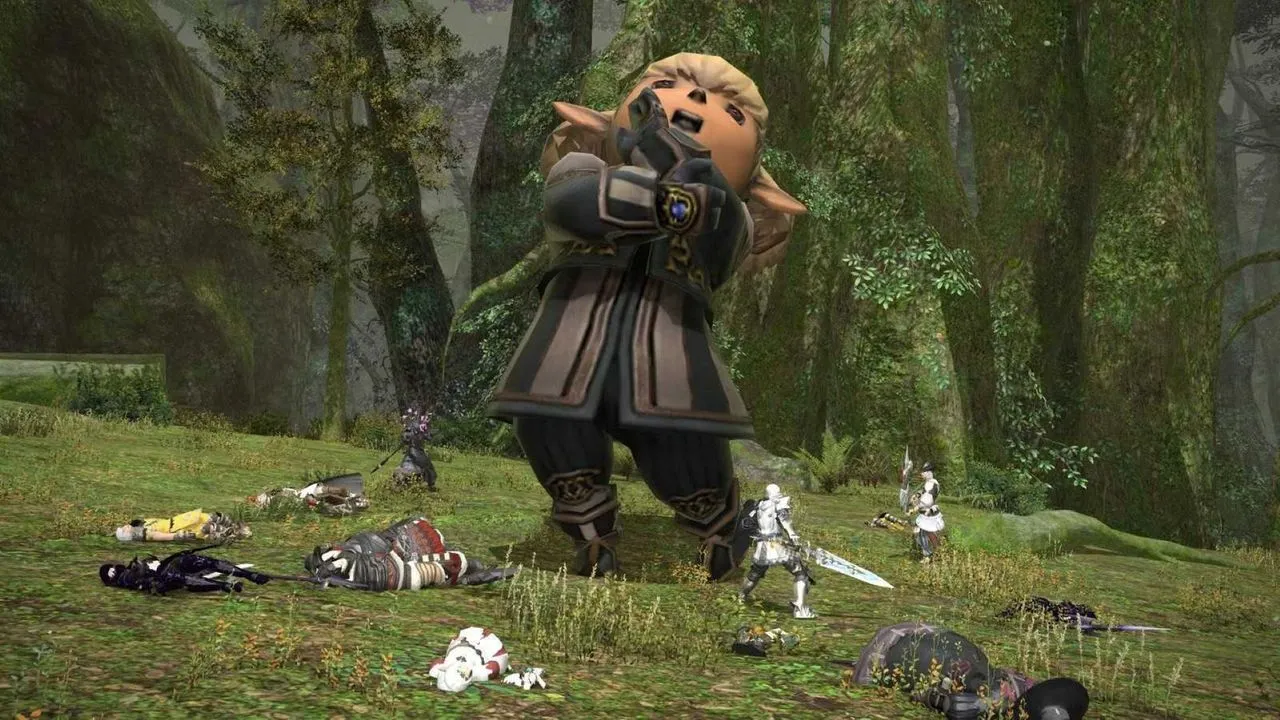
Masayoshi Ishikawa, a battle content designer at Final Fantasy 14 developer, says he built the Windurst: The Third Walk raid finale to showcase Shantotto's strength in Echoes of Vana'diel. The move changes how players experience FFXI's most infamous superboss, with wider implications for how crossovers sell power and momentum.
Final Fantasy 14 battle content designer Masayoshi Ishikawa says he made Shantotto defeat Absolute Virtue in a pre-fight cutscene, before players even enter the Windurst: The Third Walk battle. And yes, that means FFXIV players get the “true strength” message delivered instantly, with the first foe of the raid looking almost unreal compared to Final Fantasy 11’s reputation for brutality.
Ishikawa’s reasoning is surprisingly specific. Even though Absolute Virtue is one of FFXI’s most infamous bosses due to how hard it once was, he framed the raid so Shantotto appears particularly powerful in the finale of the Final Fantasy 11 crossover, Echoes of Vana'diel. In the interview with Famitsu, translated by GamesRadar+, he joked that Absolute Virtue could have been Windurst’s first boss if Shantotto had not destroyed it in the pre-fight cutscene. He also explains what he did for the gameplay-facing portion: since Shantotto is the first boss, there are limits on how strong the encounter can be. So instead of letting the numbers do all the talking, he orchestrated visuals, chaos, and signature black mage behavior to communicate power quickly.
For decision-makers who care about product experience, this is a masterclass in “what you show first” shaping player expectations. Ishikawa points to moments like Meteor raining down in the middle of the fight, exploding in chaos, while Shantotto casts a large number of mage actions so players can “easily tell” she is a powerful black mage. He also cites the dynamic way Quake raises walls from the ground. In other words, the team used readable combat language to make Shantotto’s strength legible within seconds, not after wipes. That matters in a crossover, where new and returning audiences might arrive with very different internal baselines for what “hard” means.
The key twist is that the best evidence of Shantotto’s menace is not her damage output during the battle. Ishikawa calls the cutscene defeat the “cherry on top,” because it defeats Absolute Virtue before the fight even begins. That is a direct authorial choice about sequencing. Rather than letting players earn their understanding of threat through mechanics, the raid designer tells them what the threat scale is, then lets the gameplay reinforce it. That approach is especially potent when you are borrowing legacy content with a long memory, like FFXI’s Absolute Virtue, which became infamous for being exceptionally difficult at its peak.
There is also a commercial and design incentive hiding in plain sight. Ishikawa is trying to make the crossover finale feel like a spectacle, not a patchwork. But he also has to respect that the game is introducing Shantotto as the featured face of the Windurst: The Third Walk experience. If the first boss fight were equally punishing, the onboarding friction would spike, and the crossover’s “momentum” could stall. Ishikawa even notes that, as the first boss, there are limits on how strong they can make her. The pre-fight Absolute Virtue elimination is a workaround that still pays off the legacy boss mythology without forcing early players into an encounter calibrated for endgame history.
The source also underlines why Absolute Virtue’s reputation is so sticky. In the years following its release, Square Enix got heat for discounting teams that could not beat it by “legit means.” Square Enix ultimately released tips and then conceded, nerfing Absolute Virtue. Importantly, it took “a few years” to reach that point, which tells you something about how difficult these balance debates can become when a boss becomes a community flashpoint. For executives and studios, this matters because “difficulty” is not just a tuning knob, it becomes part of a brand story. When legacy systems are involved, the cost of miscalibrating challenge can echo for years.
Second-order implications show up right where products with live ecosystems get managed: player trust. The Windurst raid cutscene reassures players that the crossover is in control of the narrative power scale. But it also subtly reframes what “winning” means. Absolute Virtue, once a symbol of hardest-in-class superboss endurance, is relegated to a defeated plot object, at least in this moment. That can be a smart way to avoid repeating the original frustration cycle, but it still risks backlash from players who wanted the classic fight. Ishikawa’s whole design pitch is built around compensating for encounter constraints with cinematic clarity and recognizable black mage spectacle.
Finally, there is a broader industry signal in the source that has nothing to do with gameplay and everything to do with operational reality. Square Enix “just killed Final Fantasy 14’s mobile port before it could even launch globally,” offering “sincere apologies for being unable to meet your expectations.” In an ecosystem where audiences expect continuous delivery and credible rollout plans, cancellation can change how players, partners, and investors view execution risk. Layer on top the earlier years-long balancing drama around Absolute Virtue, and you get a clearer picture: Square Enix is constantly navigating how to honor legacy, manage difficulty perceptions, and keep downstream roadmaps believable.
If you are a studio leader or board member, the takeaway is not “copy this cutscene.” It is that successful crossovers and live games are engineered around sequencing, expectation setting, and reputational math. Ishikawa’s approach to making Shantotto look powerful immediately is a design answer to a product question: how do you deliver satisfaction fast without reintroducing the pain points that made the original boss legendary. In a world where cancellations can happen and reputations for difficulty can linger, the strategic stake is simple. The first impression has to land so hard it carries the rest of the experience.
This story's Key Insights and Take-aways are locked.
Create a free account to unlock Executive Actions for one credit.
Register to UnlockAlways free for Executives Club members. Join the Club
More in Entertainment

12TB Steam 'teraleak' goes beyond Valve: GTA 3, Mafia 2 prototypes exposed
A 12-terabyte dump of Steam data reveals prototypes and builds of third-party classics like GTA 3 and Mafia 2, plus unreleased Valve content, rewriting game history.

LinkedIn's romance problem: 1 in 4 workers say dating on it is fair game
A new survey shows a quarter of U.S. employees treat the professional network as fair game for romance, even as LinkedIn bans it and removes hundreds of thousands of offending posts.

Enhypen's first No. 1 album breaks K-pop's Billboard 200 streak
The K-pop group's 98,000-unit debut tops the chart while Dolly Parton's catalog reentry shows how death reshapes streaming.