

FIFA barred Merlín the Duck from Azteca Stadium, but allowed him to film a Televisa spot
The duck’s whirlwind trip from Mexico City streets to the presidential palace ended with one rule: perimeter, not the match.
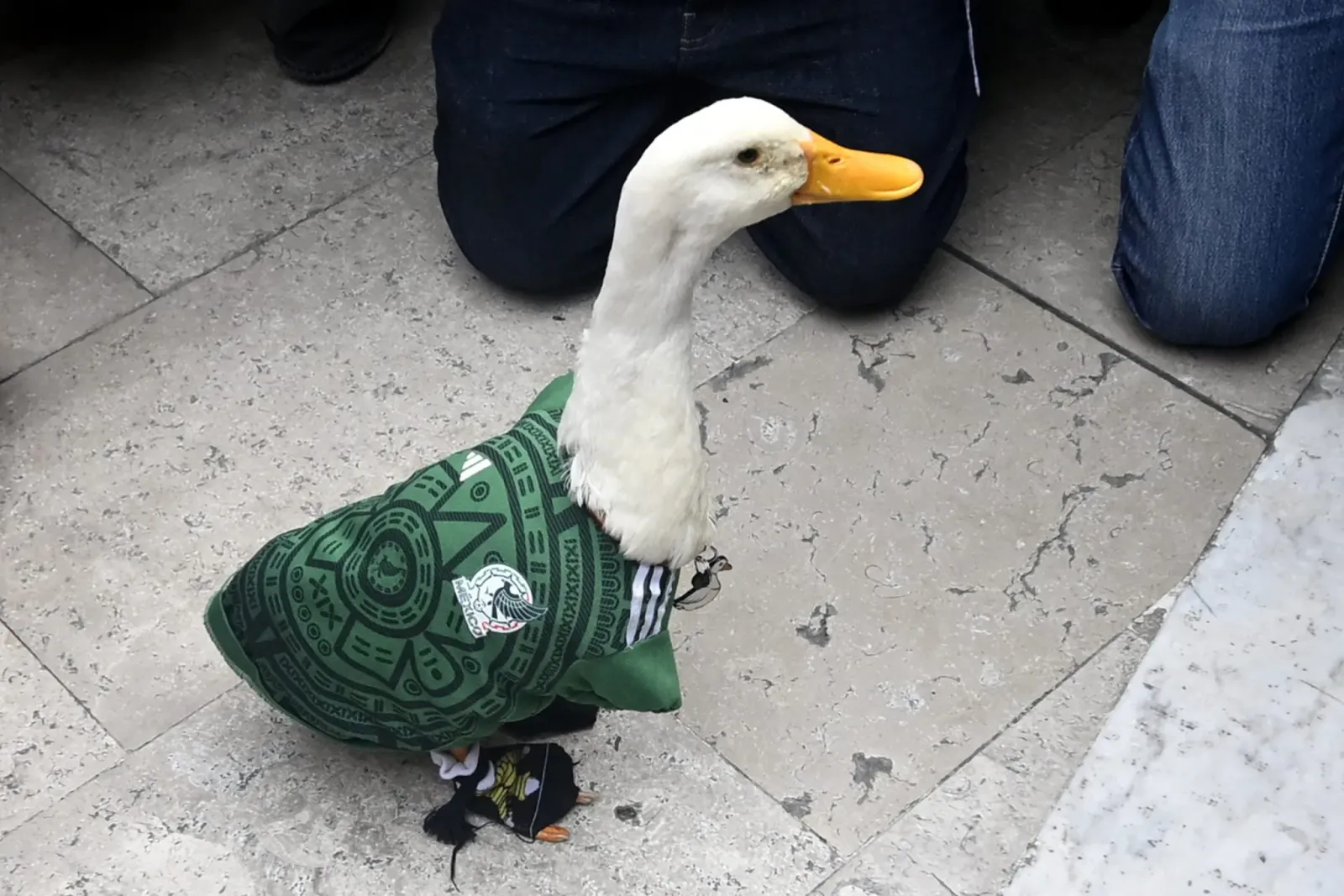
Merlín the Duck, owned by Carla Gómez, was granted access to the Azteca Stadium perimeter on Wednesday to film a segment with Televisa, but was told he could not enter the stadium for Mexico's match against the Czech Republic. For decision-makers, the episode is a live case study in how FIFA venue rules collide with mainstream media incentives and fast-moving brand ownership disputes.
Merlín the Duck went from waddling outside Mexico City’s stadium to showing up inside the tournament’s security perimeter, then hitting a hard wall: he was permitted to film a Televisa segment, but he could not stay for Mexico’s match against the Czech Republic. FIFA’s regulations, according to a tournament spokesperson, prohibit animals from entering venues “in order to safeguard their well-being,” which meant Merlín could be there for logistics and cameras, but not for the game itself.
The timeline is what makes this one sting. In less than two weeks, Merlín went from street-vendor sidekick, accompanying his family as they sold drinks throughout the city, to a presidential palace visit, then to a fan frenzy that tried to convert a folk hero into an official spectator. On Wednesday, his “proverbial flight” was cut short. The duck traveled comfortably inside a transport crate with owner Carla Gómez and her son Cristian as curious fans gathered, but FIFA’s venue rules prevented him from crossing the final line: perimeter access versus stadium access.
If you want to understand why executives should care, it is less about the duck and more about what the duck reveals: mainstream sports ecosystems do not operate on sentiment alone. FIFA is balancing two competing forces in real time. On one hand, there is the obvious PR gravity of a global social-media phenomenon with a clear human anchor, the family running the drinks stand, plus an emotional hook for fans who want to see “their” mascot in the stands. On the other hand, there is the operational and compliance reality of venue management. The spokesperson confirmed Merlín was permitted in the perimeter but not the stadium and did not offer further comment, underscoring how venue access decisions can be made quickly and narrowly even when public attention is enormous.
This is also a media story with incentives baked in. Access was granted specifically to film a segment with Televisa, one of Latin America’s largest television networks. That detail matters: Televisa did not get “a duck in the stands” rights, but it did get something more valuable for modern distribution, the ability to produce content in a controlled environment. Merlín’s presence in a transport crate and under strict security protocols signals that the network and the organizers could get what they needed on production terms without changing the underlying safety framework. In other words, the system bends for cameras in limited ways, even when it will not bend for match attendance.
And then there is the brand layer, which is where this stops being a feel-good headline and becomes a board-level concern. Merlín has become a social media phenomenon and an international celebrity. Along the way, he participated in interviews, visited television studios, mingled with supporters at the fan fest in Mexico City’s Zócalo, and even paid a visit to Netflix. That kind of attention turns instantly into monetization opportunities, and it also attracts legal friction. The source reports a trademark dispute in which at least two applications before Gómez's sought rights to Merlín’s name for exclusive commercial use. Registration was ultimately granted to Gómez.
That trademark outcome is a big deal for executives because it shows how fast value accrues in moments like this, and how quickly those moments attract someone trying to capture the upside. The dispute was not about whether Merlín is lovable. It was about who owns the name for commercial purposes. When a “mascot” is also a brand, regulators and IP processes become the quiet infrastructure behind the entertainment.
There is also a governance implication inside the family-business dynamic. Gómez is the owner, and she is also the person quoted telling The Associated Press that “these last few days have been crazy, we’ll never stop being grateful for what we’ve experienced,” and that “everyone is truly amazed by Merlín.” She later described the occasion as a “very powerful emotion.” She also stated, “Merlín is a lucky charm, and I know that, with him, the Mexican national team will win again today.” Whatever you think of the superstition, the actionable point for leaders is that audience enthusiasm is being channeled through structured rights and structured access. In this case, fans got the story, Televisa got the content, and the legal system got a registration.
By the time you reach Wednesday’s outcome, the stakes become clear for similar decision-makers in sports, media, consumer brands, and IP-heavy businesses. FIFA’s boundary line is simple: animals cannot enter venues, even if they can enter the perimeter. That single constraint forces everyone involved to redesign plans, from production schedules to fan expectations. Meanwhile, trademark ownership decides who can monetize the moment after the cameras stop rolling. For executives, the lesson is not “bring a duck.” It is that regulatory rules define the hard perimeter, while licensing and IP define who captures value inside it.
This story's Key Insights and Take-aways are locked.
Create a free account to unlock Executive Actions for one credit.
Register to UnlockAlways free for Executives Club members. Join the Club
More in Entertainment

Russell Brand's accuser 'bewildered and confused' as he denies 7 sex charges
The criminal case against the comedian is a live test of how media companies manage talent risk when serious allegations go public.

'It's a Magic Trick': Ballet Experts Say Rosalía's SNL Pose Is Impossible
Three ballet experts tell Rolling Stone Rosalía's gravity-defying SNL stillness shouldn't be possible - and why the debate is now part of the show.

Activision CMO: GTA 6 Will Boost Call of Duty, Not Bury It
Activision's top marketer says Rockstar's blockbuster will drive players back to consoles and into Modern Warfare 4, even as the company admits its recent strategy failed.