
FIFA’s 2026 World Cup: $8.9B payday, host cities face $250M-plus shortfall
FIFA runs the tournament like a franchise, keeping most revenue while cities carry costs and risk.
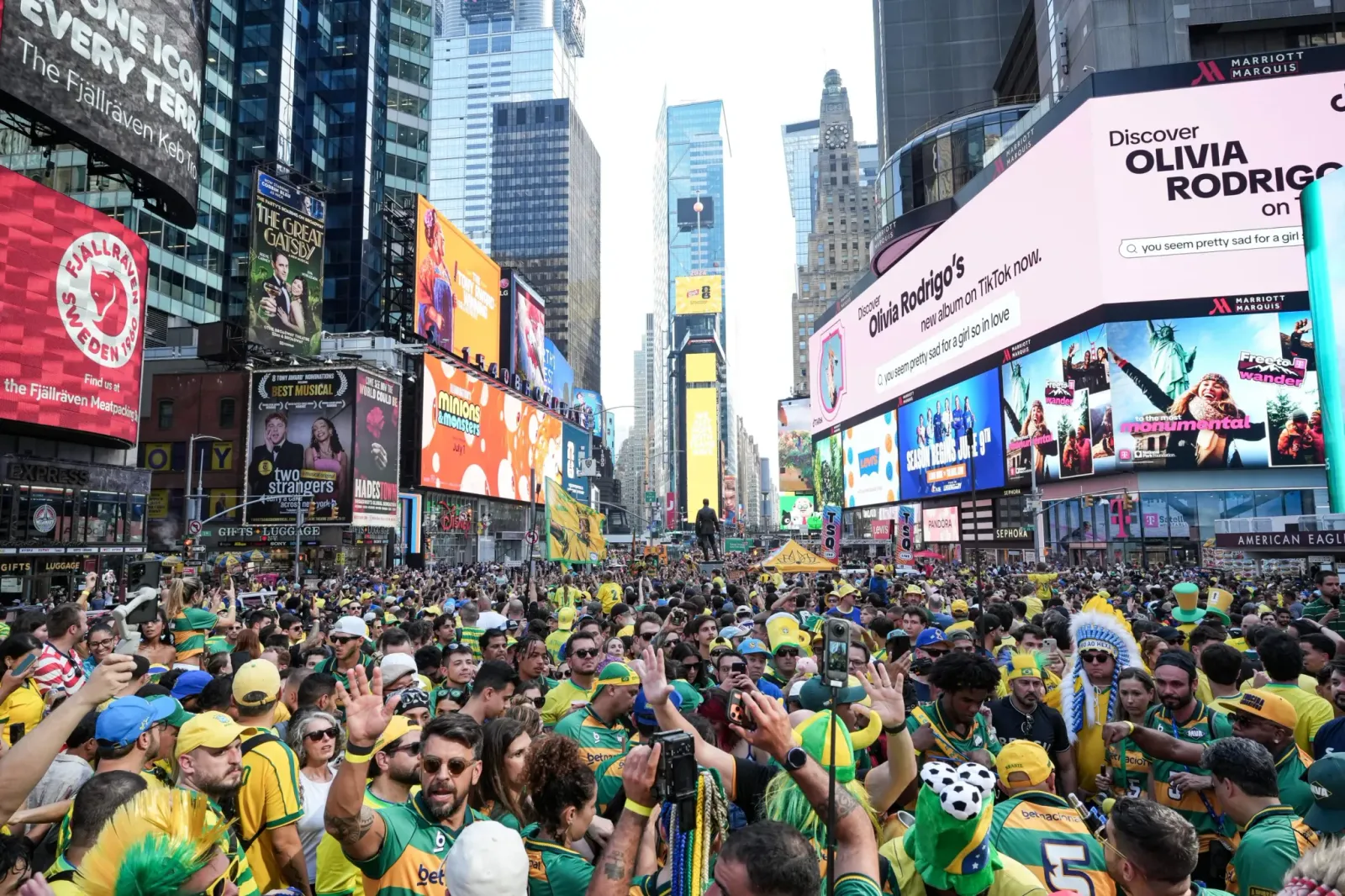
FIFA will collect an estimated $8.9 billion from the 2026 World Cup, while 11 U.S. host cities could face a collective shortfall of upwards of $250 million. The restructuring flips the incentives: FIFA controls nearly all revenue, and host locations keep many of the costs.
FIFA expects to collect an estimated $8.9 billion from the 2026 World Cup. Meanwhile, the 11 U.S. host cities face a collective shortfall of upwards of $250 million, according to the same reporting. That mismatch is the story: FIFA is restructuring how it runs the tournament so the money flows to FIFA, not the localities whose streets will host the fans.
The reason is straightforward and historically weird for soccer’s biggest stage. For most of World Cup history, a local organizing committee ran the tournament, absorbing costs and sharing the upside. For the first time in World Cup history, that is not the model in 2026. FIFA is operating the tournament itself, dealing directly with host cities instead of going through national federations. Under this arrangement, FIFA essentially controls revenue across media rights and sponsorship, plus ticketing, hospitality, and merchandise. The host cities and states control the costs.
In other words, FIFA is using a franchise-like structure: the localities pay to operate, while the central operator keeps the receipts. That lines up with FIFA president Gianni Infantino’s 2016 campaign promise to quadruple FIFA’s income. After 2026, it’s described as being on pace to hit that goal. And FIFA is leaning hard into the expanded tournament format as proof that the model can scale: the 48-team, 104-match World Cup across three countries, with Infantino calling it the equivalent of “104 Super Bowls.”
The largest lever is revenue extraction, and it gets pulled in the open. FIFA is deploying dynamic pricing at the World Cup for the first time. Ticket prices float with demand, like airline seats and concert tickets. Reported starting points and peaks are eye-popping: face values start at a federation-only $60 and climb to $7,875 for a Category 1 seat at the final. The consequence is that some matches are selling for many times what comparable seats cost at Qatar 2022. FIFA has not disputed the industry tracker label of “the most expensive World Cup in history,” and Infantino attributes the pricing to U.S. “market rates.”
Why can FIFA squeeze ticket buyers harder than a typical local organizer? A sports economist, Victor Matheson of the College of the Holy Cross, argues FIFA does not have repeat business to protect. “FIFA is not coming back to the United States for another 30 or 40 years,” he told Fortune. That changes the calculus: a city or club needs its fans back next season, but FIFA can treat this as arriving once a generation. For host cities, that also flips the bargaining reality. FIFA assigns security, transportation, stadium retrofits, administration, and public fan zones to the localities. At the same time, it withholds access to the revenue streams that might offset those costs, including tickets, sponsorship, and media.
That is where the “shortfall” math shows up. Economist Andrew Zimbalist of Smith College argues the result is structurally losing for hosts. Hosting anywhere from four to eight games, he says none of the locations will benefit economically because they get costs running “well over $100 million” while not receiving the revenue. The host of the final, New York, is used as a concrete example. City Comptroller Mark Levine estimated that even if FIFA’s prediction of 1.2 million regional visitors fully materialized, the additional tax revenue flowing to New York City would be no more than $55 million, against roughly $70 million in added costs for the NYPD, emergency management, and small-business support. That yields a loss on paper in the optimistic scenario, and the gap widens if visitors fall short.
FIFA forecasts are not arriving into an environment that looks friendly to the spending they depend on. By mid-March, advance hotel reservations for New York’s World Cup weeks were tracking 2% below bookings for the same dates in 2025, a year with no special events. By early May, an American Hotel & Lodging Association survey found 80% of hoteliers across all 11 U.S. host markets reporting bookings below initial forecasts, with 65% to 70% citing visa barriers and broader geopolitical concerns as drivers of weaker international demand. New York hoteliers reported demand still tracking a normal summer, but Boston, Philadelphia, San Francisco, and Seattle were described as going further, with the tournament called a “non-event.” There is also a supply-and-signal issue: FIFA reserved large room blocks for official use, creating what the report called an “artificial early demand signal,” then released roughly half of that inventory back to the market, forcing hotels to recalibrate downward. Add labor timing stress too: in New York, the hotel workers’ union contract expires June 30 for the first time in a decade.
Zoom out, and the incentive problem becomes a familiar mega-event pattern, just sharpened by FIFA’s revenue model. Matheson lays out compounding reasons forecasts often miss. First is the substitution effect: a local fan does not increase their entertainment budget, they reallocate it, illustrated as $410 he would spend on Scotland-Morocco instead of other local entertainment. Second is crowding out: the tournament can displace tourists and conventions that would have come anyway, like Paris during the 2024 Olympics where hotels were full but Louvre and Musée d’Orsay attendance fell by about 25%. Third is leakage: a locally owned restaurant benefits from local recirculation when people spend there, but ticket money goes largely to FIFA, limiting that local multiplier. Put together, the restructuring, dynamic pricing, and international-demand risks create a second-order outcome for boards and city leaders: the financial upside is centralized, while the operating burden and downside risk are dispersed across the local host ecosystem.
For executives watching how large platforms monetize live events, the strategic stake is simple. If a single operator captures most revenue and cities carry most cost and risk, you should expect tighter scrutiny of public-private deals, more conservative visitor assumptions, and more aggressive renegotiation demands around who gets paid when demand wobbles.
This story's Key Insights and Take-aways are locked.
Create a free account to unlock Executive Actions for one credit.
Register to UnlockAlways free for Executives Club members. Join the Club
More in Business

Accenture’s $4.18bn play fails as AI fears spark a 20% worst-ever stock plunge
On Thursday, Accenture hit its biggest one-day drop on record after forecasting worries that AI could hollow out consulting.

SpaceX stock jumps 3% after it overtakes Amazon’s market cap
CNBC says SpaceX’s shares surge following its IPO Friday, forcing investors to reprice what “space” and “AI” are worth.
SpaceX’s first options day breaks U.S. records after a $85B IPO win
Big IPO, bigger options debut: what it means for investors, risk teams, and anyone benchmarking market appetite.