

Fire Emblem: Fortune's Weave goes to $79.99 physical on Switch 2, digital stays $69.99
Nintendo’s June 2026 pricing shift lands at $80 for the standard cartridge, with clear regional differences.
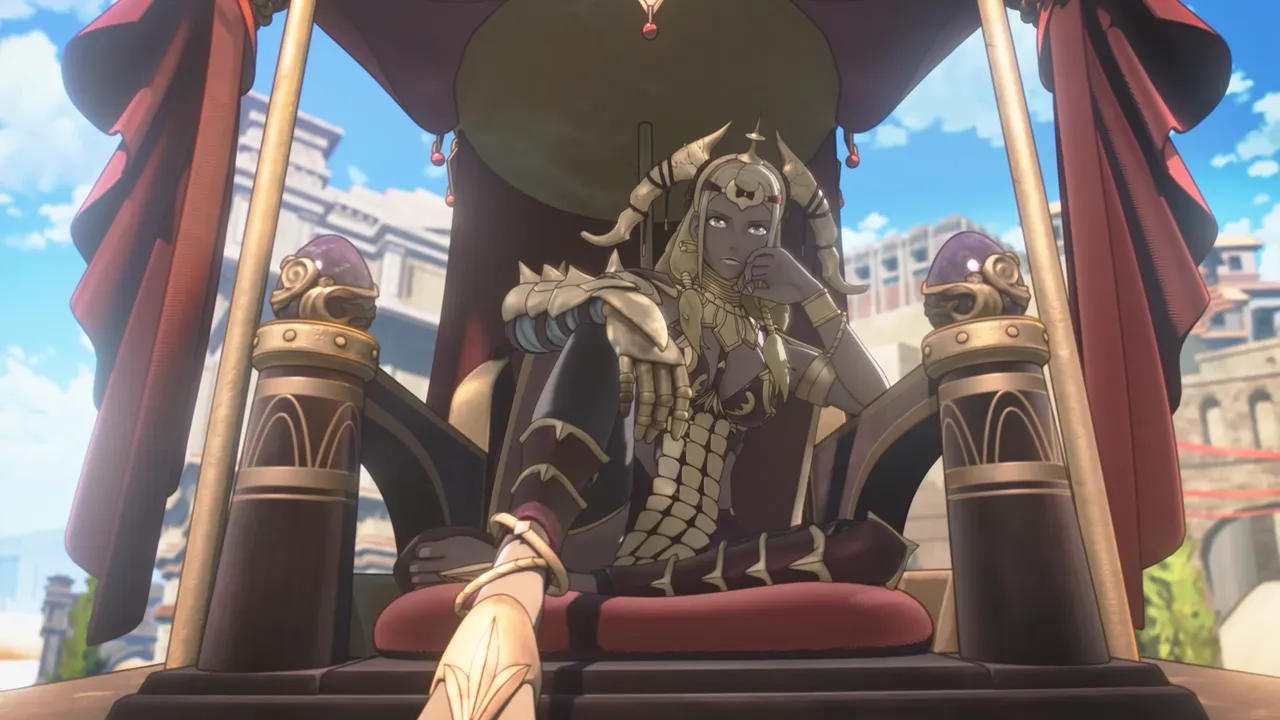
Nintendo confirmed Fire Emblem: Fortune's Weave will cost $79.99 physically on Switch 2, while the US digital price is $69.99. The move, revealed in the June 2026 Nintendo Direct, widens the gap between physical and digital and raises expectations for future releases.
Nintendo finally told Switch 2 players what they’ll pay: Fire Emblem: Fortune's Weave will be $79.99 for the standard physical version, with the digital version priced lower at $69.99 in the US. The launch is set for September 17, 2026, and pricing details showed up in the hours following today’s June 2026 Nintendo Direct, even as many other showcased games still lack numbers.
So the practical takeaway is immediate for budgeting and forecasting: the “standard physical” version of this game is priced at essentially $80, while digital stays at $69.99 in the US. Nintendo also pegged physical pricing outside the US at CAD $109.99 in Canada and AUD $119.95 in Australia, while digital pricing is listed for the UK at £58.99. IGN notes this is not a special edition. It is the standard physical release, charged $10 higher than the $69.99 floor many similarly sized games have tended to stick with.
This is all part of a broader shift Nintendo said it was preparing earlier this year: charging different amounts for digital games versus physical counterparts. In March, Nintendo announced it would move to distinct pricing between formats, using the recently released Yoshi and the Mysterious Book as its example. That title launched at $59.99 for digital and $69.99 for physical. For the Fire Emblem rollout, the pattern repeats, but with a bigger physical number in the US market: $79.99 physical, versus $69.99 digital.
Nintendo’s defense, as quoted to IGN at the time, was that “the cost of physical games is not going up.” The company’s explanation was specific: “This means that when Nintendo sells digital versions of Nintendo published games exclusive to Nintendo Switch 2 to consumers in the US, those prices will have an MSRP that is lower than their physical counterparts.” Nintendo added that retail partners set their own prices for physical and digital games, and pricing for each title may vary. Translation: Nintendo is drawing a line between its MSRP approach for digital on Switch 2 and how partners price physical in stores, even if players experience it as physical costing more.
What makes Fire Emblem: Fortune's Weave particularly important is that it’s the second $80 Switch 2 game. IGN points to Mario Kart World, an exclusive multiplayer title, as the first, launched with the system last June. If you’re an operator on the platform, a publisher planning launch windows, or even a board-level executive watching consumer pricing power, that $80 “ceiling” is quickly becoming a reference point, not an anomaly. And because Nintendo hasn’t given full pricing details for every game in today’s presentation, the market is left to infer what comes next based on how aggressively Nintendo is willing to widen digital-versus-physical pricing.
There’s also a second-order effect for retailers and distribution partners: when Nintendo emphasizes that retail partners set their own prices and that pricing may vary by title, the burden shifts to execution. A $79.99 standard physical price changes shelf expectations, promotional strategies, and value messaging. It also changes how customers compare formats, especially when digital is positioned at $69.99 in the US for this specific title. The more consistent that gap becomes across releases, the more “format pricing” could start looking like a stable product line rather than a temporary marketing decision.
The confusion angle is real, and IGN flags that it’s not just fans. Even some analysts told IGN they were not sure how to interpret Nintendo’s original announcement. That uncertainty is the kind that can linger across multiple releases, because consumers do not care about internal justifications. They care about the number in their cart. Nintendo’s approach may be defensible in its own framing, but the customer experience is that physical gets priced higher on at least some Switch 2 Nintendo-published games.
Beyond Fire Emblem, the rest of today’s showcase still has open questions. IGN lists several other featured games without confirmed pricing information, including The Legend of Zelda: Ocarina of Time remake, The Duskbloods, and Xenoblade Genesis. For now, those unknowns matter because they influence how much this pricing moment will be treated as a one-off test versus a template. If those titles land with similar physical pricing tiers, Nintendo’s new pricing strategy could rapidly become the baseline for the platform’s next purchasing cycle.
For decision-makers, the strategic stake is simple: format pricing is becoming a lever. Nintendo is moving it, and Fire Emblem: Fortune's Weave gives the clearest data point yet. A launch date of September 17, 2026 is far enough out for players to plan, but close enough for partners to act on messaging and forecasting now. The question executives will be asking is whether this is the beginning of a broader realignment of how Switch 2 games are priced, or just the next visible step in how Nintendo wants digital to carry a different MSRP story than physical.
This story's Key Insights and Take-aways are locked.
Create a free account to unlock Executive Actions for one credit.
Register to UnlockAlways free for Executives Club members. Join the Club
More in Business

Anthropic’s Levant Alpöge cracks the Jacobian conjecture after 87 years
A Harvard valedictorian used Claude to hit a 1939 breakthrough, but the missing “why” is the real problem.

Uber buys Delivery Hero for nearly $15B, vaulting to top food delivery outside China
The deal doubles Uber's dual-services footprint and pushes a ride-and-eats bundling play into 50 more markets.

Epic and Google drop settlement bid, forcing rival Android app stores by July 22
Google told the court it is ready to carry third-party app stores starting Wednesday, July 22.