

Flight of the Navigator proves time dilation for kids, 40 years before Interstellar
On July 4, 1978, a boy wakes up eight years later, and Disney accidentally made sci-fi history.
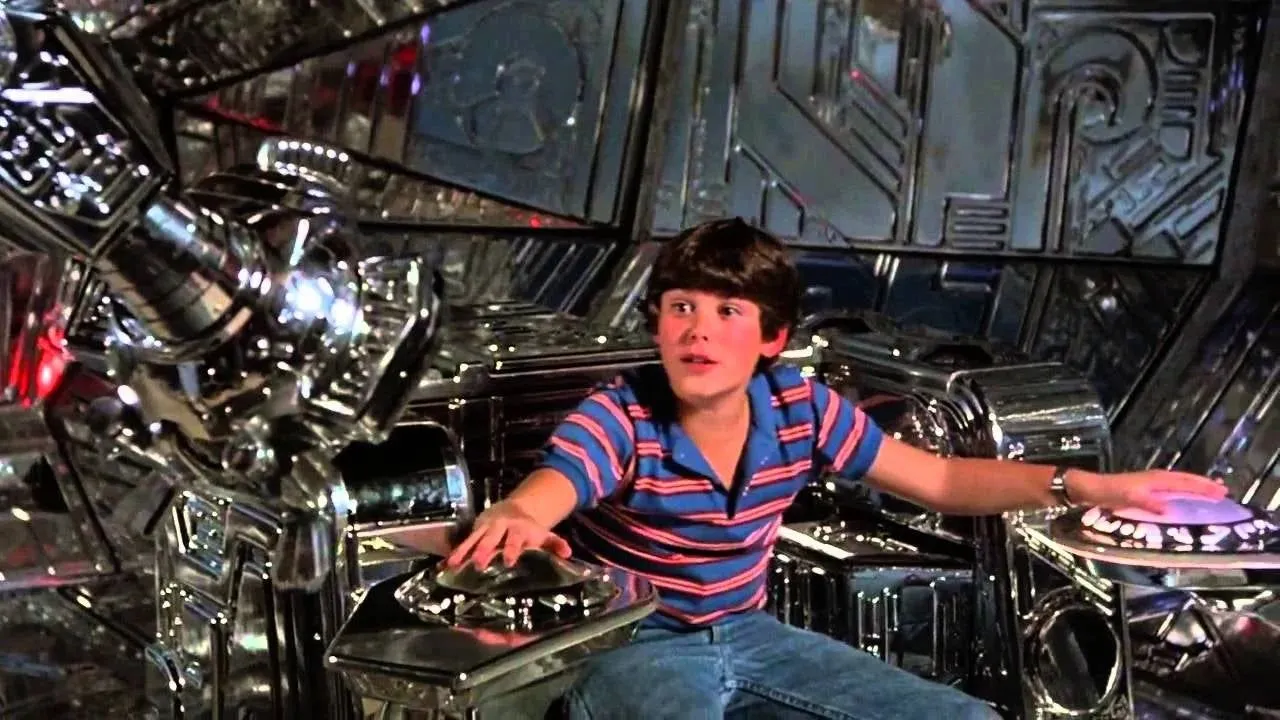
On July 4, 1978, Flight of the Navigator follows 12-year-old David Scott Freeman, who falls into a ditch near his Florida home and wakes to find eight years have passed. The film’s time-dilation premise, space-mission framework, and later cult success matter because it shows how major storytelling can make hard physics feel graspable.
“Flight of the Navigator” hit theaters in 1986, but its real trick is set on July 4, 1978. Twelve-year-old David Scott Freeman falls into a ditch near his Florida home, blacks out, and wakes up to find that eight years have passed for everyone else. In his new 1986 reality, strangers are living in his house, his little brother is now his big brother, and David is declared dead. If that sounds like it belongs in a Nolan script, it’s because the film is doing something unusually sophisticated for a Disney family movie: it uses time-dilation as the emotional engine, not the special-effect accessory.
And the physics hook is not just vibes. The story ties the eight-year time slip to “light speed theory,” the idea that “time slows down as you approach the speed of light.” David, the film explains, is unwittingly taken on a ride in a Trimaxion drone ship, making the round trip to the planet Phaelon, some 560 light years away, in a mere 4.4 solar hours. So yes, the movie is playing with relativity long before “Interstellar” made audiences feel smug for understanding it. More importantly for decision-makers looking at media, product education, or any knowledge-heavy narrative, it proves you can smuggle a difficult concept into a storyline kids can actually follow.
That leads to the first surprising business lesson: ambition and accessibility can coexist, even when the incentives inside a studio push the other way. When director Randal Kleiser joined the project, he was coming off “Grease,” the highest-grossing movie of 1978, and he walked into disagreement over what the film should be. Disney wanted a family movie “with dancing little animals,” while production partners at Producers Sales Organization (PSO) wanted something “a little edgier,” including their preference for “the army come in and shoot down the spaceship.” The compromise they landed on kept the movie from going full action-thriller, but the opening act remains “surprisingly bleak and emotionally complex.” That tonal tension is exactly why the film is still discussed as more than nostalgic decoration.
Now zoom into casting, because the credibility of the “kid understands relativity” bet rests on performance. The role demanded a lot: David has to move through confusion, alienation, and a new reality that reshapes his family itself. Kleiser ultimately selected Joey Cramer, a young Vancouver native, after Cramer beat hundreds of other kids to the part, including future Hollywood stars Chris O'Donnell and Joaquin Phoenix, who appeared in “Space Camp” the same year. Kleiser said Joey was “so easy to get to cry,” adding that his audition performance was also so “personable and likeable” that it put him over the top. In other words, the film doesn’t ask kids to do intellectual heavy lifting without giving them emotional footing.
Then comes the part where the story stops being only a physics lesson and becomes a full sci-fi playground. David’s co-star is Max, a spacecraft nicknamed Max and voiced by Pee-wee Herman star Paul Reubens (credited here as Paul Mall). Max reveals that David is one of several alien species taken to Phaelon for study, plus it introduces the ship’s puppet menagerie, including a hungry little guy who eats David’s hat and the pocket-sized, implausibly cute Puckmaren. Max also drops the key limitation: the ship usually returns test subjects back to the time and place he found them, but David’s human physiology is too fragile to make the journey back to 1978. That forces the plot into its second narrative engine, the chase and the partnership.
To access the maps David’s brain now contains, David has to escape from a top-secret NASA facility, then hitch a ride on the Trimaxion ship. The source notes the movie’s escape is “credibility-stretching,” including questions about the security guards. From a reader’s standpoint, that’s not a minor quibble. It shows how the film balances scientific framing with the looseness required for adventure storytelling. It’s also why the film transitions into childhood wish-fulfillment: David and a fast-learning AI become BFFs on the run from authorities, and the alien mission becomes a kind of emotional homecoming quest.
The other half of the “why this feels ahead of its time” argument is visual technology, and it’s connected to real production decisions. The spaceship exterior is described as a mirrored, shapeshifting update of the classic flying saucer design popularized by “The Day the Earth Stood Still.” Kleiser “persisted” with the reflective surfaces even after advice from a former University of Southern California classmate, George Lucas, who warned those reflections would make the ship “more trouble than it’s worth.” The source adds that by the time “The Phantom Menace” was released 13 years later, Lucas had changed his mind, suggesting influence might have gone both directions. Kleiser also describes the practical moment of inspiration, seeing reflections while driving behind a big silver truck, and then the long road to making it real. After several unsuccessful experiments involving silver paint and mylar glued to paper plates, salvation came from Kleiser’s brother Jeff, who worked on the VFX for “Tron” and was a pioneer in the nascent field of computer graphics.
Despite the inventive ship and a happier ending than “Interstellar” (David does eventually make it home), the film struggled at the box office. It found its audience on home video and became a cult classic. Kleiser later suggested the original problem was marketing, saying, “I think maybe it just wasn’t marketed properly,” and he noted many people like the fact that it explored how time travel could change a sibling relationship. The strategic implication for executives is straightforward: if you build a product that can teach without talking down, you still have to package it so the right viewers show up. Great storytelling can underperform in the market, not because it lacks intelligence, but because distribution and positioning fail to match the audience.
So what should peers take from this 40th anniversary moment? “Flight of the Navigator” demonstrates a rare combination: it makes relativity emotionally legible, it uses production creativity instead of leaning on genre clichés, and it survives the initial commercial miss through later discovery. In an era where platforms reward both watch time and repeatability, the film’s path to staying power is a reminder that time-dilation, for audiences, can be real. You might not land at the opening weekend. But if the concept is genuinely smarter than it looks, it can still become the reference point for what comes next.
This story's Key Insights and Take-aways are locked.
Create a free account to unlock Executive Actions for one credit.
Register to UnlockAlways free for Executives Club members. Join the Club
More in Science

Alaska's 1,580-foot tsunami had warning signs. Scientists just found them.
Rapid glacier retreat, heavy rainfall, and thousands of tiny tremors preceded Alaska's 1,580-foot tsunami, a warning for every coastal community in a warming world.

The rare mutation that lets high-risk brains dodge Alzheimer's
Scientists found a natural defense against protein buildup, opening a new path to preventive treatments.

3,000 steps a day may halve Alzheimer's decline, study finds
New research links a modest daily walk to less tau buildup and nearly half the cognitive and functional decline, even for those with early signs.