

Foreign Affairs warns Europe and China are set for an unavoidable trade-war clash
The magazine argues a trade war is structurally baked in, and leaders cannot wish it away.
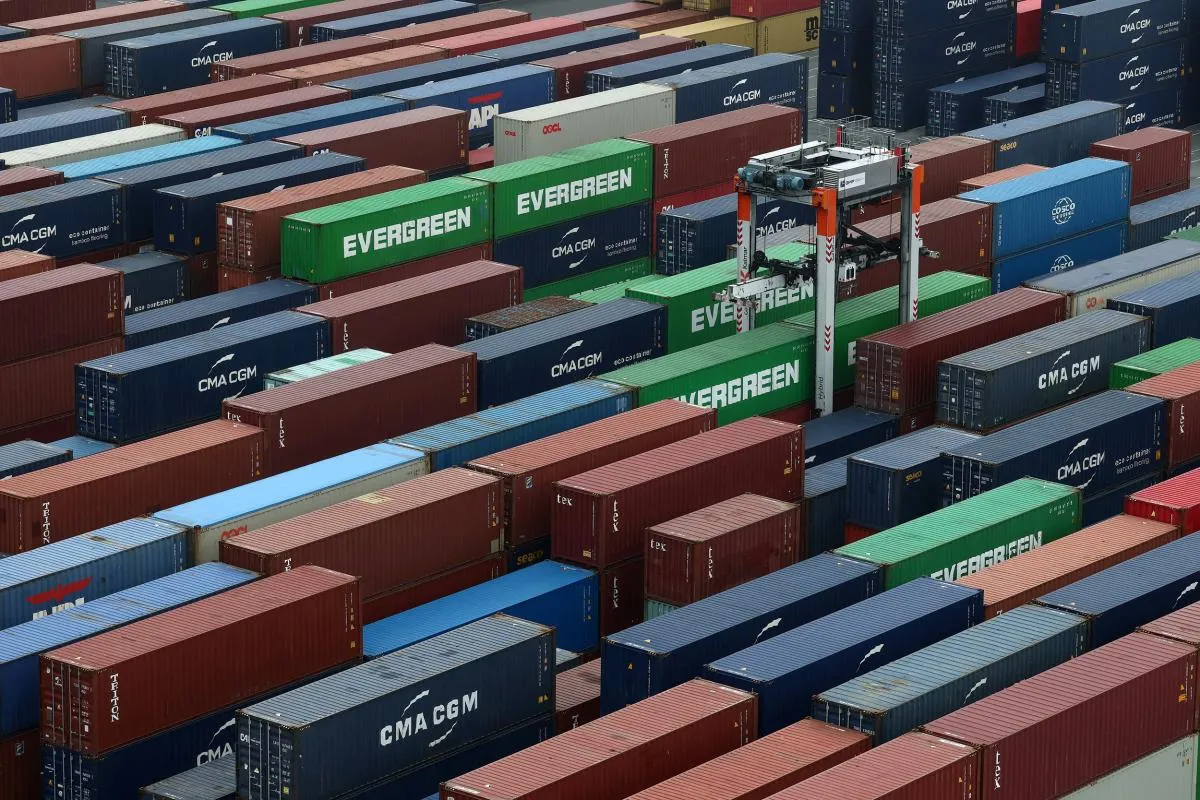
Foreign Affairs frames a coming clash between China and Europe as a trade war that cannot be avoided. For decision-makers, the consequence is clear: plan for escalation dynamics, not optimism.
Foreign Affairs argues that Europe and China are headed toward an unavoidable clash, with a trade war not something leaders can negotiate away with good intentions. The core claim is simple and high stakes: when two large economies structure their competition around industrial policy, market access, and supply chain control, escalation tends to become self-sustaining.
That matters because “trade war” is not just tariffs in isolation. It is the packaging of industrial decisions into economic leverage. Once countries start treating specific sectors as strategic, trade policy stops looking like normal market bargaining and starts looking like national strategy with spreadsheets. Foreign Affairs’ framing is that this shift in incentives makes avoiding conflict harder with every policy cycle, because every side builds tools that are also weapons. Even if no one wakes up craving a fight, the systems they create pull them toward one.
For European decision-makers, the pressure is amplified by how EU trade and competition governance works in practice. Europe does not negotiate trade as a single bilateral relationship with a single counterparty. It operates through a blend of national politics, EU-level regulation, competition enforcement, and sector-specific industrial strategies. That means leaders face internal constraints while also responding externally. If one member state is pushing for protection in a politically sensitive sector, or if regulatory authorities are escalating scrutiny over foreign state-linked supply chains, the EU as a bloc often has fewer off-ramps to de-escalation. Foreign Affairs’ “can’t be avoided” thesis fits that reality: once domestic politics and regulatory posture harden, external concessions become harder to sell.
On the China side, the same logic points toward structural entrenchment. China’s model has long included a strong role for industrial upgrading and state-backed coordination. When China’s industrial trajectory intersects with Europe’s regulatory standards and competition frameworks, the conflict is not only about who sells what. It is about rules, subsidies, downstream control, and whether economic power is considered fair competition or disguised policy. When both sides believe their approach is defensive and the other side’s approach is aggressive, the negotiating baseline shifts. You end up not with “two parties can compromise,” but “two systems defend themselves,” and defense tends to look like retaliation.
This is why a trade war, as Foreign Affairs frames it, can become difficult to prevent through ordinary diplomacy. Normal diplomacy assumes that both sides can return to a shared playbook after a disagreement. But when incentives are anchored in industrial policy, regulatory frameworks, and national security judgments, returning to “the old normal” may not be feasible. Each round of friction creates new constituencies inside each economy: firms that benefit from protection, agencies that justify new enforcement, and politicians who find leverage useful. Those constituencies do not disappear because a summit was held.
Executives should also understand the board-level second-order effects embedded in this kind of escalation. Boards typically manage risk through scenario planning, supply chain diversification, and exposure monitoring, but in a trade-war trajectory the risk is not one-dimensional. It can shift demand patterns, force compliance changes, and alter the cost of doing business overnight, depending on how trade remedies and customs enforcement tighten. That means financial risk, operational risk, and regulatory risk can move together, turning what looked like manageable volatility into a more systemic shock.
If you are sitting in a CFO or strategy role in a company that depends on cross-border manufacturing, components, or distribution, Foreign Affairs’ framing implies you should treat this as a planning default, not a worst-case fantasy. The “coming clash” is not just a headline about politics. It is a signal about the direction of travel for rules around industrial competition and market access. The leaders who benefit will not be the ones who bet on a clean diplomatic resolution. They will be the ones who can operate under uncertainty, maintain compliant supply chains, and adapt pricing and sourcing strategies as barriers rise.
The bottom line from Foreign Affairs is blunt: a trade war cannot be avoided. Whether the exact sequence differs, the underlying drivers are the incentives, institutions, and political constraints on both sides. For European and China-adjacent boards and executives, that translates into one clear strategic stake. You cannot rely on friction to magically reverse. You have to prepare for a longer, more structural contest where trade policy becomes a permanent instrument of industrial power.
This story's Key Insights and Take-aways are locked.
Create a free account to unlock Executive Actions for one credit.
Register to UnlockAlways free for Executives Club members. Join the Club
More in Politics

Zelensky removes Ukraine’s Defence Minister Mykhailo Fedorov on July 16, sparking citywide protests
Popular moderniser Mykhailo Fedorov was dismissed after only six months, and Ukrainians took to the streets.

Peter Kyle: Argentina banner after England semi-final was 'entirely inappropriate'
The Labour minister calls out behaviour tied to the Falklands dispute, after Argentina’s Atlanta win and pitchside banner.

At Jay Clayton’s DNI hearing, senators pressed Trump’s election-fraud claims
In a Wednesday confirmation session, the nominee faced pointed questions on whether the fraud narrative holds up.