

Forma proposes a Pink Thermal Baths data center, turning AI heat into community pools
As hyperscalers rush to build, architects ask what these buildings owe neighbors, not just power users.
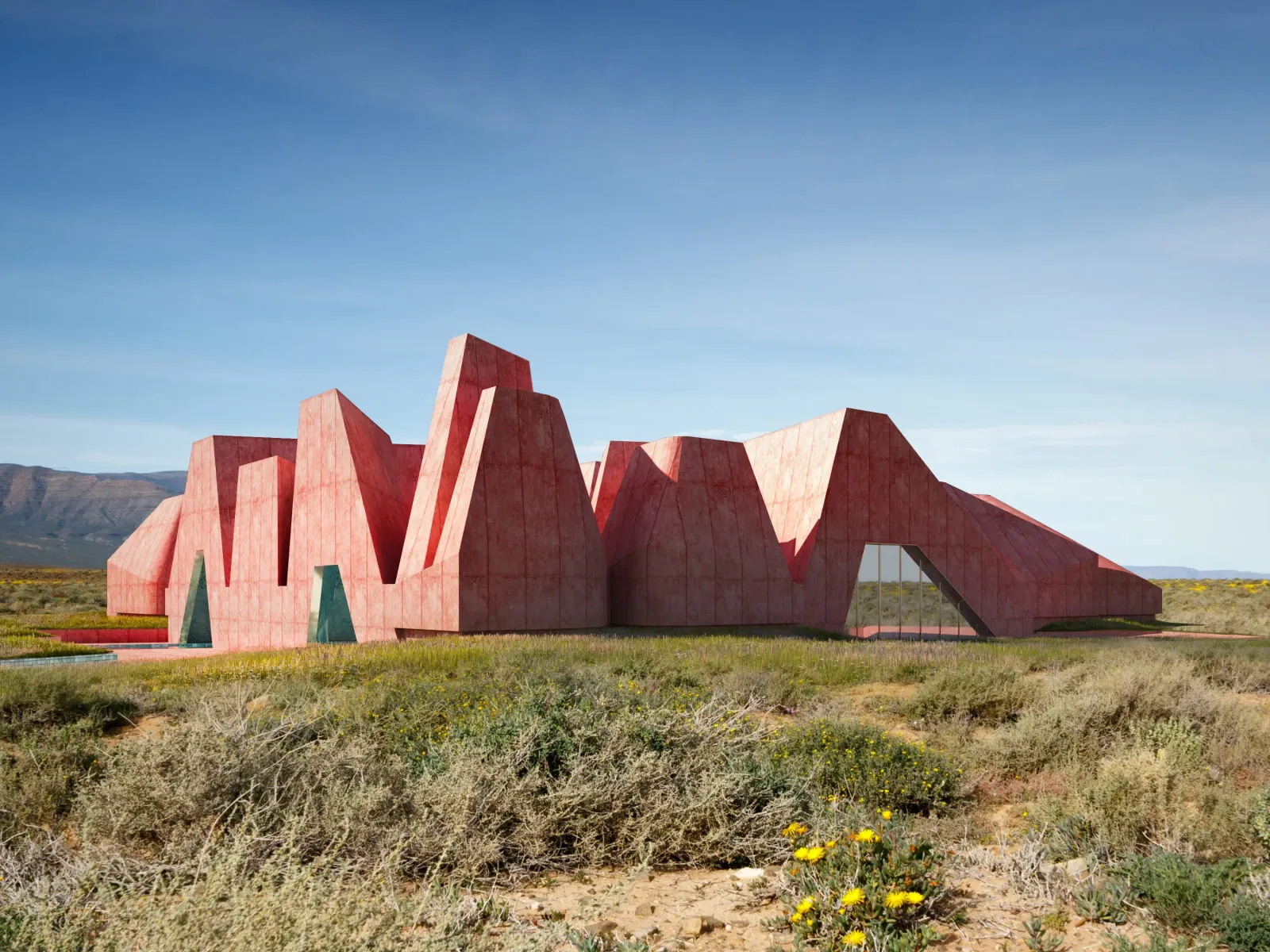
Forma, a New York-based architecture studio, designed its “Pink Thermal Baths” concept in 2021, imagining an underground data center that heats a public bathhouse above. For decision-makers, it reframes the AI infrastructure debate from “who gets power” to “what communities get back.”
Forma’s “Pink Thermal Baths” isn’t exactly the future most people picture when they hear “AI data center.” The concept, designed by New York-based architecture studio Forma in 2021, imagines an underground data center that transfers heat it emits into a public bathhouse above ground. The payoff is civic, not just operational: a community gets a 32,000-square-foot bathhouse where people lounge in pools warmed by subterranean servers.
The more urgent part is why Forma is even asking the question. Miroslava Brooks, a founding partner of Forma, told Business Insider that the concept wasn’t meant to be a blueprint for turning hyperscale AI campuses into spas. It is, instead, a challenge to a growing real-world problem: as computing complexes pop up closer to residential neighborhoods, communities want answers to a plain question. What does the building give back, beyond “energy and the data”? Brooks put it directly, arguing that design needs to go beyond the utility transaction. In a wave where AI infrastructure is racing to market, this is the kind of framing that can either reduce backlash or intensify it.
To understand why architects are suddenly in the governance conversation, you have to zoom out to the incentives that drive data center development. Data centers are not new. They have supported banks, websites, streaming services, and cloud storage for years. But frontier AI model labs have changed the scale and urgency, pushing the industry into a sprint. A Business Insider analysis found that by the end of 2025, more than 1,400 data centers had been built or approved across the US. Virginia has become a hotbed of data centers, and some facilities are being built near residential communities. That proximity is colliding with community concerns that are both practical and political.
The friction is measurable. A 2024 Virginia study found that 29% of operational data center properties were within 200 feet of residentially zoned land, and it warned neighborhood impacts could increase as suitable land grows scarcer. Residents have raised issues about constant noise, water use, and pressure on electricity bills. The social temperature is also rising. A March Gallup poll found 71% of US adults opposed building an AI data center in their local area, including 48% who “strongly oppose” one. When you have that level of resistance, architects are no longer just designing buildings. They are trying to figure out whether design can reduce burdens, or whether it just camouflages them.
And the design constraints are real. Nathan Howard/Getty Images appears in the reporting alongside the discussion of data centers near homes, but the operational constraints come from the other side of the table. Making data centers for hyperscalers usually means prioritizing speed to market, scaling, access to power, and buildings that can adapt as computing equipment changes. Gensler, a San Francisco-based architecture firm, has multiple hyperscaler clients, including Microsoft, and its managing director Thomas McGoldrick said clients prioritize those fundamentals because “they’re all trying to get their product out there as fast as they can to make their business grow as best they can.”
Within those constraints, Gensler tries to make data centers more than “blank, industrial boxes.” McGoldrick described an approach of treating the facility like an “office building that houses computers.” For one complex, Gensler repurposed an old call center campus into a 1 million-square-foot computing facility. In another case, it designed a Corten-steel data center that blends with the local environment, adding a one-acre public park through efficient planning. The pattern is consistent: start with a repeatable prototype, then adjust materials and layout for each site. But McGoldrick also offered an important reality check. There are limits to what architects can control. “There are only so many things that we could control in that environment,” he said. So Gensler tries to be openly honest about what it can do and what it sees in other communities, which is often the first step toward trust when the community’s baseline expectation is skepticism.
Other firms are pushing the conversation into what “back” might mean, and that is where ideas start to sound almost too creative until you remember the underlying problem is infrastructure, not vibes. Arup, a UK-based architecture and engineering firm, is exploring how the standardized data center box could change when brought into a city. Rachel Atthis, an Arup director, said the traditionally long, low building may need a smaller footprint and more height, scaling multiple stories. Bringing a data center into town, she said, means architects have to “turn it on its end.” Arup associate director Marco Mugnai said acoustic screens, landscaped buffers, and changes in site topography can address noise issues.
Arup also imagines data centers that repurpose structures like redundant offshore oil rigs, or pairs them with tomato farms that use waste heat. The point is to connect computing with local use cases, not just local proximity. Still, some of the more ambitious plans require participation from local governments and developers, like district heating networks. Backup power and security requirements also mean some concepts may remain years away, Atthis said. These timelines matter for executives because permitting, community buy-in, and grid upgrades are often multi-year projects, and “future-ready” concepts still have to survive the politics of today.
Forma’s “circular model” mirrors that urgency. Instead of a linear system where electricity enters and heat is expelled, Brooks imagines excess heat turned into public use. A successful data center, she said, would operate across “the ecology, the infrastructure, and the culture or civicness.” That’s a higher bar than aesthetic integration, and it connects to what another architect, Marina Otero Verzier, warned against. Otero, an architect and Harvard Graduate School of Design lecturer, has explored “Computational Compost,” which channels heat generated from a computer into a vermicomposting system that uses worms and microorganisms to create fertile compost for a local garden. But she cautioned that reusing heat alone is not a complete solution because the heat is already a waste product.
Her broader critique is strategic and, frankly, uncomfortable for anyone treating data centers as “just another industrial load.” Otero said parks, lower-carbon materials, and shared heating systems can help, but they are “just not enough.” She argued that the data center blueprint itself needs to be questioned, including whether every type of data must be immediately available, whether facilities need round-the-clock operations, and whether companies’ competitive demands should determine how community resources are expended. In her view, companies should design for different “ecologies of data,” not default to the same high-security, always-on model. She also said, “The needs of OpenAI, Google, Meta are not the needs of the majority of the world,” framing community resources as something that should start with what a community needs, rather than restructuring housing and energy around a data center.
So what does this mean for boards, investors, and hyperscaler leaders who are still scaling at high speed? It means community backlash is not an edge-case risk anymore, and “design” is becoming a governance issue. As more data centers get built or approved, the winners will be the organizations that treat heat reuse, landscaping, noise reduction, and potential district energy partnerships as part of a broader social contract, not a marketing layer. Forma’s bathhouse idea is playful on the surface, but the underlying message is not: in the AI era, infrastructure is going to be evaluated not only by uptime and power, but also by its civic footprint.
This story's Key Insights and Take-aways are locked.
Create a free account to unlock Executive Actions for one credit.
Register to UnlockAlways free for Executives Club members. Join the Club
More in Business

Uber buys Delivery Hero for nearly $15B, vaulting to top food delivery outside China
The deal doubles Uber's dual-services footprint and pushes a ride-and-eats bundling play into 50 more markets.

Epic and Google drop settlement bid, forcing rival Android app stores by July 22
Google told the court it is ready to carry third-party app stores starting Wednesday, July 22.
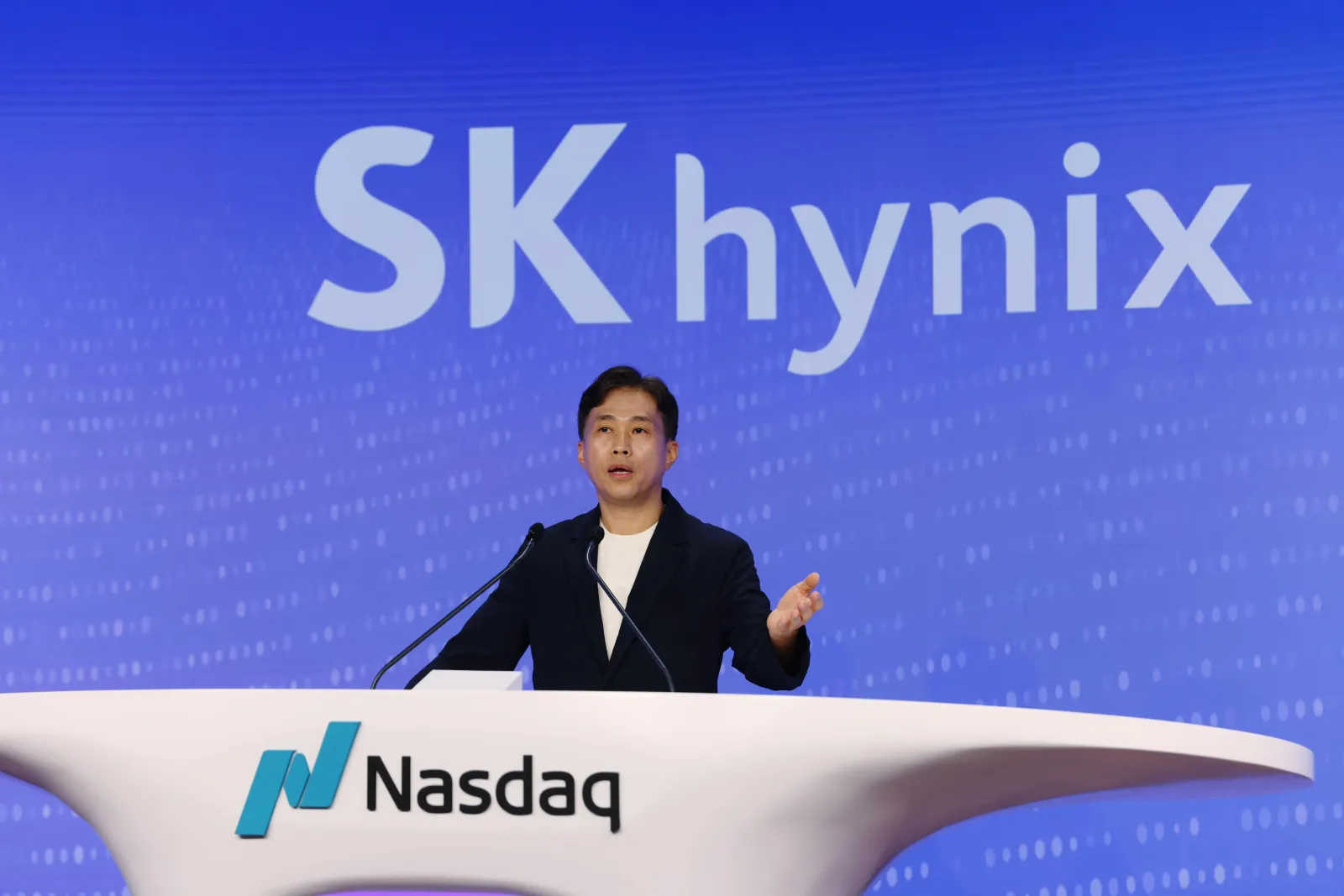
SK Hynix opens at $170, raises $26.5B, and tops foreign IPO records
In Friday's Wall Street debut, SK Hynix turns AI RAM demand into a $26.5B fundraising moment that rewrites comps.