

Four Tet’s unpronounceable glyphs break across streaming apps, confusing everyone
Kieran Hebden (aka Four Tet) released a side project whose title and visuals render differently on YouTube Music, Apple Music, and Bandcamp.
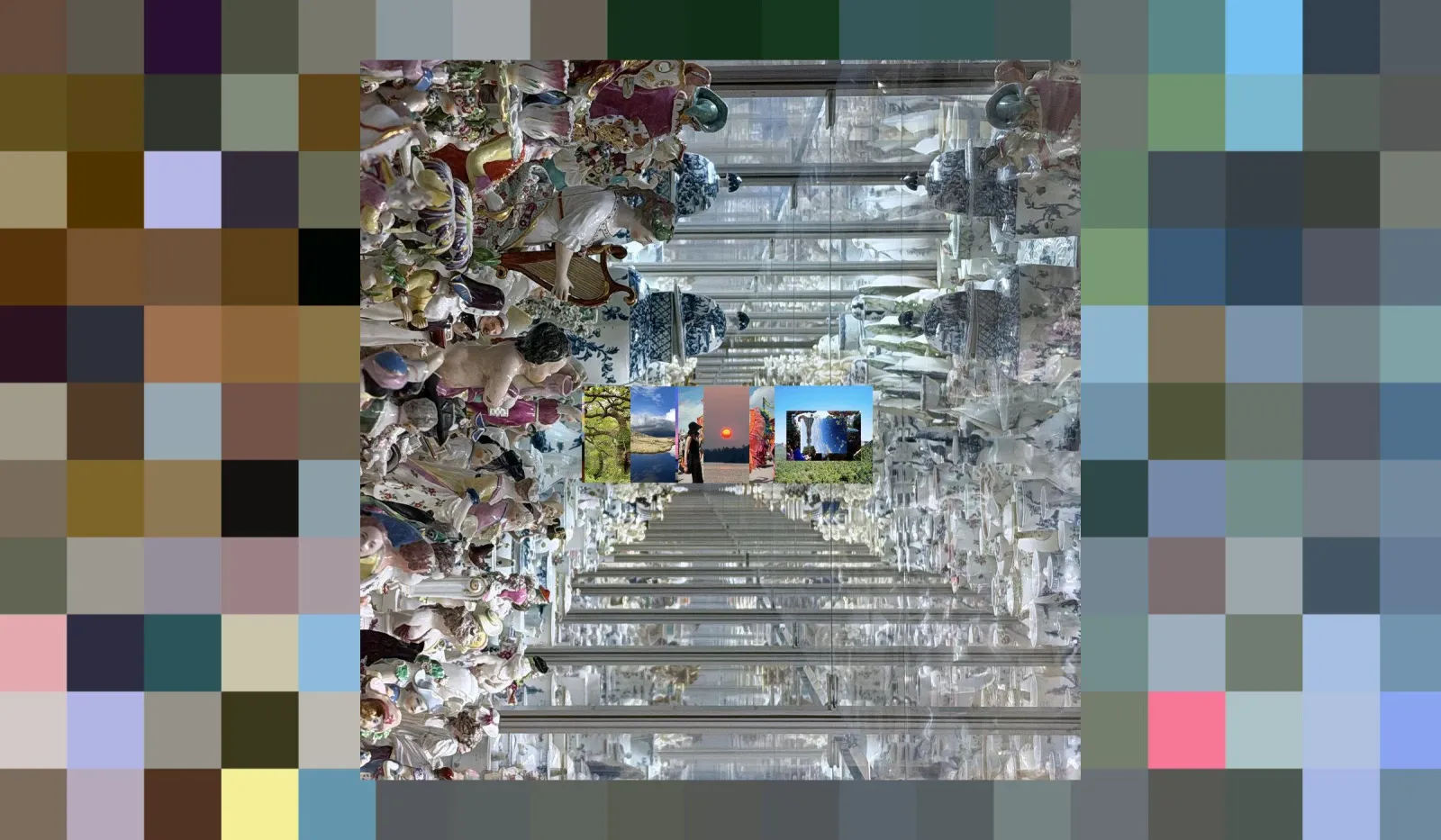
Kieran Hebden, better known as Four Tet, shared a side project defined by an “unpronounceable” series of glyphs used as the artist name. The result is a cross-platform mismatch that makes the work hard to search, hard to say, and inconsistent across major services.
Kieran Hebden, aka Four Tet, has an “incredible side project” that comes with a problem so basic it is almost funny: nobody can reliably pronounce or even consistently view it. The artist name is a string of glyphs, starting with ⣎⡇ꉺլ༽இ•̛)ྀ◞ ༎ຶ ༽ৣৢ؞ৢ؞ؖ ꉺլ, and the whole thing behaves like a glitch you can listen to.
The punchline, and the reason this is spreading in tech and music corners, is that it does not render the same way everywhere. The Verge notes that the project looks one way on YouTube Music, another on Apple Music, and yet another on Bandcamp. Add to that the fact that it is “un-Googleable” and “unpronounceable,” and you have a strange new kind of release friction: it is not about the music being obscure. It is about the metadata being unruly.
So what exactly is the “side project”? The article describes it as a sequence of glyphs presented as the artist name, and it frames the experience as immediately bewildering. If you are expecting something you can search for, type, say out loud, or share in a plain, repeatable way, you get something closer to a typographic puzzle. The first-order effect is obvious. If the name cannot be pronounced, it is harder to talk about. If it cannot be easily searched, it is harder to discover. And if it renders differently across platforms, then even people who click are not all seeing the same thing.
But the deeper story is bigger than “lol weird typography.” Music platforms run on text, and text is the contract between creators and listeners. Streaming services depend on identifiers that stay stable: artist names, track titles, IDs, and the fonts or glyph sets used to display them. When a project leans into characters that do not behave consistently, you force every downstream system to interpret the same input in different ways. That means the audience experience becomes dependent on the platform's rendering pipeline, font coverage, and formatting rules.
The Verge’s reporting is blunt about this inconsistency. It says the work looks one way on YouTube Music, another on Apple Music, and yet another on Bandcamp. It also notes that “it doesn't even render the same way on various platforms,” which matters because those platforms are the distribution chokepoints for discovery. If your artist name is a fragile arrangement of glyphs, you essentially make your brand legible only within the specific environment that renders it correctly.
There is also a cultural layer here. The article compares the situation to Prince, implying that even someone legendary might struggle with a title constructed to resist pronunciation. That is not a market claim; it is a reminder that readability is not just a technical feature. It is part of how artists build recognition. Names are supposed to be repeatable, even when they are stylized. Four Tet has clearly leaned into maximal non-repeatability as an aesthetic choice.
And then there is the “what am I supposed to do with this?” moment. The author’s response is practical: they decide to refer to the project using a simplified label, “from here on out.” That is a tiny detail, but it is the clearest illustration of the stakes. When a title resists standard speech and stable rendering, even writers and curators have to create workarounds. Multiply that by everyone who might share it, recommend it, or embed it into playlists. The barrier is not just at the listener. It spreads across the entire ecosystem of people who mediate discovery.
If you are an executive, board member, or operator watching this kind of thing, the second-order implications are immediate. Platforms and distributors are already racing to optimize recommendation, ranking, and conversion. But those systems assume metadata is workable. When artist names are “un-Googleable” and not consistently displayed, you risk degrading the very inputs that search and recommendation rely on. It also raises a subtle brand risk: different surfaces might show different strings, so the audience may associate the same work with multiple visible identities.
None of this means stylized metadata is “bad.” It means it comes with real operational consequences. The Verge story reads like a side project that turned into a stress test for cross-platform text handling. And it makes a broader point that applies to every modern media company: your UI can look right while your naming contract still fails. If your title cannot be read the same way on the services that matter, the distribution path gets louder, not smoother.
For peers in similar roles, the takeaway is simple and slightly uncomfortable. Even in music, where discovery is often framed as taste, the plumbing of text and rendering still shapes who gets found. Four Tet’s glyph experiment is entertaining on the surface, but it is also a real reminder that interoperability is not optional, and searchability is not a cosmetic feature. It is the difference between being heard and being missed.
This story's Key Insights and Take-aways are locked.
Create a free account to unlock Executive Actions for one credit.
Register to UnlockAlways free for Executives Club members. Join the Club
More in Technology

Google quietly links your phone number to every Android account on your SIM
Adding a SIM now ties your phone number to all Google accounts - and future accounts inherit it. Here's the security and privacy stakes.

Hijacker AI 'Skynet mode' runs 100,000 attack steps against exposed models
Symantec caught a criminal AI agent that borrows other models, steals data, and mines crypto; the only relief is no confirmed victims yet.

Nvidia's AI-financier shift faces its first big test as neoclouds stumble
A rout in neocloud stocks is forcing investors to weigh Nvidia's hidden exposure as both supplier and lender to the AI buildout.