
Fox News apologizes for Kevin O'Leary China proxy claim after he said he had no evidence
The apology followed an on-air accusation about Utah data center opponents, and a later retraction by O'Leary.
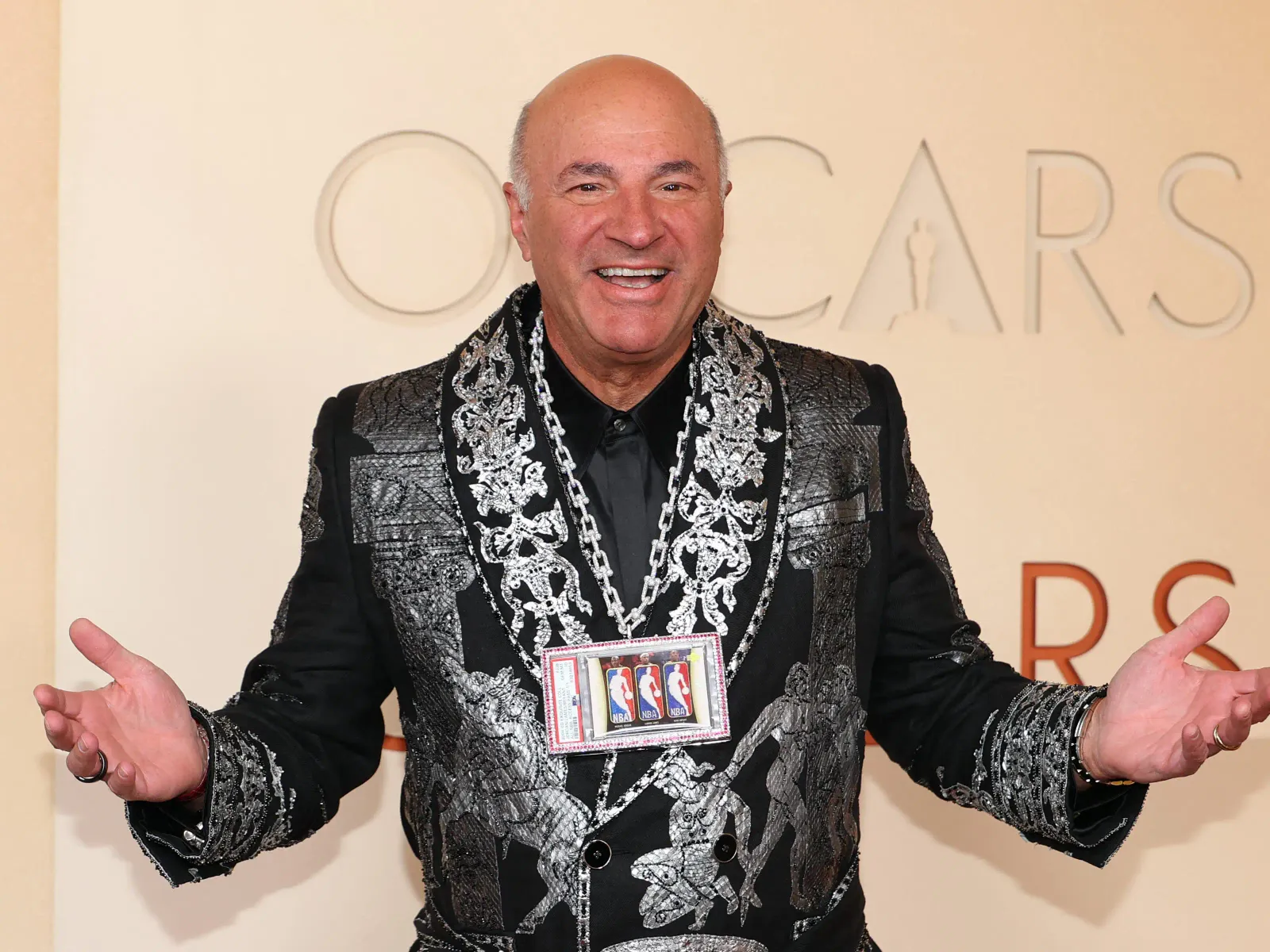
Fox News apologized after Kevin O'Leary, the “Shark Tank” investor, claimed in late May that opponents of his Utah Stratos Project data center were proxies for the Chinese government. For decision-makers watching the AI infrastructure buildout, the incident highlights how easily geopolitics can spill into local permitting fights.
Kevin O'Leary has been one of the most visible cheerleaders for building more data centers. But after Fox News aired his claim that opponents to his Utah project were working with China, Fox later apologized and corrected the record when O'Leary himself said he had “no evidence” for the accusation.
The timeline matters because it shows the public trail a high-profile investor can leave behind. On Fox in late May, O'Leary said there was “only one” adversary behind the pushback, explicitly “It’s China,” and he named groups including the Alliance for a Better Utah and Elevate Strategies. Then, on June 28, Fox News and multiple hosts read rare on-air apologies after O'Leary’s comments. Fox News host Johnny Joey Jones said there was “no evidence” that the groups referenced by O'Leary were funded by or working in coordination with the Chinese Communist Party, adding that “Fox News Media also apologizes for the error.” Fox issues an apology for the segment where O'Leary made the claims, but O'Leary also publicly walked back the basis for it.
In a Facebook post on Thursday, O'Leary said he had no evidence that the opponents he called out on Fox were working with China. His logic on Fox in May was framed around stakes in compute, the grid, and AI development, with the implication that an adversary would benefit from stopping more electrical and compute capacity. But his later “no evidence” framing is the key pivot. For anyone managing brand, regulatory relationships, or community support, that is a very specific lesson: when you make a geopolitical allegation about specific organizations, you are not just giving a talking point. You are placing names into a narrative that can shape local politics and public scrutiny.
The Utah context is already combustible. O'Leary’s data center campus, developed by O'Leary Ventures as the “Stratos Project,” has been a flash point in a broader debate over data centers as the AI boom drives construction. Concerns raised in the reporting include the impact of new data centers on local water and electricity supplies. The article also cites that around 71% of Americans say they don't want a data center built in their area, according to a recent Gallup poll, and that some states are considering legislation to ban new sites. In other words, even without any geopolitical framing, the baseline opposition is high. But high-profile accusations can harden the conflict and expand it beyond zoning and infrastructure into questions of foreign influence and security.
O'Leary’s campus faced “fierce local opposition,” and the company moved earlier in June to cut the size of the 40,000-acre site in half after backlash from local politicians. The reporting notes that this has not stopped O'Leary from continuing to advocate for data center buildout. In a June interview with Business Insider, he maintained that building more data centers was vital for the US to retain its technological edge, describing the competition in global, economic, military, and technological terms. That matters because it helps explain why he keeps leaning into the bigger picture. Data centers are not just local infrastructure in this narrative. They are cast as national capability.
Still, the Fox apology and the “no evidence” correction underscore how narratives collide with proof. According to the article, several Fox News and Fox Business hosts, including Maria Bartiromo, read out rare on-air apologies after O'Leary made the comments. Johnny Joey Jones specifically emphasized the lack of evidence regarding coordination with the Chinese Communist Party and said O'Leary corrected the record. The practical second-order effect for operators is obvious: if national media personalities tie a project’s local opposition to China without evidence, the project may attract not only infrastructure-focused skeptics but also broader political and media attention that can complicate stakeholder conversations.
The impact also hits individuals who get named. Taylor Knuth, a longtime political organizer O'Leary mentioned by name, told Business Insider that his reaction to O'Leary’s follow-up post was, “Oh, that’s nice,” and he joked that getting an apology from Fox News was something he could put on his résumé. Knuth also said he was confused about why he was named in O'Leary’s interviews and noted he formerly served as executive director of the Alliance for a Better Utah but left in early April, before the first public proposal for the Utah data center. Knuth said he does not watch “Shark Tank,” and his comment “I think he knew more about me than I knew about him” captures the asymmetry that can occur when a spotlight figure cites or implies relationships that the person on the ground says do not match their own timeline.
For executives and boards in AI infrastructure, the strategic stakes are simple: the AI race is accelerating data center demand, but the path to permits, utilities, and community acceptance is increasingly political. When media coverage turns into allegations, the risk is not just reputational. It is operational. It can trigger additional scrutiny, complicate negotiations with local stakeholders, and add layers to the governance and compliance work around communications. O'Leary’s episode is not just a media correction. It is a reminder that in contentious infrastructure buildouts, the truth standard is not optional, because the people and places named in the story are not abstractions. They are the ones who have to live with the fallout after the cameras stop rolling.
This story's Key Insights and Take-aways are locked.
Create a free account to unlock Executive Actions for one credit.
Register to UnlockAlways free for Executives Club members. Join the Club
More in Business

Comcast shares jump 25% as it plans to split NBCUniversal and Sky
The tax-free spin-off could reshape focus, funding, and competition across media and tech for years.

Bungie cuts most Destiny 2 staff as Sony says Marathon still matters
Herman Hulst confirms layoffs affecting most Destiny and some Marathon teams after Bungie admits Destiny fell short.

SK Hynix jumps 11% after seeking up to $29.4B in Nasdaq listing
The chip giant filed for a Nasdaq listing plan that could raise $29.4 billion, instantly reshaping investor expectations.