

France vs Spain semi-final: Mbappé meets Yamal for a final berth on Bastille Day
A place in the World Cup final is on the line as France's attack clashes with Spain's midfield control and defense.
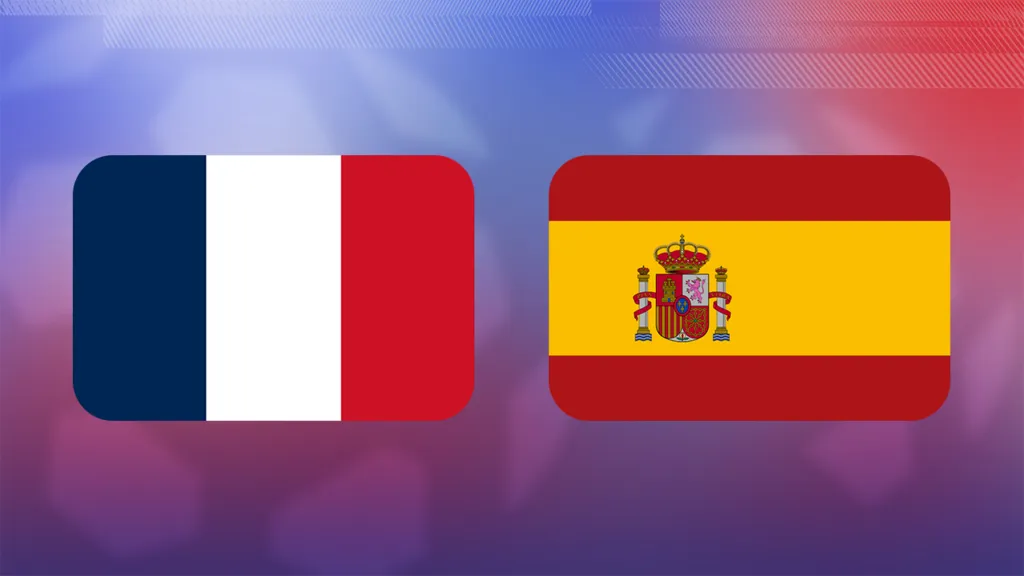
Kylian Mbappé's France play Lamine Yamal's Spain in a World Cup semi-final at the Dallas Stadium on Bastille Day. The match decides who reaches the final, turning attacking firepower and defensive discipline into a high-stakes chessboard.
A place in the World Cup final is at stake as Kylian Mbappé's France take on Lamine Yamal's Spain at the Dallas Stadium on Bastille Day. This semi-final matters because it is not just “two teams playing well.” It is a direct collision between the tournament’s most formidable attacking armada and the smoothest midfield, backed by the stingiest defence.
In plain English: France’s biggest threat is built to punish moments, while Spain’s gameplan is built to reduce them. That is the core tension of this France vs Spain semi-final, and it is why watching it minute-by-minute is not spectator sport. It is pattern recognition at speed. France arrive with the kind of attack that turns pressure into chances. Spain arrive with the kind of midfield flow that keeps games calm, and the kind of defence that makes calm look inevitable.
The style matchup is the headline, but the stakes are the real story. A final berth is the tournament equivalent of a contract renewal with global visibility. One match decides the next fortnight of attention, momentum, and narrative control. For teams, coaches, and support staff, it is also a scheduling and preparation problem: your next opponent is unknown, but your recovery and tactical adjustments cannot wait. For viewers and football stakeholders, it is the moment where the tournament’s best “systems” face off, not just individual stars.
This is also a reminder that modern football is increasingly like an operating model. France’s “attacking armada” is a capability. It relies on timing, spacing, and execution, and it becomes dangerous when transitions are clean and finishing is sharp. Spain’s strength, described as a smooth midfield and a stingiest defence, is also a capability. It is less about one explosive highlight and more about turning possession and structure into reduced risk. Think of it as one team betting on conversion speed, the other betting on error reduction.
There is a second-order implication here for anyone who pays attention to how boards and executives think, even outside sport. In high-stakes environments, people often ask, “Who has the better talent?” But the more durable question is, “Who has the better system under pressure?” France’s system is designed to generate attacking volume and sharpness. Spain’s system is designed to manage tempo and absorb pressure without giving away the kind of openings that elite attackers punish. When those systems meet, the game often becomes a referendum on fundamentals.
And yes, this is also a reminder that tournament football compresses decision-making. In a league season, teams can correct for weeks. In a semi-final, you correct in minutes. Substitutions are choices with tradeoffs: energy, matchups, and tactical shape, all under the clock. Defensive discipline can turn from plan to panic if the wrong moment breaks the structure. Meanwhile, the attacking side has to decide how much to chase without leaving the midfield unprotected. The matchup between France’s attacking threat and Spain’s midfield control is essentially a time-and-space negotiation, conducted in real time.
Bastille Day adds its own layer of symbolism. The match is taking place on France’s national day, at the Dallas Stadium, which makes the setting feel bigger than the sport alone. In events like this, audience attention can spike, and narratives build faster. That matters because semi-finals are where reputations harden. Fans and pundits do not only evaluate outcomes; they evaluate identities. France will want to look like the best attacking version of themselves. Spain will want to look like the best version of control, the team that makes even elite attackers look like they are chasing shadows.
So the strategic stake is simple: one team walks into the final, and the other goes home with what-ifs. If France can turn their attack into sustained pressure and clear chances, they force the tournament’s “system” thesis into a test of finishing. If Spain can keep the midfield smooth and the defence stingy, they turn France’s best weapon into an expensive problem, one that looks harder the longer it goes without payoff. That is why this France vs Spain semi-final is a mouthwatering clash of styles and why the live, minute-by-minute commentary is more than background noise. It is the only way to fully see which system is winning the war of small decisions, one moment at a time.
This story's Key Insights and Take-aways are locked.
Create a free account to unlock Executive Actions for one credit.
Register to UnlockAlways free for Executives Club members. Join the Club
More in Politics
LA County: DOJ's 20,000 'noncitizen' voter list is 'unreliable,' includes U.S.-born
Preliminary review by Los Angeles County election officials finds errors in the federal list, raising the stakes for voter roll integrity ahead of November.
Trump's $1.5B Pentagon chip investment lands in North Carolina
A $1.5 billion defense infusion for North Carolina chipmaking signals a new era of Pentagon-backed reshoring - here's what it means for the industry.
Nigeria confirms first Ebola case in Abuja, a woman just off a Uganda flight
Health Minister Muhammad Ali Pate says the patient flew in from Uganda, putting Africa's latest outbreak on Nigeria's doorstep.