

Fumito Ueda: “so fortunate” fans hunted Shadow of the Colossus' last secret for a decade
After PlayStation wiped old forums, creator Fumito Ueda explains why fans keep circling his worlds, even years later.
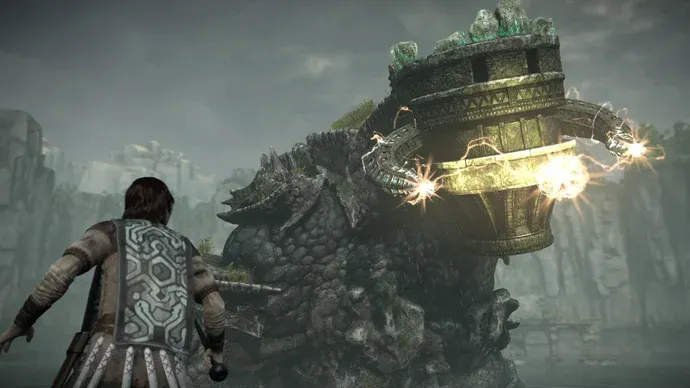
Fumito Ueda, creator of Shadow of the Colossus, told Eurogamer that he feels “so fortunate” people want to be in his worlds, following the reveal of his latest game, Gen Atlas. The long-running fan search for a final secret survived platform disruption, offering a blueprint for how audience communities outgrow infrastructure.
If you were online for the late PS2 and PS3 era, you might remember the kind of fandom that does not just play games. It investigates them. A dedicated group of secret hunters spent almost a decade convinced Shadow of the Colossus, one of Fumito Ueda’s most acclaimed titles, had one last mystery hidden inside it.
Now, speaking to Eurogamer after the reveal of his latest game, Gen Atlas, Ueda addressed the obsession head on. He said he feels “so fortunate” that people want to be in his worlds. That matters because it is not a throwaway compliment. It is a direct response to something that has become rare in modern gaming: a community that treated a game like a living puzzle, long after the original play session ended.
To understand why this story lands, you have to remember the platform context. Eurogamer points out that it has been six years since PlayStation “nuked its forums,” taking with it one of gaming’s most legendary secret-hunting communities. When those forum spaces disappeared, the group did not quietly vanish. The hunt and the interest did not disappear into the void. Instead, the fascination persisted, even as the infrastructure around it got erased.
That is a big deal for anyone in a product, publishing, or investing seat, because it highlights how “audience” is not just a number. It is also a set of behaviors that can outlive the tools and channels that originally supported them. Forum discussions, guides, and speculation are often the accelerant, but the underlying engine is usually the same: shared curiosity plus time. In this case, the time investment is the headline fact Eurogamer emphasizes, “almost a decade,” and the curiosity is anchored in a specific, recognizable work: Shadow of the Colossus.
There is also an incentive question hidden inside Ueda’s comments. When a creator says “so fortunate” that people want to be in his worlds, he is acknowledging that his games are not only consumed, they are entered. Players do not just experience the story and move on. They return, re-interpret, and keep searching for meaning and resolution. For decision-makers, the second-order implication is that creators who build worlds with interpretive depth can generate durable engagement even after platform changes.
This is where modern gaming economics gets weird. In a world of algorithmic feeds and short attention cycles, long-horizon communities look like an anachronism. But they keep reappearing, usually around games that reward not just skill but theorycrafting, exploration, and obsessive verification. Shadow of the Colossus is one of those rare titles, and the secret-hunting effort Eurogamer describes is essentially proof that players will supply their own momentum for years.
Another layer is governance and platform control, even though Eurogamer does not pivot into policy language. When PlayStation removed its forums, it effectively removed a major “public square” where knowledge and hype could accumulate. Regulators and lawmakers across tech have been increasingly focused on platform accountability, content moderation, and user rights. Even without getting into formal regulatory specifics here, the practical business risk is clear: if a platform can delete the community infrastructure, the community becomes more dependent on wherever it can regroup. In other words, your brand heat can persist, but your distribution channels and knowledge hubs might not.
So what does this mean for Ueda and for Gen Atlas? The reveal itself is the timing anchor in Eurogamer’s reporting. Ueda speaking after the Gen Atlas reveal is not just PR padding. It is a signal that he understands the audience dynamic he helped create. The “world” framing matters because these games, historically, have leaned into atmosphere and mystery rather than checklist quests. When fans treat mystery like a long-term project, creators have something valuable: a built-in audience that wants to stay in your ecosystem of interpretation.
For executives and boards, the strategic stakes are straightforward. A game that can trigger a nearly decade-long search is demonstrating something capital markets often struggle to quantify: durable, community-driven engagement. That engagement does not necessarily require constant platform support. It can migrate, re-form, and continue generating attention.
The uncomfortable part, and the reason this story is worth your focus, is that platforms can still vanish the channels people use to coordinate. If your engagement model depends entirely on one owned community space, you are exposed. If your product creates the kind of fandom that persists through forum nukes, you are building a moat that is harder to delete.
Ueda’s “so fortunate” line is warm, but the underlying reality Eurogamer describes is operational. Fans can outlast infrastructure. Mystery can outlast release cycles. And when a creator’s worlds give people a reason to keep searching, the community becomes an asset that survives even when the original home gets taken away.
This story's Key Insights and Take-aways are locked.
Create a free account to unlock Executive Actions for one credit.
Register to UnlockAlways free for Executives Club members. Join the Club
More in Entertainment

Christopher Nolan’s “The Odyssey” posts his biggest Tuesday haul, surpassing “The Dark Knight’s” record
The film’s Tuesday breakout reframes Nolan’s box-office ceiling and forces competitors to rethink timing, budgets, and release strategy.

Kacey Musgraves cancels Aug. 20, 29, Sept. 2 Middle of Nowhere shows
Ticketmaster emails are telling fans refunds are coming, while the tour still starts Aug. 21 in Chicago.

Billie Joe Armstrong launches Epiphone Les Paul Junior and Marshall 1959BJA signature gear
Two limited releases turn decades of Green Day’s tone into branded hardware, including Marshall’s first artist amp in 14 years.