
Galaxy Z Fold 8 Ultra dials power-user upgrades against Z Fold 7 baseline
Samsung’s first true Ultra-style foldable shifts design and software for enthusiasts. Here’s what changes, and why it matters.
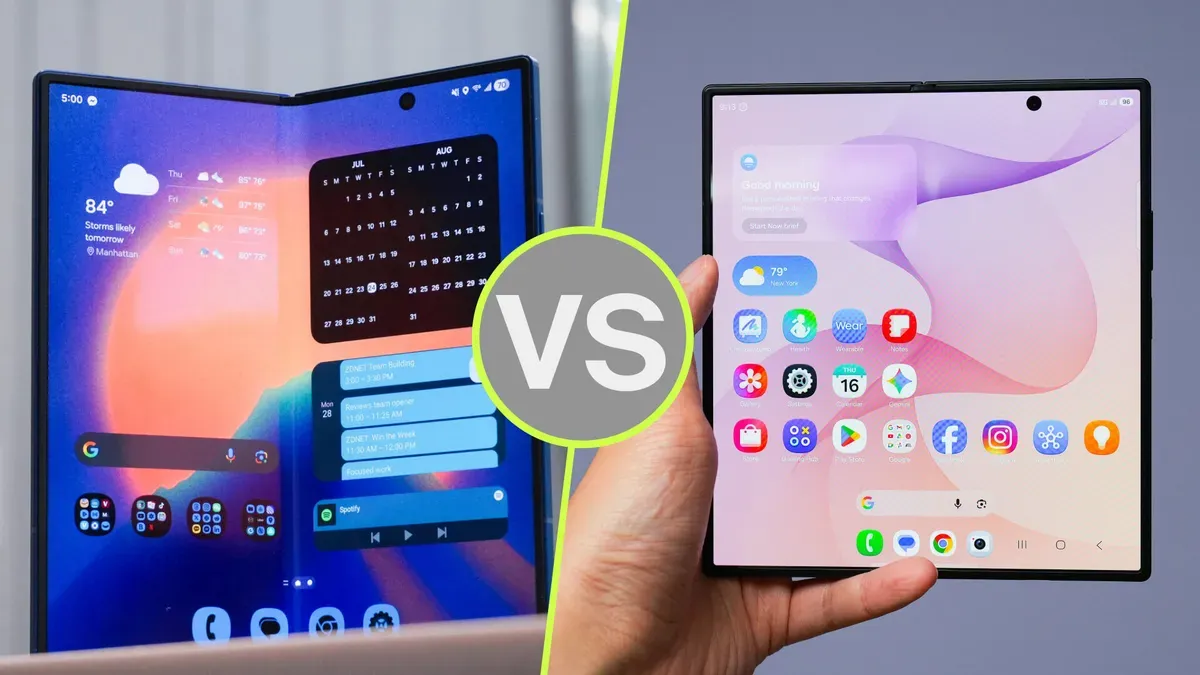
Samsung introduced the Galaxy Z Fold 8 Ultra, positioning it as the first “Ultra” foldable in the Z series, with design and software updates aimed at power users and enthusiasts. For decision-makers, the move signals Samsung is sharpening its foldable segmentation, which could reshape how competitors price and differentiate flagship foldables.
Samsung’s Galaxy Z Fold 8 Ultra is a clear attempt to do something the foldable market has needed for a while: separate the “nice-to-have” enthusiast devices from the “this is for power users” premium tier. The headline feature is exactly that. Samsung says its new Fold 8 Ultra brings design and software changes aimed at power users and enthusiasts, and then implicitly contrasts that direction with last year’s Z Fold 7.
The most important part for buyers and for executives watching the product ladder is the framing. Samsung is not treating the Ultra name as cosmetic. The company is positioning the Fold 8 Ultra as a step designed for people who actually wring value out of their phones, not just people who like big screens. The Fold 8 Ultra therefore matters beyond fan excitement because it is an attempt to make the foldable category feel more like the mainstream flagship phone space, where tiers are built around differentiated use cases.
To understand why this is a business moment, you have to remember how foldables have typically been treated. Foldables are still sold as premium, premium-priced devices, but they often struggle to justify their cost to the broader mainstream audience with clear, repeatable daily benefits. Samsung’s approach with an “Ultra” label hints at a strategy to reduce that friction. Instead of asking customers to believe in the form factor first, Samsung is using product segmentation and software tuning to make the experience itself the selling point.
The Fold 8 Ultra’s design and software changes also land in an industry context where competitors keep trying to figure out what the foldable “sweet spot” really is. Some companies chase hardware spectacle. Others chase durability. Others chase software continuity across inner and outer displays. Samsung’s Ultra positioning is essentially saying it will chase the power-user workflows angle, where software controls and multi-tasking capabilities can be the difference between “cool device” and “my primary device.” Even without getting into specific feature-by-feature claims here, the thrust is unambiguous: Samsung is making its Ultra foldable feel more like a tool.
There is also a regulatory and compliance backdrop that executives tend to underestimate when thinking about consumer devices. In many markets, product categories that emphasize advanced features can become subject to scrutiny around software behavior, user data handling, and accessibility requirements. While the source focuses on design and software changes geared toward power users and enthusiasts, the strategic implication is that Samsung is likely tuning the software experience in ways that must still meet those compliance constraints. That matters because software differentiation is where the competitive edge can be fastest to win, but it is also where compliance and platform policy friction can show up sooner.
Second-order implications go beyond feature lists. An Ultra-tier foldable shifts expectations inside Samsung’s own product stack. It changes how Samsung positions its “regular” Fold models, how it might bundle trade-in offers, and how it persuades retailers and carriers to treat foldables as a more consistent revenue stream rather than a niche bet. For boards and investors, this kind of segmentation can be a stabilizer: when the flagship lineup has a clearer ladder, it can improve forecasting and reduce the risk that the market treats every new foldable as interchangeable.
For peers, there is a simple competitive question hiding inside Samsung’s decision. If the Fold 8 Ultra is built for power users and enthusiasts, what does that imply for what the Z Fold 7 was built for? Last year’s Z Fold 7 becomes the reference baseline for value, and the Ultra line becomes the reference point for differentiation. That creates pressure on rival foldables to either match the power-user experience, or to choose a different lane such as battery life, durability, camera specialization, or AI-driven productivity. Either way, the market gets clearer, and the “how do I buy this” confusion reduces.
Strategically, the stakes for decision-makers are straightforward: when Samsung creates an Ultra tier within the foldable lineup, it is training customers, carriers, and developers to expect tiered experiences. If Samsung succeeds in making the Ultra feel meaningfully different through design and software, it can lift the average selling price and improve brand momentum. If it does not, it still provides a blueprint for competitors and for future Samsung products. Either way, the Fold 8 Ultra is a signal that Samsung wants foldables to be more than a spectacle, and more of a daily driver for people who actually use phones like workstations.
This story's Key Insights and Take-aways are locked.
Create a free account to unlock Executive Actions for one credit.
Register to UnlockAlways free for Executives Club members. Join the Club
More in Technology

doubleAI's Maxwell rewrites code while it runs, claims 38x speedups
The Tel Aviv startup's code execution model formally verifies optimizations, turning AI into an agent for the hardware itself.
Saudi military official paid to fly OpenAI bugging suspect's family out, prosecutors say
A court filing says a Saudi military official funded the family's exit and Riyadh offered bail, putting foreign-influence risk squarely on AI boards.

AI researcher's 26,000-word claim: Neural nets aren't tangled after all
Nick Cammarata's Goodfire post has the AI world split - if he's right, monitoring frontier models just got a lot easier.