

Gartner warns AI agentic IT ops will cause outages by 2028, before tool consolidation
Expect more layers, more control points, and deterministic guardrails as agentic workflows raise business-critical disruption risk.
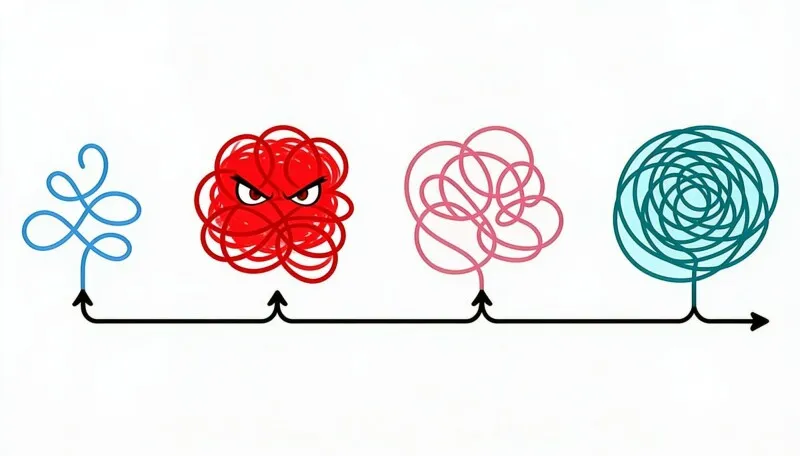
Gartner, in its 2026 Hype Cycle for AI in IT Operations, predicts that by 2030 a quarter of IT infrastructure and operations work will be handled by AI. It also projects a sharp rise in business-critical service disruptions from agentic I&O at scale, alongside a near-term “opposite outcome” to tool consolidation promises.
Gartner’s 2026 Hype Cycle for AI in IT Operations lands with a blunt warning: by 2028, 40 percent of I&O organizations using agentic I/O at scale in production will experience a business-critical service disruption, up from less than 1 percent in 2026. In other words, the first big wave of AI-powered operations is not arriving as a smooth upgrade. It is arriving as operational risk you cannot hand-wave away.
The analyst firm also says the near-term outcome will likely look nothing like the “tool consolidation” narratives. Gartner argues that agents will query multiple systems, reason across silos, and reduce dependence on specialized tools, but then predicts “the opposite outcome in the near term.” The mechanism is practical and unglamorous: “more layers, more control points, and more specialized observability, orchestration and management capabilities.” More AI is not just less software. It is a more complex stack that needs tighter governance.
Why the contradiction? The core promise of agentic IT operations is that AI agents take actions across an environment, not just generate suggestions. That shift forces organizations to connect more systems, automate more workflows, and supervise more moving parts. Even if agents can reduce reliance on some standalone tools, you still need tooling around them: policy, monitoring, orchestration, and incident response that can answer the question boards and incident commanders care about, “What did it do, when did it do it, and how do we stop it?” Gartner’s “more control points” language is basically the admission that your environment grows new choke points as automation expands.
The disruption math Gartner highlights is tied to adoption shape, not theory. Gartner expects that by 2029, 60 percent of enterprises will deploy agentic AI as part of IT infrastructure operations, up from fewer than 10 percent today. It also forecasts a control trade that operations leaders should read carefully: in 2029, just 20 percent of actions suggested by AI will happen after human-in-the-loop approval, down from 80 percent in 2025. Gartner says this shift will happen due to increased use of “deterministic guardrails,” policy-driven rules that determine what an AI is allowed to do.
So the operational future Gartner sketches has a structure: less constant human approval, more pre-defined boundaries. That can be a win, but it also changes what “failure” looks like. With guardrails, incidents may move from “AI did the wrong thing” to “AI hit a boundary we did not define well enough,” or “the system’s assumptions about policy and environment diverged from reality.” The Gartner document implies the workforce and governance model will evolve too. A year later, in 2030, Gartner thinks bosses will have restructured half of all infrastructure and ops teams after investing in agents to handle complex management tasks. And by 2030, Gartner predicts work distribution as follows: 75 percent will be done by humans augmented with AI, and 25 percent will be done by AI alone.
This is where the second-order effects start stacking for executives. First, you cannot treat observability and incident management as “nice-to-have” add-ons while moving toward agentic automation. Gartner rates four tools likely to reach maturity in the next two to five years as the most impactful: Agentic AI Observability, Agentic NetOps, Augmented FinOps, and Multiagent Systems. Agentic AI Observability focuses on observing AI agents and reporting when they go awry, which directly supports governance and cost control. Agentic NetOps automates network management tasks. Multiagent Systems is “self-explanatory,” multiple agents working together to achieve a task. Augmented FinOps uses AI to provide “algorithmically driven cloud budget planning and financial operations,” including automatically optimizing underlying cloud resources and delivering efficient resource utilization and optimal spending by reducing misaligned or poor use of cloud infrastructure and service offerings.
Second, the market categories Gartner expects to mature in the next couple of years point to how vendor ecosystems may consolidate. Gartner calls out “native” vendors that build IT ops tools, as well as GenAI virtual assistants and GenAI-Augmented CloudOps that analyze logs, metrics, traces, configuration, and change events, then create scripts or infrastructure-as-code templates to automate cloud maintenance. Gartner also points to autonomous endpoint management that configures machines with software to match user profiles and handles patches, and network AI and automation tools that monitor networks and recommend configuration improvements to boost resilience. It also mentions “Network AI and Automation,” defined as conversational interfaces for networking equipment.
Third, service providers may be the direct beneficiaries, while most others see downstream performance improvements. That matters for enterprise buyers because vendor value capture can shift. If providers build the agentic layers and expose outcomes rather than raw tooling, procurement and risk teams will need to renegotiate what accountability looks like. Gartner’s document ends up reinforcing that the path forward is not a single decision to “turn on AI.” It is a sequence of architecture, governance, staffing, and monitoring decisions that can either contain disruption or amplify it.
For leaders, Gartner’s message is clear: if you are planning for AI in IT operations, you are also planning for outages, at least during the adoption ramp. The payoff may come when market and vendor consolidation reduce the overall tooling footprint, but Gartner explicitly warns that future consolidation is not the near-term story. That means boards and executive teams should treat agentic adoption timelines as risk-managed programs, not technology refreshes, and ensure deterministic guardrails, agent-level observability, and operational readiness are built before scale turns “potential outage” into “business-critical disruption.”
This story's Key Insights and Take-aways are locked.
Create a free account to unlock Executive Actions for one credit.
Register to UnlockAlways free for Executives Club members. Join the Club
More in Business

Uber buys Delivery Hero for nearly $15B, vaulting to top food delivery outside China
The deal doubles Uber's dual-services footprint and pushes a ride-and-eats bundling play into 50 more markets.

Epic and Google drop settlement bid, forcing rival Android app stores by July 22
Google told the court it is ready to carry third-party app stores starting Wednesday, July 22.
SK Hynix opens at $170, raises $26.5B, and tops foreign IPO records
In Friday's Wall Street debut, SK Hynix turns AI RAM demand into a $26.5B fundraising moment that rewrites comps.