
Gemini and face-ticketing are the World Cup’s fan-facing tech bet
Google drives consumer AI while biometric gates turn a fan’s face into access, reshaping security and customer flow.
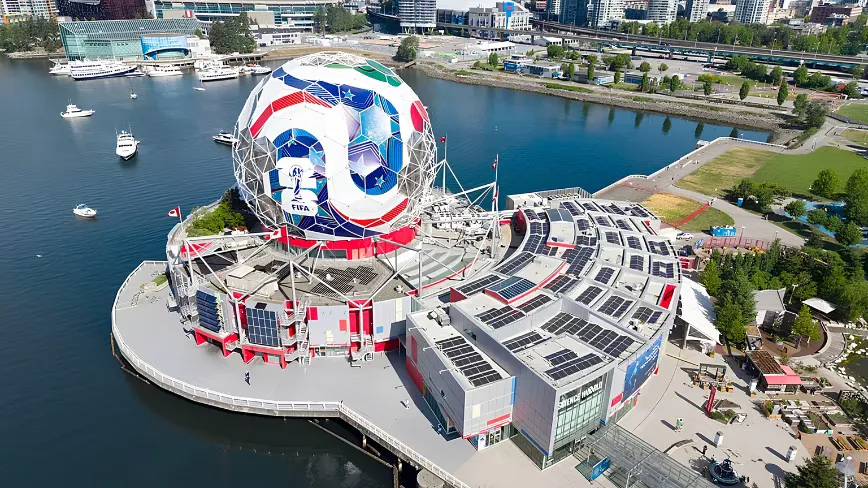
The 2026 World Cup is introducing two fan-facing technology layers: a consumer-AI layer led by Google, and a biometric-identity system that uses a fan’s face as a ticket. For decision-makers, this is a real-world test of how AI convenience and identity controls can coexist at massive scale.
The 2026 World Cup is not just a spectacle. It is also rolling out two technologies that most visitors will actually touch: a consumer-AI layer led by Google, and a biometric-identity layer that turns a fan’s face into a ticket. In other words, the quieter tech story is the one that changes the day-to-day experience, from “how do I get in” to “what do I ask, and what do I get back.”
Put simply: if you are one of the roughly 10 million people expected to show up, you are part of the rollout. The tournament is building a fan journey with two systems running in parallel, one aimed at interaction and personalization through consumer AI, and another aimed at identity verification through biometrics. That combination matters because it forces organizers to prove both can work smoothly without turning matchdays into a tech support hotline.
Zoom out for a second and you see why this is interesting to executives, not just soccer people. Mega-events have a history of adopting innovation in the “backstage” first, when nobody’s watching and the risk is contained. This time, the headline lesson is that the risk is being pushed front and center to the crowd itself. That shifts what “success” means. It is no longer just about deploying technology. It is about operating it under constant pressure: peaks in demand, network variability, crowded physical spaces, and zero tolerance for friction at entry points.
The biometric layer is the most operationally sensitive piece. Turning a fan’s face into a ticket changes the security and access model. Traditionally, ticketing is a document or token problem. You scan a code, you verify eligibility, you move on. With face-based identity verification, the workflow becomes something closer to authentication as a service: the venue has to capture or match facial data, apply rules, and grant access in real time. When the source describes it as a “biometric-identity layer,” the core point is that it is identity, not paper, doing the heavy lifting.
That brings regulatory framing into the picture, because biometrics do not get treated like ordinary identifiers. In many jurisdictions, face data and biometric templates are subject to tighter privacy expectations than, say, an email address. Even if the article does not specify particular regulators or laws, the practical implication for decision-makers is clear: biometrics require governance. You need clear consent flows, data minimization, defined retention periods, and a plan for what happens when matching fails. The operational risk is matched by legal risk, and both can show up at the worst possible time: on a match day, with millions of humans in the system.
Meanwhile, the consumer-AI layer led by Google is aimed at the other side of the fan experience: the interaction layer. Consumer AI at an event is not only about novelty. It is about reducing friction for questions that fans naturally have, like where to go, how to access information, and how to get help quickly. But it also creates its own governance problem. AI experiences are only “smooth” when they are accurate enough and appropriately bounded. For executives, that means the tournament is effectively testing two governance styles at once: biometric governance to control identity, and AI governance to control information quality.
This matters for boards and leadership teams beyond sports because it is a template for what the next wave of consumer experiences might look like. Once biometric gates become normal at scale, other industries will feel pressure to follow. Not because they all want the same tech, but because customers start to expect instant access, fewer steps, and frictionless verification. Once consumer AI becomes normal at scale, customers also start expecting conversational help in real time, not static apps and PDFs. The second-order effect is that convenience becomes an operating system. If you do not adopt, you risk falling behind in perceived service quality.
There is also a strategic dynamic in play. Mega-events are high-visibility deployments, and vendors want credibility. A successful rollout can become marketing proof, but a problematic rollout becomes reputational damage for everyone involved, including the organizer and the technology partners. The stakes are therefore not just technical. They are about trust. Fans have to feel confident that they can get in quickly and that the experience works, while regulators and policymakers have to feel confident that the system respects privacy and security expectations.
So the quieter tech story here is not “AI is coming” or “biometrics are a thing.” It is that the 2026 World Cup is combining a consumer-AI layer led by Google with a biometric-identity system that uses a fan’s face as a ticket, and it is doing it at the scale of millions of visitors. For leaders at other organizations, the strategic question is the same: can you deliver frictionless experiences without breaking privacy, security, or operational reliability? That is the real test hiding behind the fun.
This story's Key Insights and Take-aways are locked.
Create a free account to unlock Executive Actions for one credit.
Register to UnlockAlways free for Executives Club members. Join the Club
More in Technology

OpenAI says 10,000 agents cracked a 90-year math problem in 88 hours
The company's claim is audacious, but one mathematician is pushing back. Here's what it means for AI-driven discovery.
Meta still serves child sexual abuse ads on Instagram in India - BBC report
A new report following the BBC Eye investigation says the ads are still there - what it signals for every platform with a self-serve ad engine.

White House yanks 'Build the Wall' game after Tetris Company copyright warning
The administration's arcade game vanished in hours - and the takedown playbook every brand can learn from.