

George Lucas’ LA museum turns free access into a neighborhood policy
A billion-dollar cultural build in a low-income area comes with free access for neighbors, changing the local incentive map.
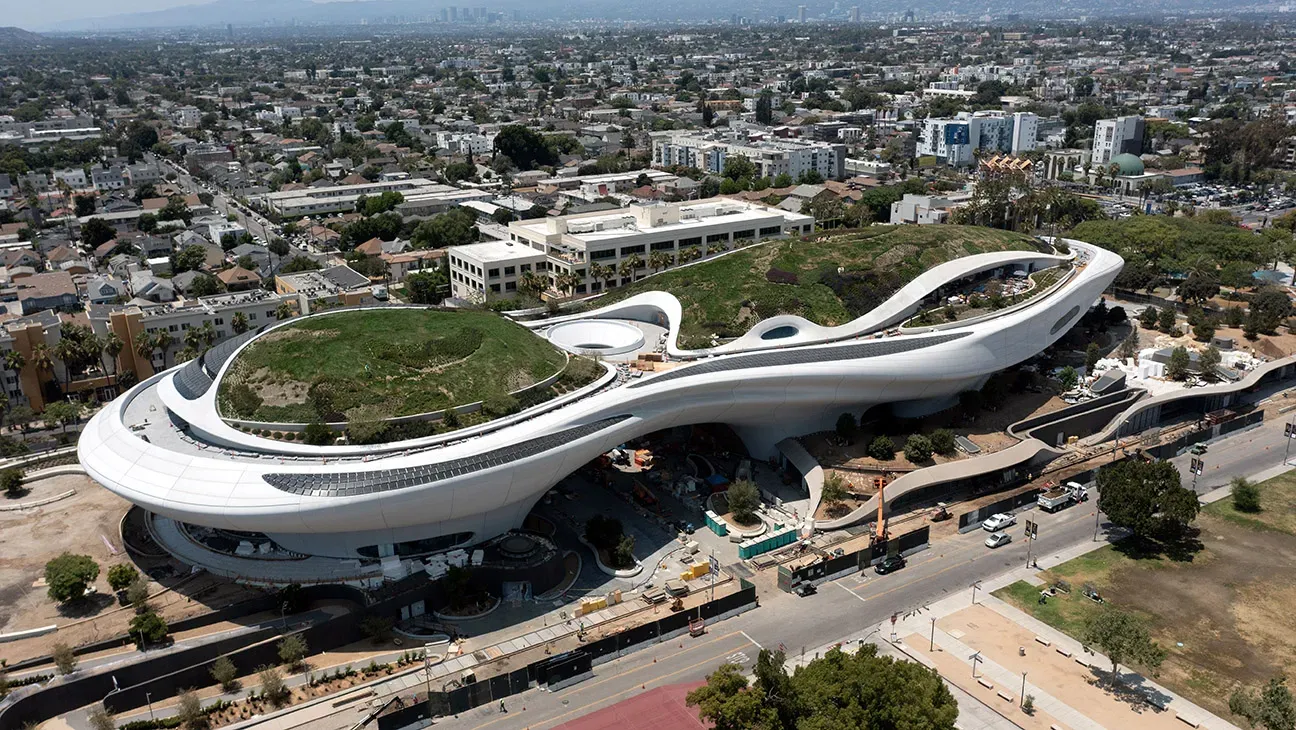
George Lucas' new L.A. museum will offer free access to neighbors, even though it is a billion-dollar cultural institution. For decision-makers, it signals how major cultural capital can be structured to win local legitimacy while still scaling big.
George Lucas’ new L.A. museum is being built as a billion-dollar cultural institution. The twist is how it treats the immediate community: it will offer free access to neighbors, located in a low-income neighborhood where a quarter of the population lives below the poverty line.
That neighborhood detail is not a throwaway background line. If you run in real estate, development, or civic partnerships, you already know the risk profile of a prestige project in an economically stressed area. When a major institution arrives, residents often worry about displacement, pricing out, and the sense that culture is “for other people.” By pairing a massive budget with free access aimed at neighbors, Lucas’ museum is explicitly trading some pricing power for goodwill and participation.
To understand why this matters, it helps to remember what museums are economically, not just culturally. Museums are sticky, long-lived assets that rely on steady foot traffic, memberships, donors, and government or foundation support. “Free access” is more than a marketing move. It is a policy that can reshape who feels invited on day one, which can drive volunteerism, word of mouth, and repeat visits. Over time, those dynamics can matter as much as ticket revenue for institutions that need broad-based support to stay resilient.
The location also changes how stakeholders evaluate success. In a neighborhood where a quarter of the population lives below the poverty line, pricing barriers are not theoretical. Even modest costs can be a real constraint on frequency of visits, education programs, and family participation. So when a billion-dollar institution chooses free access to neighbors, it is effectively removing a major friction point for the people closest to the doors.
There is a second-order governance angle too. Major cultural projects typically involve multiple boards, funders, and partners, each with different risk lenses. Capital projects need funding, approvals, and long-run operating assumptions. Community access policy can become a central bargaining chip. The more a museum depends on philanthropic sentiment and public trust, the more board members and executives have incentive to design programs that reduce backlash and increase perceived benefit.
From a regulatory and policy framing perspective, large institutional developments in low-income areas often live under heightened scrutiny, even when the “rules” are not all the same across jurisdictions. Planning processes can include community benefit expectations, and public-facing promises can influence the political feasibility of future expansions. Even if free access is not a mandated requirement, it becomes part of how regulators, local leaders, and residents interpret the project’s social impact. In practical terms, that can help institutions avoid the slow burn of reputational risk that can escalate when communities feel excluded.
Now zoom out to what this signals for the broader ecosystem of executives and operators building big in public-facing spaces. The story is not just that a museum exists. It is that a high-budget cultural institution is choosing a neighborhood-first access policy right from the start, in an area defined by poverty-rate reality. That kind of decision can influence how peers structure partnerships, negotiate community benefits, and think about audience development beyond affluent segments.
If you are a CEO, CFO, or board member overseeing a flagship facility, entertainment venue, hospital, or even a tech campus with cultural programming, the strategic stakes are clear. Free access is a cost center on paper, but it can function as an investment in legitimacy, participation, and long-term operating stability. In neighborhoods where a quarter of residents live below the poverty line, the difference between “open to everyone” and “free for neighbors” is the difference between being seen as inclusive versus being perceived as extractive.
For decision-makers in similar roles, the takeaway is straightforward but demanding: when you deploy billion-dollar cultural capital, the access model becomes part of the project, not an afterthought. George Lucas’ museum is making that model explicit, and the neighborhood context makes it consequential.
This story's Key Insights and Take-aways are locked.
Create a free account to unlock Executive Actions for one credit.
Register to UnlockAlways free for Executives Club members. Join the Club
More in Entertainment

12TB Steam 'teraleak' goes beyond Valve: GTA 3, Mafia 2 prototypes exposed
A 12-terabyte dump of Steam data reveals prototypes and builds of third-party classics like GTA 3 and Mafia 2, plus unreleased Valve content, rewriting game history.

LinkedIn's romance problem: 1 in 4 workers say dating on it is fair game
A new survey shows a quarter of U.S. employees treat the professional network as fair game for romance, even as LinkedIn bans it and removes hundreds of thousands of offending posts.

Enhypen's first No. 1 album breaks K-pop's Billboard 200 streak
The K-pop group's 98,000-unit debut tops the chart while Dolly Parton's catalog reentry shows how death reshapes streaming.