

Ghost particle hunter Francis Halzen wins Nobel for IceCube
The Belgian physicist's Antarctic observatory cracked open a new window on the universe - and a new era for neutrino science.
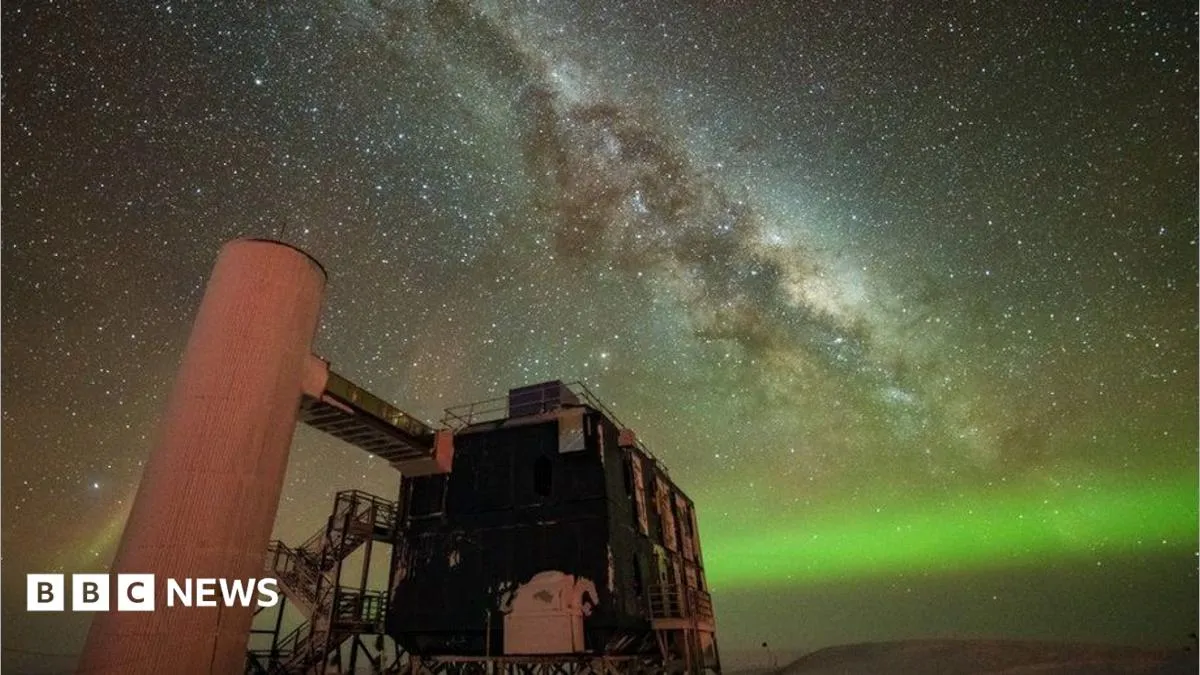
Prof Francis Halzen, the Belgian physicist behind the IceCube Neutrino Observatory, has won the Nobel Prize for his pioneering work detecting ghost particles from space. The win validates a decade of big-science investment and signals that neutrino astronomy is now a strategic frontier for research funding and commercial sensing technology.
Belgian physicist Prof Francis Halzen has won the Nobel Prize for his pioneering work on an observatory that detects ghost particles from space. The award, announced by the Royal Swedish Academy of Sciences, recognizes Halzen's leadership of the IceCube Neutrino Observatory, a cubic-kilometer detector buried a mile deep in Antarctic ice that captures neutrinos - subatomic particles so elusive they pass through matter almost undisturbed. For executives, the honor is more than a scientific milestone: it is a signal that a new observational era has arrived, one with implications for everything from fundamental physics to the commercial sensors that could one day monitor reactors or map the Earth's interior.
Halzen, a professor at the University of Wisconsin-Madison, conceived IceCube in the 1980s and spent decades pushing it from a wild idea to a working instrument. The observatory, completed in 2010, uses thousands of optical sensors frozen into a cubic kilometer of ice to detect the faint flashes of light produced when a neutrino occasionally collides with an atom. By tracing those flashes back to their origins, IceCube has identified high-energy neutrinos from beyond our galaxy - including, in 2018, the first source of cosmic neutrinos ever pinpointed: a blazar, a supermassive black hole firing a jet of particles directly at Earth. That discovery effectively launched neutrino astronomy, giving scientists a new way to study the most violent events in the universe without being blocked by dust or magnetic fields.
The Nobel win lands at a moment when neutrino research is accelerating on multiple fronts. IceCube is being upgraded with a new array of sensors, and rival projects are emerging in the Mediterranean and elsewhere. Governments and philanthropies have poured hundreds of millions into neutrino detectors, betting that they can answer questions about dark matter, supernovae, and the origins of cosmic rays. For decision-makers outside academia, the takeaway is that big-science infrastructure can produce outsized returns - not just in prestige, but in the engineering spinoffs that often follow: advanced photodetectors, data-processing algorithms, and cryogenic systems that find their way into commercial products.
The commercial angle is real but often overlooked. Neutrino detection technology is already being explored for nuclear non-proliferation, because neutrinos stream out of reactors in predictable patterns and can reveal whether a facility is operating as declared. Startups and defense contractors have begun testing compact neutrino detectors for this purpose, and the Nobel spotlight will likely accelerate interest in those applications. For a CEO or CTO scanning for emerging tech, the message is that a physics breakthrough can quietly seed a new industry - just as the discovery of the Higgs boson helped drive advances in superconducting magnets and data analysis that later showed up in medical imaging and machine learning.
There is also a strategic lesson in how Halzen won. He did not build IceCube alone; he led a collaboration of hundreds of scientists from dozens of institutions, funded by the National Science Foundation and international partners. The project took more than two decades from proposal to first results, surviving budget battles, technical setbacks, and skepticism from peers. That kind of patience is rare in the private sector, where timelines are measured in quarters, not decades. But the payoff - a Nobel Prize and a new branch of astronomy - suggests that long-horizon bets on hard problems can still deliver outsized rewards, especially when they combine academic persistence with institutional backing.
For boards and executives, the Halzen win is a reminder that the frontier of science is often where the next wave of technology comes from. Neutrino detectors are already being commercialized for reactor monitoring, and the same sensors could one day be used to image the inside of the Earth, detect clandestine nuclear tests, or even communicate through solid rock. The Nobel Prize will not immediately change any P&L, but it will change the risk calculus for investors and R&D leaders who have been waiting for a signal that neutrino technology is ready for prime time. That signal has now arrived.
The broader context matters too. The Nobel Committee has a history of rewarding discoveries that open new windows on the universe - from X-rays to cosmic microwave background radiation - and each time, the underlying technology eventually ripples into industry. Halzen's win fits that pattern. It validates the idea that fundamental research, however abstract, can create the tools and talent that drive economic competitiveness. For governments weighing science budgets, the message is that basic physics is not a luxury; it is an early-stage venture fund for the future.
For peers in similar roles - whether they run a research lab, a deep-tech startup, or a corporate innovation unit - the practical takeaway is to look for the Halzens in their own fields: the people who have been quietly pushing a contrarian idea for years, not because it is fashionable, but because they believe it is true. The Nobel Prize is the ultimate proof that such persistence can be rewarded. The question is whether your organization has the patience to back the next IceCube before it becomes obvious.
This story's Key Insights and Take-aways are locked.
Create a free account to unlock Executive Actions for one credit.
Register to UnlockAlways free for Executives Club members. Join the Club
More in Science
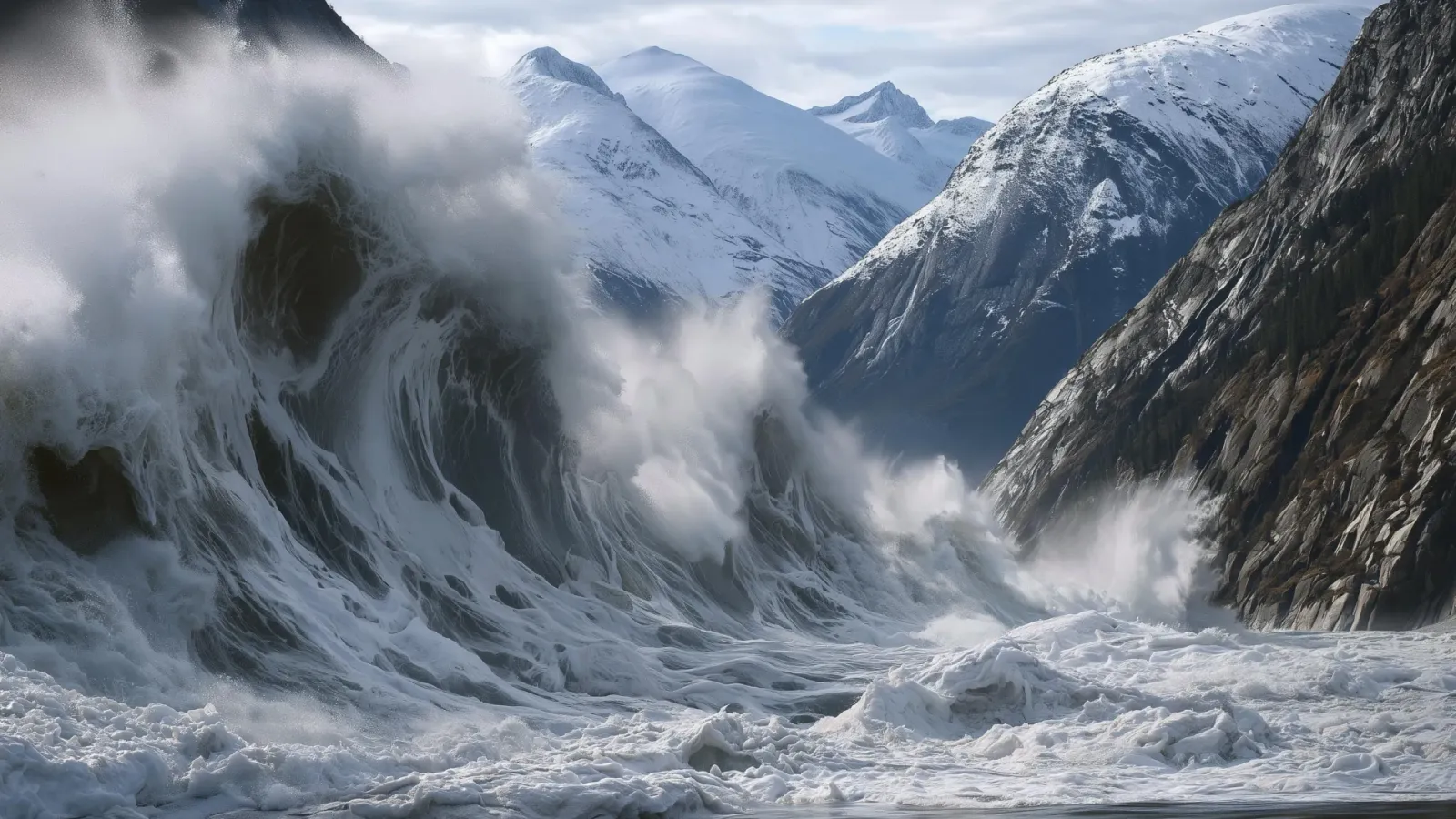
Alaska's 1,580-foot tsunami had warning signs. Scientists just found them.
Rapid glacier retreat, heavy rainfall, and thousands of tiny tremors preceded Alaska's 1,580-foot tsunami, a warning for every coastal community in a warming world.
The rare mutation that lets high-risk brains dodge Alzheimer's
Scientists found a natural defense against protein buildup, opening a new path to preventive treatments.

3,000 steps a day may halve Alzheimer's decline, study finds
New research links a modest daily walk to less tau buildup and nearly half the cognitive and functional decline, even for those with early signs.