
GJ 3378b mass recalculated June 30, study cuts estimate to 2.3 Earths
A nearby super-Earth shrinks in the math, landing it in the habitable zone with better odds for a real atmosphere.
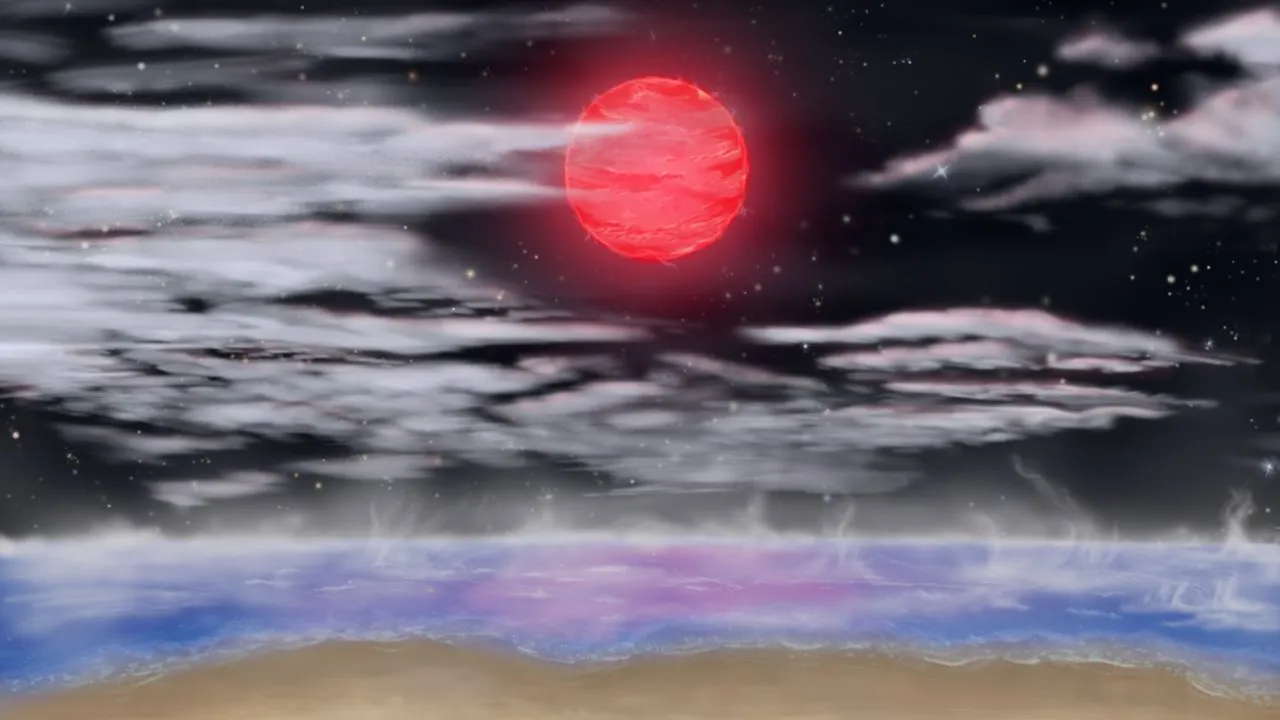
Astronomers using the Habitable-zone Planet Finder on the Hobby-Eberly Telescope re-estimated the mass of the exoplanet GJ 3378b. Published June 30 in The Astrophysical Journal, the revised number is 2.3 times Earth, not about five times.
A “super Earth” 25 light-years away just got a lot more plausible for life. In a study published June 30 in The Astrophysical Journal, researchers recalculated the exoplanet GJ 3378b and found it is only 2.3 times more massive than Earth, not roughly five times. That single change matters because it dramatically shifts what kind of planet it likely is, and therefore whether it could plausibly hold onto an atmosphere with surface conditions closer to Earth than to a crushed-by-pressure nightmare.
Here is what the updated measurement fixes, right away. The world, dubbed GJ 3378b, orbits a red dwarf star about 25 light-years from Earth, completing a circuit every 21.5 days at a distance around 10 times closer than Earth orbits the sun. In our solar system that would sound instantly inhospitable, but red dwarfs are different: they emit around 90% less radiation than the sun. That lower output places GJ 3378b in the star system’s “habitable zone,” where liquid water could exist on the surface, assuming the planet has the right physical makeup.
The catch before this new work was that GJ 3378b’s size and composition were murky. Researchers initially thought it might be about five times more massive than Earth. If it were that heavy and still rocky, it would probably generate extremely high atmospheric pressures, making it less likely to be livable. And if it were not truly rocky, it could instead be a mini gas giant, which would again reduce the chances of Earth-like conditions. In other words, the earlier estimate left scientists stuck in a fog: could this be a “super Earth” with breathable-ish physics, or something that only looks promising on paper?
This is where the Habitable-zone Planet Finder earns its keep. The instrument is attached to the Hobby-Eberly Telescope at the McDonald Observatory in Texas, and it measures subtle wobbles in the host star. Those wobbles are caused by the gravitational tug of an orbiting planet, and they let astronomers calculate the planet’s mass and trajectory. Using those measurements, the team constrained GJ 3378b’s mass to 2.3 times Earth. The study argues that this almost guarantees a rocky world. And if it is rocky, the odds improve that it could have an atmosphere with a similar pressure to our own, which raises the chances that extraterrestrial lifeforms could thrive there.
But even with the mass problem solved, the science has a next question queued up: does it actually have an atmosphere, and if so, what is in it? The source is blunt on this point. There is currently no evidence that GJ 3378b has an atmosphere or liquid water. That is not just caution for caution’s sake. Proximity to a red dwarf cuts both ways. Close-in planets can be great for follow-up because they are easier to observe, but they can also be chemically and physically vulnerable. The study notes that stellar winds may strip atmospheres over time. The comparison given is Mars, whose atmosphere and ancient oceans were likely stripped by solar radiation. If that kind of erosion happened here, the planet might not have the surface chemistry life needs.
Still, executives and board members in adjacent “moonshot” areas can take something useful from how this is unfolding. Space science is increasingly an evidence pipeline, where faster confirmation can reorder priorities and budgets. GJ 3378b is singled out as especially intriguing not only because it sits in the habitable zone, but because it is so close that confirming habitability should be easier than for more distant candidates. Paul Robertson, an astronomer at the University of California, Irvine and the study’s first author, is quoted saying, “25 light-years sounds like a long way, but the Milky Way is about 100,000 light-years across, so in that respect it’s our next-door neighbor.” That quote is doing real work: it explains why astronomers are treating this target as a near-term opportunity rather than a far-future curiosity.
The follow-up logic is also clear in the paper’s framing about what atmospheric detection would unlock. The study co-author Gogod James, an undergraduate student at UC Irvine, is quoted saying, “If a planet in the habitable zone has a proper atmosphere, we can justify further research looking for biosignatures, liquid water or other signs of life.” And Michael Endl, an astronomer at the McDonald Observatory and the University of Texas at Austin, adds a broader strategic angle: “About 70% of stars in our galaxy are red dwarfs, so they represent the standard,” and “It’s really important that we understand the planet population around these stars.” In practical terms, red dwarfs are the default backdrop in the Milky Way, so tightening our knowledge of their planetary systems is not a niche obsession. It is population science, which affects how teams design future observing campaigns.
So where does this leave decision-makers who care about science throughput, instrumentation, and the next wave of discoveries? GJ 3378b now looks like a better bet than it did last year, because the mass recalculation strengthens the case that it is a rocky super Earth, not a larger world with crushing pressures or a mini gas giant composition. That improves the statistical odds that an atmosphere could exist, which would determine whether GJ 3378b moves up in the queue for deeper study. The stakes are straightforward: without an atmosphere, the habitability hypothesis stalls. With one, this nearby red dwarf system could become one of the most intensively investigated exoplanet targets on the sky.
This story's Key Insights and Take-aways are locked.
Create a free account to unlock Executive Actions for one credit.
Register to UnlockAlways free for Executives Club members. Join the Club
More in Science

Alaska's 1,580-foot tsunami had warning signs. Scientists just found them.
Rapid glacier retreat, heavy rainfall, and thousands of tiny tremors preceded Alaska's 1,580-foot tsunami, a warning for every coastal community in a warming world.

The rare mutation that lets high-risk brains dodge Alzheimer's
Scientists found a natural defense against protein buildup, opening a new path to preventive treatments.

3,000 steps a day may halve Alzheimer's decline, study finds
New research links a modest daily walk to less tau buildup and nearly half the cognitive and functional decline, even for those with early signs.