
Perseverance finds surface macromolecular carbon on Mars, and biology is only one suspect
NASA’s rover detected the shallowest organic detection yet on Martian surface, but the origin remains uncertain.
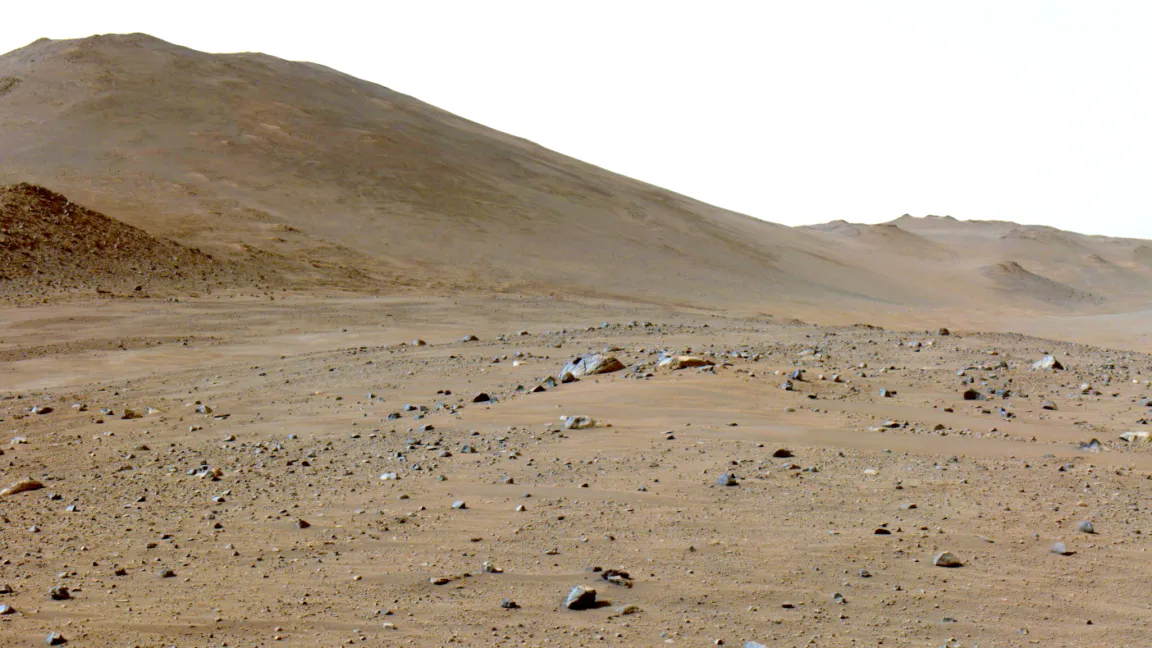
NASA’s Perseverance rover, using its SHERLOC instrument, detected complex macromolecular carbon on a Martian rock surface at Bright Angel, near Neretva Vallis. The finding is shallowest-to-date, yet a biological origin is not the only possible explanation, which raises major questions for future sample return priorities.
NASA’s Perseverance rover has been hunting Jezero Crater for signs of ancient Mars chemistry, and it just hit a moment that makes astrobiology feel close enough to touch. At an outcrop called Bright Angel, near the edge of an ancient river channel named Neretva Vallis, Perseverance detected complex macromolecular carbon sitting on the rock’s surface. The study lead author, Ashley E. Murphy of the Planetary Institute in Tucson, Arizona, said: “To our knowledge, that’s the shallowest detection of organic matter on Martian surface to date.”
Why that matters immediately is simple: on Mars, organic signals often show up only after you drill or abrade rocks to expose interior material. This time, the carbon was not just present, it was exposed. That changes the interpretation problem. On Earth, the level and type of macromolecular carbon usually points toward biological origins, but the same is not automatically true on Mars. If biology is the explanation, it would be a headline category event. If not, it still tells scientists that non-biological processes can manufacture complex organics in ways that survive exposure and detection.
The detection came from SHERLOC, a UV Raman spectrometer mounted on Perseverance’s robotic arm. SHERLOC works by firing a deep-ultraviolet laser at a target and then reading the light that bounces back at shifted energies. Those energy shifts act like molecular fingerprints, letting scientists identify specific molecular bonds. In other words, Perseverance was not just measuring “carbon-like stuff.” It was using spectroscopy to infer what the carbon is chemically attached to, and how it is structured enough to qualify as complex macromolecular carbon.
For the rover program and anyone in the business of space science, this is where the incentives get interesting. Perseverance has spent about five years traversing Jezero Crater looking for the chemical leftovers of processes from billions of years ago. The earlier pattern was consistent: organics were often mostly found inside rocks, where investigators needed to drill or abrade to expose them. This new pattern at Bright Angel suggests that at least some organics may be present at or near the surface layer in a way that can be detected without those destructive steps. That does not eliminate uncertainty, but it can change where future missions aim their time and what they choose to sample.
There is also a measurement risk that teams managing scientific missions always carry: surface exposure can increase the chance of contamination, alteration, or confusing signals from coatings and radiation processing. The source text does not claim a specific contamination mechanism, but the ambiguity is built into the logic. On Earth, macromolecular carbon of this nature usually suggests biology. On Mars, the environment can drive chemistry in other directions, and the phrase “it’s not clear why” in the original framing is doing real work here. The science is telling you the detection is real and shallow. It is not yet telling you the causal story.
Second-order implications follow quickly. If the carbon is shallow and persistent, it could shift how researchers prioritize follow-up targets across Jezero Crater and beyond. It could also influence what gets emphasized in the argument for returning samples to Earth, which the article flags as potentially necessary to learn what the Bright Angel carbon is and where it came from. Sample return is expensive, politically complex, and operationally hard, so organizations typically need very specific justification. “Shallowest detection of organic matter on Martian surface to date” is the kind of line that helps justify the cost, because it promises easier-to-hypothesize, harder-to-dispute evidence.
Zoom out one more level and you get why this matters to decision-makers in adjacent domains too. Astrobiology is not just a scientific question, it is a platform question: what instruments, what mission architectures, and what evidence thresholds will future space budgets demand. Regulators and oversight bodies are usually less interested in poetic possibilities and more interested in testable claims, measurement credibility, and traceable reasoning. A UV Raman spectrometer like SHERLOC, reading shifted energies to infer molecular bonds, is exactly the kind of repeatable method that can support that credibility, even while the origin remains unresolved.
For peers watching from the sidelines, the strategic takeaway is that the “where to look” problem on Mars may be changing. Perseverance already found organic carbon mostly inside rocks, but at Bright Angel it found complex macromolecular carbon on the rock’s surface, at the edge of Neretva Vallis. That combination forces teams to keep two thoughts in their heads at once: biology is plausible on Earth, but Mars demands caution. The next phase, likely involving brought-back samples, is not optional if the goal is to move from detection to explanation.
This story's Key Insights and Take-aways are locked.
Create a free account to unlock Executive Actions for one credit.
Register to UnlockAlways free for Executives Club members. Join the Club
More in Science

Alaska's 1,580-foot tsunami had warning signs. Scientists just found them.
Rapid glacier retreat, heavy rainfall, and thousands of tiny tremors preceded Alaska's 1,580-foot tsunami, a warning for every coastal community in a warming world.

The rare mutation that lets high-risk brains dodge Alzheimer's
Scientists found a natural defense against protein buildup, opening a new path to preventive treatments.

3,000 steps a day may halve Alzheimer's decline, study finds
New research links a modest daily walk to less tau buildup and nearly half the cognitive and functional decline, even for those with early signs.