
Glassworms survive killer pressure using air sacs built to hang tight on deep dives
A weird survival trick in glassworms hints at how biology manages extreme pressure, and why it matters for deep tech.

Researchers highlighted glassworms, which can endure pressures that would kill most humans, thanks to specialized air sacs. For decision-makers, the discovery frames a concrete biological design path for engineering safer deep-water systems.
Glassworms can hang out at pressures that would kill most humans, and the reason is not magic. It is an unusual piece of internal engineering: specialized air sacs that help them endure deep dives.
That single detail does a lot of work. When you are talking about pressures that are lethal to most humans, the core problem is simple in principle but brutal in practice: pressure increases with depth, and biological systems usually cannot stay intact under that load. Glassworms, however, keep functioning in that hostile environment because their anatomy includes air sacs designed for that pressure reality. In other words, they do not just “tolerate” deep pressure, they are built around it.
Why this is interesting beyond natural history is that the business world keeps running into the same theme: the deep is hard, and failure gets expensive. Subsea operations, ocean observation, offshore energy, underwater robotics, and even certain research environments all depend on hardware that can survive high-pressure conditions. In most engineering projects, designers end up choosing between weight, cost, reliability, and safety, with pressure resistance often driving the tradeoffs. Biological systems like glassworms are a reminder that evolution can produce solutions that reduce the burden on the “whole system” by offloading risk onto specialized structures.
There is also a second-order implication here for anyone funding or governing deep tech. When regulators and safety standards evaluate extreme-environment systems, they often look for clear failure modes and robust evidence. Hardware that survives through brute-force strength can still be risky if materials fatigue, seals leak, or stress concentrates under repeated cycles. A biology-inspired approach, focused on how the organism manages pressure internally, can shift the conversation from “can we make it strong enough” to “can we manage pressure dynamics so the body, or the device, experiences less catastrophic stress.” That is the kind of design philosophy that can influence engineering roadmaps, procurement decisions, and risk registers.
From a governance perspective, this is also about incentives and attention. Boards and executive teams tend to prioritize programs with measurable milestones and identifiable engineering levers. An air-sac mechanism is not a product, but it is a concrete reference point. If the underlying principle is transferable, it gives leaders a story they can translate into development targets: pressure-tolerant internal volumes, controlled gas handling, and structures that maintain function under depth-driven load. Even without jumping to conclusions, having a specific mechanism to investigate is how you avoid vague “we should do something in deepwater” strategies.
Capital allocators should also care because extreme-environment tech is often a long-cycle bet. The deep ocean is unforgiving, so projects require time for testing, certification, and iteration. When the field has a defensible biological benchmark, it can help teams prioritize experiments and interpret results. Instead of treating pressure survival as a binary pass-fail outcome, leaders can frame it as a performance target linked to internal architecture, which can make the technical narrative easier to validate.
Finally, the strategic stakes are broader than one species. Glassworms offer a working example of how life can adapt to pressure that is lethal to humans. For founders, operators, and investors building in or around deep environments, the message is clear: progress is not only about stronger shells. It can also be about smarter internal design, the kind that keeps the system alive when conditions get extreme.
This story's Key Insights and Take-aways are locked.
Create a free account to unlock Executive Actions for one credit.
Register to UnlockAlways free for Executives Club members. Join the Club
More in Science
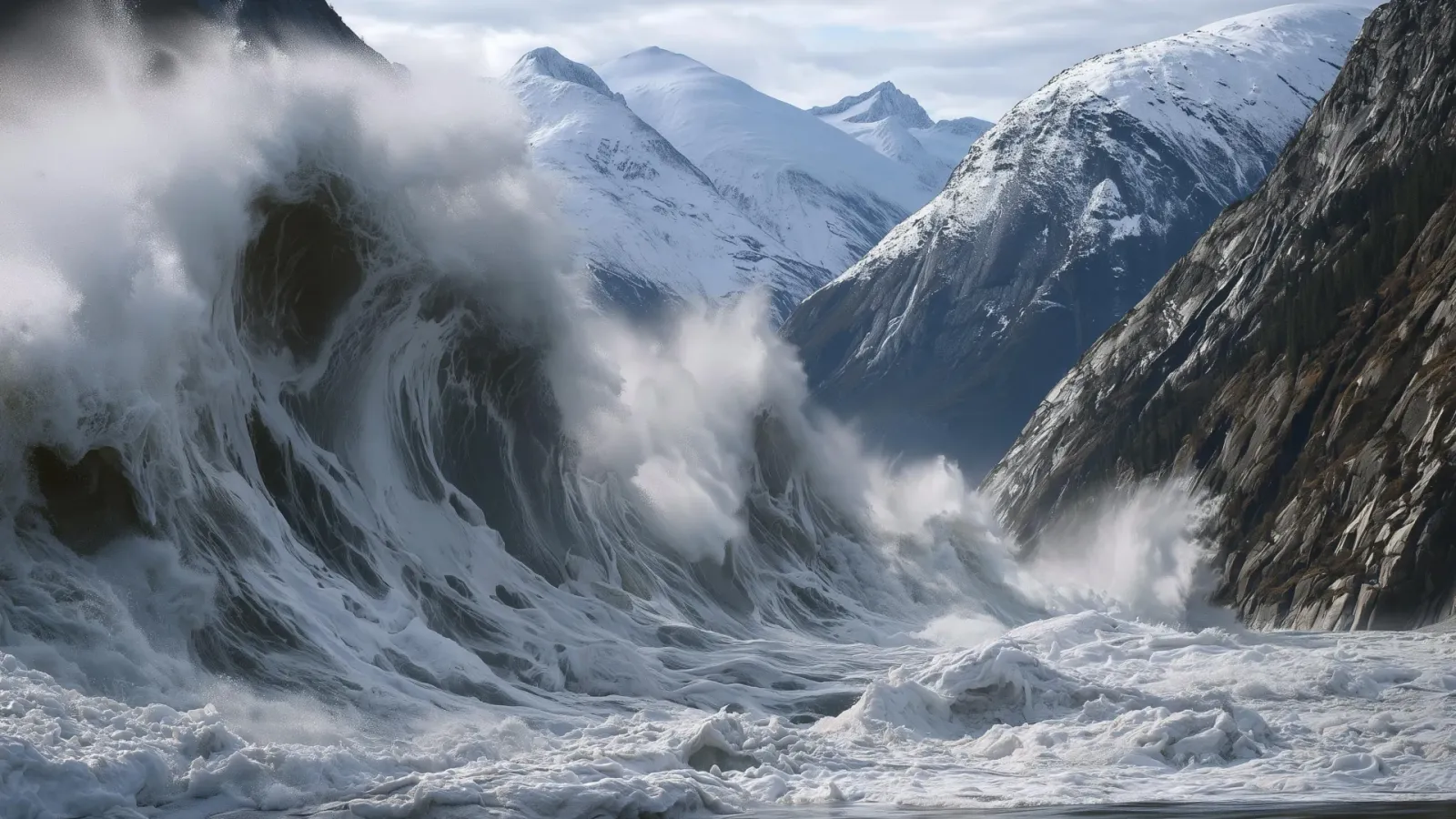
Alaska's 1,580-foot tsunami had warning signs. Scientists just found them.
Rapid glacier retreat, heavy rainfall, and thousands of tiny tremors preceded Alaska's 1,580-foot tsunami, a warning for every coastal community in a warming world.

The rare mutation that lets high-risk brains dodge Alzheimer's
Scientists found a natural defense against protein buildup, opening a new path to preventive treatments.

3,000 steps a day may halve Alzheimer's decline, study finds
New research links a modest daily walk to less tau buildup and nearly half the cognitive and functional decline, even for those with early signs.