

GM Energy adds V2G with PG&E and DTE, turning EVs into grid tools
GM says more than 250,000 of its V2G-capable EVs can help utilities balance power, while storage shifts to sodium-ion chemistry.
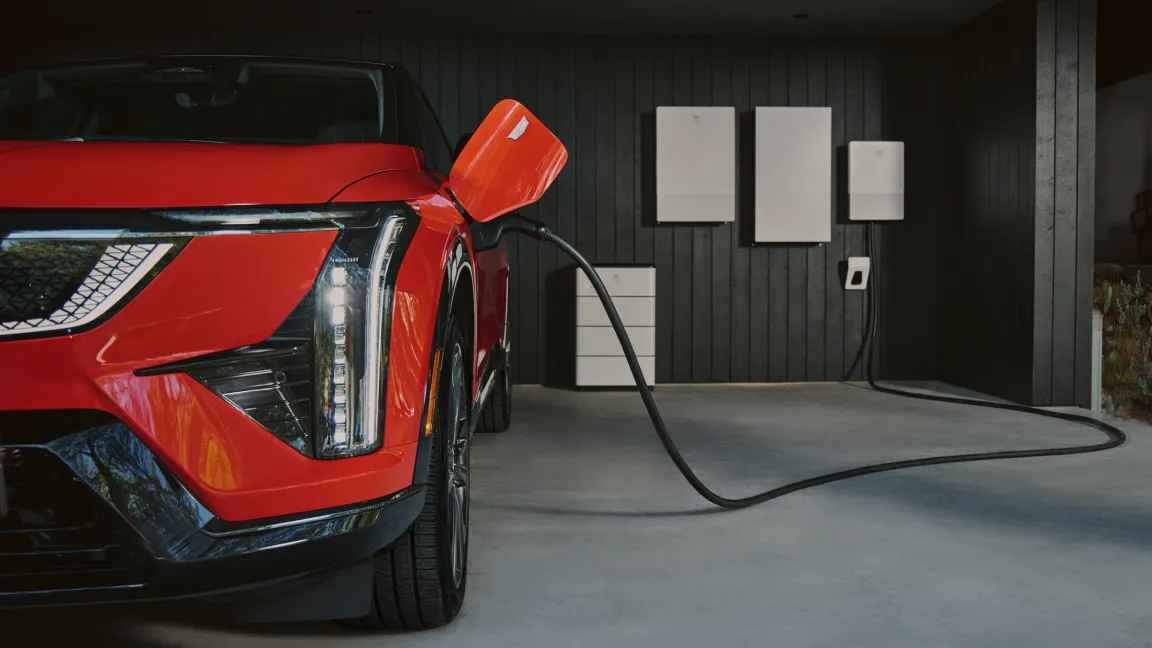
GM Energy is rolling out vehicle-to-grid (V2G) support alongside vehicle-to-home, and it is building launch partnerships with PG&E in California and DTE Energy in Michigan. The company also announced sodium-ion battery development for standalone grid energy storage with Peak Energy.
GM Energy just moved bidirectional charging from “interesting roadmap” to “grid product,” adding vehicle-to-grid (V2G) support for its energy platform. The company says there are more than a quarter of a million V2G-capable GM EVs already on the road, meaning the capability is not theoretical. It is an installed base issue, and installed bases tend to turn pilots into procurement conversations faster than promises ever do.
The grid part is the whole point. GM Energy’s V2G integration is not something a car company can flip by itself, so GM is working with utilities and has named launch partners PG&E in California and DTE Energy in Michigan. Alongside V2G, GM Energy products also support vehicle-to-home (V2H), framing the offer as both household backup and grid support. For executives staring at reliability requirements, peak load pressure, and the cost of balancing supply and demand, that is the operational shift that matters.
To understand why GM is pushing this now, look at what is stressing the grid. The source ties it directly to the rise of AI and the pressure it places on electric infrastructure. Data centers are hungry, and that hunger increases the urgency around grid flexibility, not just generation. In plain English: when demand swings harder or peaks higher, someone has to smooth the bumps, and flexibility is often more valuable than raw capacity.
This is also why V2G is showing up in mainstream product planning. Bidirectional charging is the mechanism that lets electricity flow both ways. In vehicle-to-home mode, EVs can provide power to homes; in vehicle-to-grid mode, those same capabilities can support utilities by helping balance the system. GM’s announcement essentially argues that EVs can be treated as distributed energy resources, not just transportation.
The infrastructure work is the unglamorous part, and GM is being explicit about it. “The grid integration requires working with utilities,” the source notes, which is a reminder that interconnection rules, market structures, and reliability procedures are typically utility-driven realities. Naming PG&E and DTE Energy matters because it signals GM is targeting regulated environments where programs have to be operational, not experimental.
It helps that the company is pitching more than one angle. The V2G/V2H platform connects vehicles to the grid, but GM is also talking about standalone energy storage. Storage is the other lever grid operators use when they need to absorb excess power or deliver it later. And here GM’s chemistry update stands out: it announced a partnership with Peak Energy on sodium-ion batteries built specifically for grid energy storage.
Why sodium-ion, and why should executives care? The source does not give a performance comparison, but it does position the chemistry as purpose-built for grid storage. That is strategically meaningful because battery procurement is a supply chain and cost problem as much as it is a technology problem. When utilities and developers plan projects, they care about timelines, sourcing, and compatibility with operational needs. Chemistry diversification can broaden options, reduce bottlenecks, and potentially reshape cost curves over time, even if the exact economics depend on project-specific details.
For decision-makers, there is also a market-timing angle. The source briefly notes that electric vehicle sales might be “better now” than at the end of last year, when demand fell after a surge of purchases ahead of the end of federal financial incentives. That context matters because it frames why automakers and energy companies cannot rely solely on near-term EV unit growth. They need software-like value streams, services, and new relationships with utilities. V2G is one such service, and pairing it with energy storage development suggests GM is trying to build an ecosystem rather than a single feature.
Second-order implications are where boards and CFOs start to sweat, and GM’s move has a few. First, utilities are likely to treat bidirectional EV programs as part of broader grid resource planning, which can pull automakers closer to regulated stakeholders with long procurement horizons. Second, if more than 250,000 V2G-capable vehicles are already in the wild, program design can shift from “can the tech work” to “how do we operationalize incentives, dispatch, and customer participation.” Third, sodium-ion storage partnership with Peak Energy signals GM Energy is thinking beyond cars, toward grid-scale deployments where capital allocation and manufacturing partnerships can make or break momentum.
The big takeaway for peers: GM is trying to turn EV adoption into grid leverage. With V2G supported through named utility partners and sodium-ion storage aimed at grid energy storage, GM Energy is positioning itself at the intersection of transportation, power management, and regulated infrastructure. If AI-driven load growth continues to accelerate, flexibility will be a scarce asset, and GM is betting that its vehicles and storage lineup can become part of the solution.
This story's Key Insights and Take-aways are locked.
Create a free account to unlock Executive Actions for one credit.
Register to UnlockAlways free for Executives Club members. Join the Club
More in Technology

OpenAI says 10,000 agents cracked a 90-year math problem in 88 hours
The company's claim is audacious, but one mathematician is pushing back. Here's what it means for AI-driven discovery.
Meta still serves child sexual abuse ads on Instagram in India - BBC report
A new report following the BBC Eye investigation says the ads are still there - what it signals for every platform with a self-serve ad engine.

White House yanks 'Build the Wall' game after Tetris Company copyright warning
The administration's arcade game vanished in hours - and the takedown playbook every brand can learn from.