
Go’s ¥88.6B IPO funds driver supply battle, plus possible robotaxi and acquisitions
After Japan’s biggest IPO of 2026 so far, Go says it will deploy IPO capital to fix a driver shortage that threatens growth.

Go, the taxi-hailing app, went public Tuesday and raised Japan’s biggest IPO of 2026 so far. The company plans to use ¥88.6 billion of IPO proceeds to tackle Japan’s driver shortage, alongside eyes on robotaxis and acquisitions.
Go’s IPO, the biggest in Japan so far this year, did not just brighten the country’s sluggish listing season. It also dropped a real amount of capital into the hands of a company fighting an industry-level problem in plain sight: Japan’s shortage of drivers.
Go, which went public Tuesday, said it plans to use ¥88.6 billion in IPO proceeds. That number matters because it is large enough to change the operational reality for a service whose core promise is availability. When you are building a taxi-hailing marketplace, the hard bottleneck is not always “demand for rides.” Often it is supply, meaning drivers who can accept trips, show up on time, and keep service levels steady. In Japan, that shortage is described as existential for the taxi category, and Go’s funding plan is positioned as the response.
To understand why this is a big deal for more than just one company, zoom out to how listing season works and why IPO capital is not interchangeable. A languishing equity market can starve growth businesses of the runway they need to do the unglamorous work: recruiting, onboarding, partnerships, and payments that make supply available. When a market finally produces a large, high-profile IPO like Go’s, executives in the same ecosystem pay attention because it signals investor appetite for operating models that can survive long payback periods.
For Go, IPO proceeds are a direct bridge to the next set of bets. The TechCrunch piece frames Go’s approach as going beyond fixing today’s taxi supply constraints, with “eyes” on robotaxis and acquisitions. Robotaxis, at least in concept, represent a way to reduce dependence on human driver supply over time. But the path to meaningful deployment is typically not immediate, and in the meantime, a shortage can keep limiting scale. That means there is a strategic logic to using fresh capital to stabilize and expand the current marketplace while preparing for a future where autonomy could shift the economics of ride supply.
Acquisitions add another layer to the story, and this is where boardroom dynamics come in. When a company raises a massive round, it does not just buy operations. It also buys decision optionality. Management can pursue targets that strengthen supply, deepen geographic coverage, improve mapping or dispatch systems, or add operational capabilities that would be slow to build internally. In a market experiencing driver scarcity, acquiring the right capabilities can turn a long-term demographic constraint into something more manageable.
Regulation and licensing are the quiet gravity wells in mobility businesses, especially in a country like Japan where transportation is heavily structured. Even without getting into specific licensing rules in this story, the broader point is that autonomy and cross-operator consolidation do not happen in a vacuum. They need to fit within what regulators and local authorities will allow. For decision-makers, that means the question is not simply “does Go have capital?” The question is how fast the company can translate that capital into compliant, scalable deployments. IPO funding helps, but it does not erase the regulatory timeline.
There is also a marketplace feedback loop executives should watch. Taxi-hailing apps succeed when the service is consistently usable. If drivers are scarce, wait times rise, rider satisfaction falls, and demand can soften. That can then make driver recruitment and retention harder, because earnings potential and trip frequency change. Injecting ¥88.6 billion is a way to interrupt that loop by addressing driver availability directly, and by preparing alternative supply paths such as robotaxis.
Second-order effects matter for competitors too. A company that can finance supply and technology at scale can force rivals to move faster on their own strategies. It can also change negotiation leverage with partners, whether that is fleet owners, driver networks, or technology suppliers. In other words, Go’s move is not only about what it will do. It is about what it pressures everyone else to respond to.
For founders, investors, and operators watching Japan’s tech and mobility space, the headline lesson is straightforward. Go’s IPO capital is being aimed at an operational choke point, driver shortage, while also keeping optionality open for robotaxis and acquisitions. If the plan works, it helps the company grow despite the demographic headwinds. If it stumbles, it becomes a test of whether capital can outpace supply constraints and whether robotaxi timelines can be accelerated enough to matter before the marketplace costs catch up. Either way, Go has put real money behind a real problem, and that is the kind of strategic reckoning that tends to ripple across the whole sector.
This story's Key Insights and Take-aways are locked.
Create a free account to unlock Executive Actions for one credit.
Register to UnlockAlways free for Executives Club members. Join the Club
More in Business

Accenture’s $4.18bn play fails as AI fears spark a 20% worst-ever stock plunge
On Thursday, Accenture hit its biggest one-day drop on record after forecasting worries that AI could hollow out consulting.

SpaceX stock jumps 3% after it overtakes Amazon’s market cap
CNBC says SpaceX’s shares surge following its IPO Friday, forcing investors to reprice what “space” and “AI” are worth.
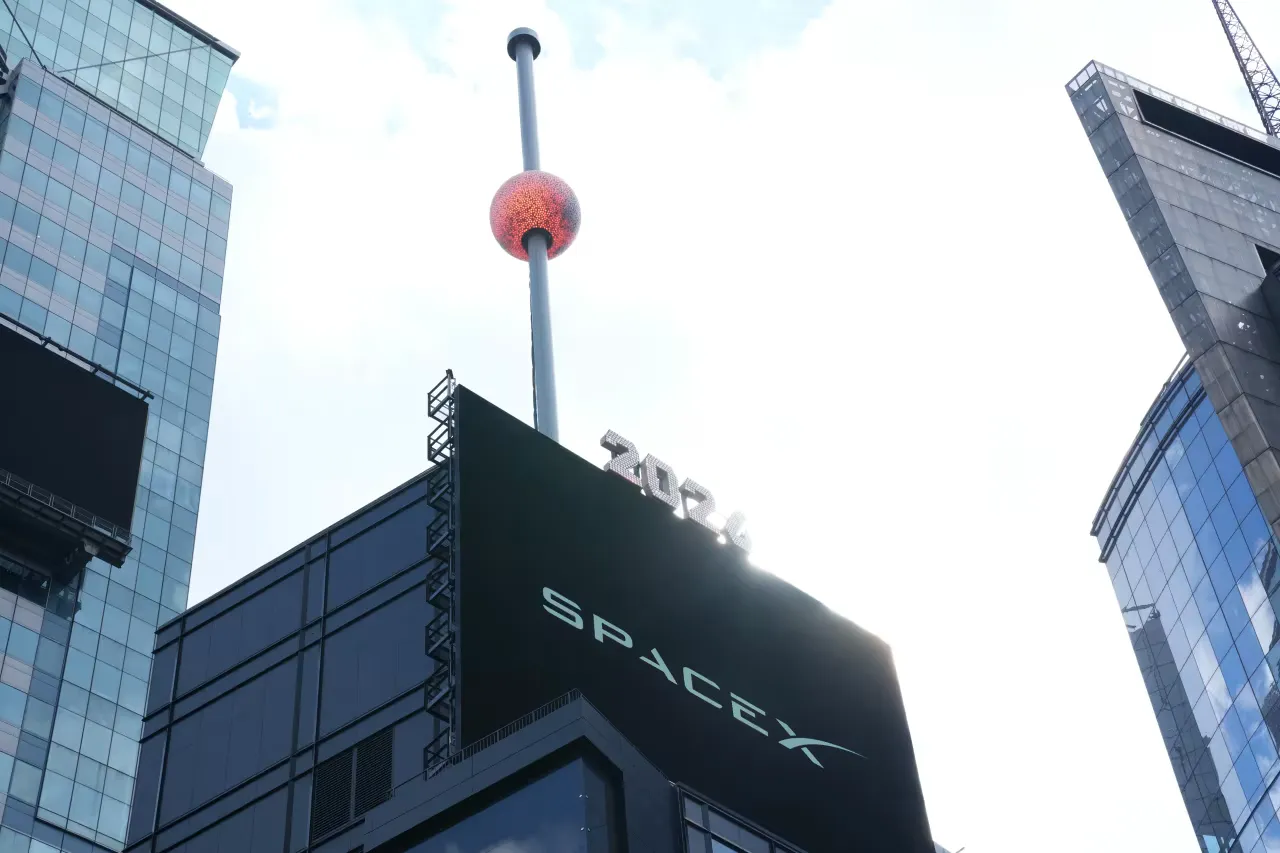
SpaceX’s first options day breaks U.S. records after a $85B IPO win
Big IPO, bigger options debut: what it means for investors, risk teams, and anyone benchmarking market appetite.