

Goldman bans employees from prediction-market bets tied to elections, macro, and Goldman
The bank rewrote its personal trading policy to block event contracts that could blur conflicts around major news cycles.

Goldman Sachs updated its personal trading policy to prohibit event contracts tied to elections, macroeconomic data, and Goldman itself. For decision-makers, it is a reminder that prediction markets are now close enough to core business risk to trigger direct internal controls.
Goldman Sachs is banning employees from betting on prediction markets when those bets are tied to three sensitive categories: elections, macroeconomic data, and Goldman itself. The change comes through an updated personal trading policy, which explicitly prohibits “event contracts” linked to those subjects.
That is the key point, and it matters because the whole pitch of prediction markets is that prices can reflect expectations about real-world events. Now Goldman is drawing a line: even if an employee’s personal position is “just” a market bet, the topics Goldman flagged are exactly the ones where information, timing, and incentives can get complicated.
To understand why, zoom out to how prediction markets work. In an “event contract,” the payoff depends on whether a defined outcome happens. Markets can be broad and long-run, but elections and macroeconomic data are not. They arrive on schedules and move quickly, and they often overlap with the kinds of analysis, client coverage, and internal forecasting that investment banks rely on. When the same organization is also the issuer of major views, underwriting, or market-making liquidity, a personal bet can start to look less like casual investing and more like a shadow channel for sensitive information or influence.
Goldman’s policy update is also a classic conflict-of-interest control, in plain English: reduce the chance that an employee can profit from something that their day job could plausibly touch. The “Goldman itself” part makes that unusually direct. Even without adding any new allegation or scenario, the inclusion of Goldman-related event contracts signals that the bank wants to keep internal roles and proprietary exposures from tangling with personal positions tied to the firm’s own outcomes.
This kind of internal rule does not show up in a vacuum. Banks live in a regulatory world where personal trading by insiders and “the appearance of impropriety” can be as consequential as the actual mechanics. Personal trading policies are often built to address two fears at once. First is the obvious one: preventing trading that could benefit from nonpublic information. Second is reputational and governance risk: if employees can place bets that track major catalysts, stakeholders can question whether the firm’s incentives are aligned or whether the bank’s culture is accidentally encouraging questionable behavior.
Quartz’s report frames the specific mechanism: Goldman updated its personal trading policy to prohibit event contracts tied to elections, macroeconomic data, and Goldman itself. That means the restriction is not a vague “no prediction markets” rule that might be hard to enforce. It is targeted to event contracts associated with high-scrutiny subject matter. In practice, that makes the policy more administrable for compliance teams, because it gives clearer boundaries for what is allowed versus prohibited.
There is a second-order implication here for other executives and boards. Prediction markets are gaining attention because they can turn uncertainty into tradable information. But the moment large incumbents treat certain contracts as disallowed because of conflicts, the market ecosystem changes. Platforms and traders have to adapt, and internal compliance teams at other financial firms will likely ask similar questions: which contracts intersect with client work, underwriting cycles, earnings-related analysis, and macro commentary? Even firms that are not explicitly restricting prediction markets may tighten personal trading rules around anything that is too close to their corporate or informational ecosystem.
For decision-makers, the strategic stakes are simple: governance is now part of the prediction-market conversation. If an employee’s personal betting activity can be interpreted as tied to elections, macro releases, or outcomes related to the firm, boards will increasingly expect explicit controls. Goldman’s move suggests that the bar is not “illegal trading.” It is “risk-managed trading,” where compliance draws the perimeter early, before scrutiny arrives. And for peers in similar roles, the takeaway is that prediction-market participation is becoming less of a free-for-all and more of a policy decision with real-world consequences.
This story's Key Insights and Take-aways are locked.
Create a free account to unlock Executive Actions for one credit.
Register to UnlockAlways free for Executives Club members. Join the Club
More in Business
AstraZeneca $27B wipeout as Wainua late trial misses cardiovascular target
A failed late-stage heart study triggered a swift market punishment, forcing investors and boards to reset timelines and risk.
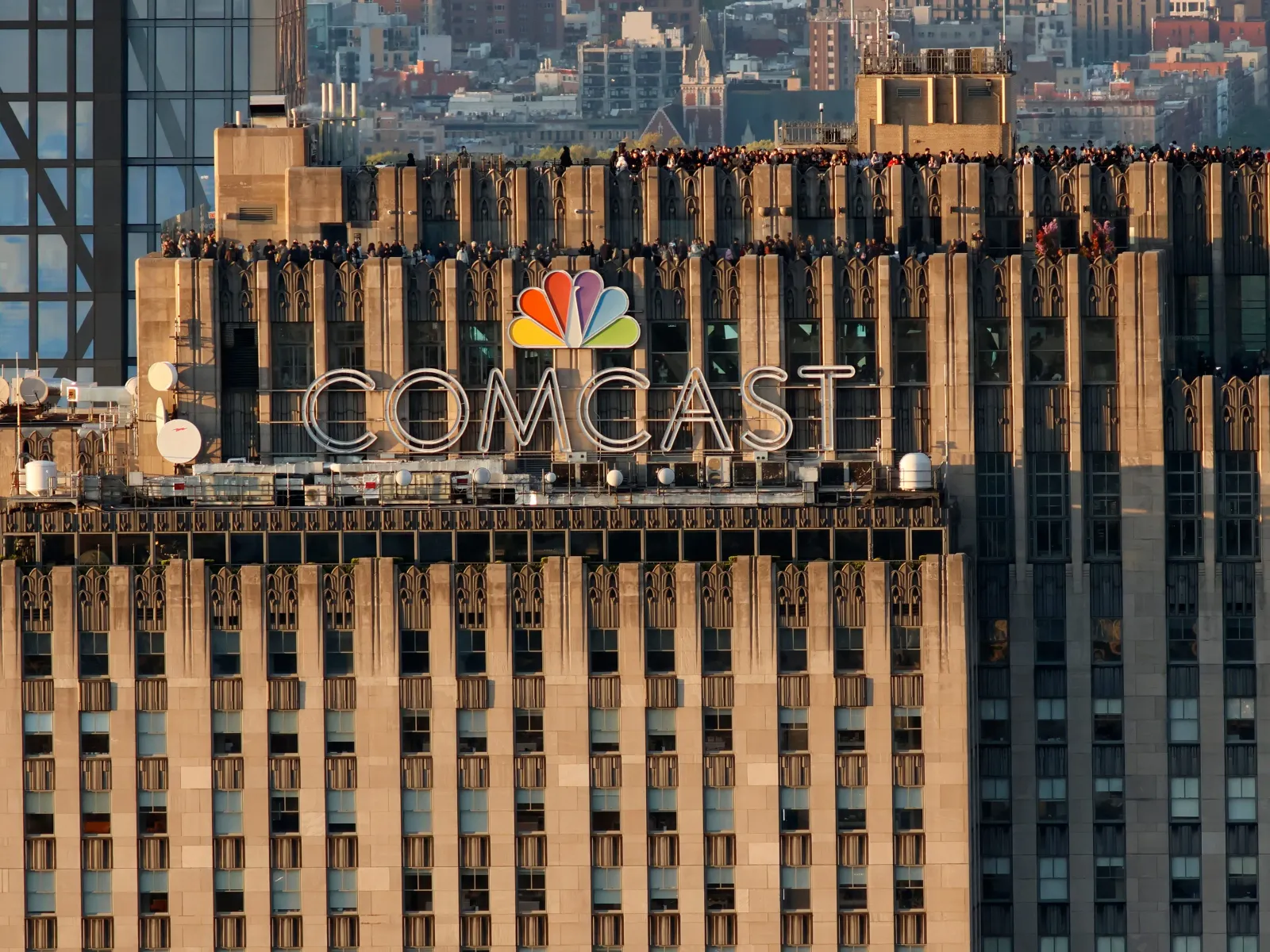
Comcast shares jump 25% as it plans to split NBCUniversal and Sky
The tax-free spin-off could reshape focus, funding, and competition across media and tech for years.

Bungie cuts most Destiny 2 staff as Sony says Marathon still matters
Herman Hulst confirms layoffs affecting most Destiny and some Marathon teams after Bungie admits Destiny fell short.