

Google builds quantum calibration that runs during error correction, not after it
A reinforcement learning approach could keep superconducting qubits aligned while programs run, reducing drift for long jobs.
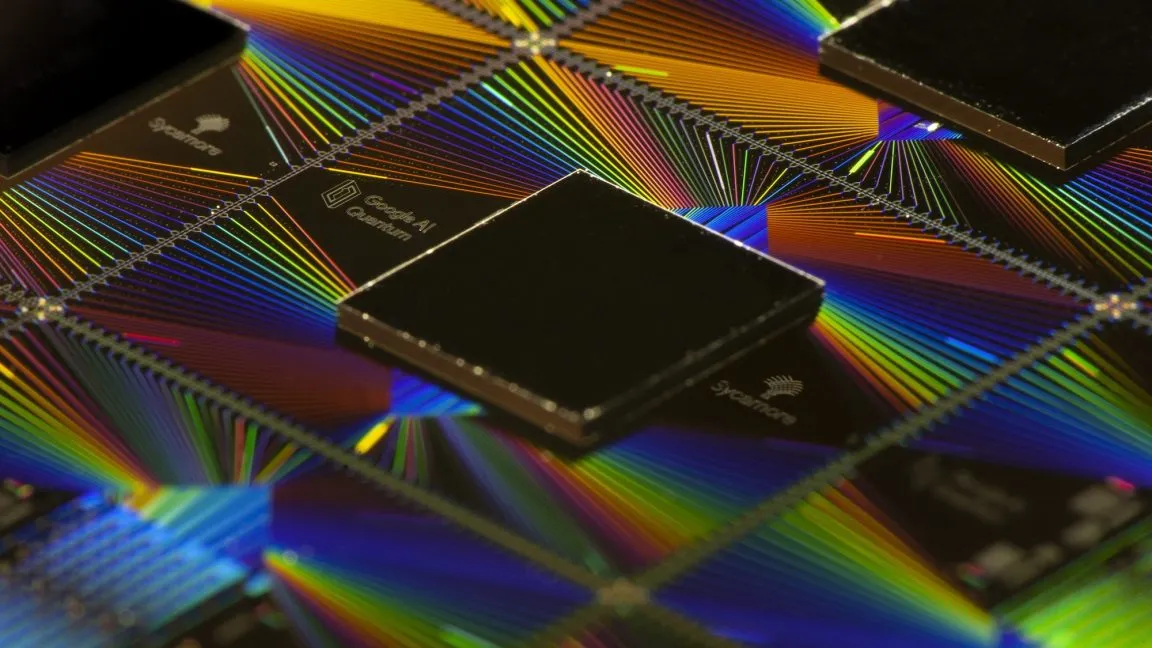
Google has figured out that calibration for some quantum hardware can happen using the same data used for error correction, rather than as a separate pre-run step. For decision-makers, that shifts calibration from a blocking overhead into a continuous process, making longer quantum algorithms more feasible.
Quantum error correction does more than fix mistakes. In Google’s work described by Ars Technica, it can also constantly recalibrate the quantum processor while the computation is happening. That is a big deal because one of the most annoying gaps between “we can run a quantum experiment” and “we can run a useful quantum program” is calibration drift. If the control pulses drift while a computation is in progress, error rates rise, the algorithm fails, and the whole promise of error-corrected logical qubits becomes harder to realize.
Here’s the key point: for certain devices, calibration normally happens before calculations begin, when engineers test different frequencies and amplitudes of the microwave pulses used to control superconducting qubits. They search for the combination that produces the lowest error rates, then save those settings for later use in computations. But you cannot perform the typical calibration process while you are doing calculations. So for long and complicated algorithms, drift becomes an issue. Google’s reported approach is different. It uses the same data used for error correction to drive calibration updates, with reinforcement learning adjusting control algorithms based on error information.
To understand why this matters, it helps to separate two layers of the quantum problem. The obvious big picture issues include whether we can make enough high-quality hardware qubits and connect them into the error-corrected logical qubits we need, plus how we generate the states needed for universal computation on those logical qubits. Those are the headlines. But there are also many less prominent challenges that only show up when you try to make quantum compute continuously reliable. Calibration is one of those challenges, and it affects some types of hardware.
Ars Technica highlights a hardware reality that operators will recognize immediately: not every physical qubit behaves identically. For superconducting qubits, there are subtle variations among individual qubits. That is not true in the same way when you use an atom to hold the qubit, because the lasers that control them can drift instead. In other words, whether the “drift problem” lives in the qubits themselves or in the control optics, the system still needs periodic recalibration to keep error rates low. The difference is that Google’s method aims to eliminate a hard boundary between calibration time and computation time.
There is also an engineering incentive baked into this. Traditional calibration is a pre-run ritual. It requires testing control settings, measuring performance, then locking in the best frequencies and amplitudes of microwave pulses that minimize error. If you can only do that when the machine is idle, then long computations become brittle. You are essentially betting that the system’s behavior will remain stable for the entire duration. The longer the algorithm, the bigger the bet. That creates a planning problem for anyone trying to scale quantum from short demonstrations into workloads that last long enough to matter.
By contrast, reinforcement learning uses error information to adjust control algorithms. The Ars Technica piece ties this directly to the calibration problem. If the processor is already producing error information as part of error correction, that data can double as a calibration signal. Google’s insight is that you do not need to run a separate calibration process. You can recalibrate using the same stream of information that the system already has for error correction. Practically, that means the system can respond to drift while it runs, rather than waiting until after the computation finishes.
For executives, this is the kind of operational shift that changes the feasibility math. Board members and investors often ask a blunt question: when do we stop treating quantum as a science project and start treating it like a platform? Platform thinking is about uptime and repeatability. Calibration that only happens between jobs is the opposite of platform operations. A continuous calibration loop aligned with error correction suggests a path toward fewer failed long runs and less downtime spent re-tuning hardware. It also reduces the burden on teams to pause computations for recalibration, which can be expensive in both engineering time and opportunity cost.
It is worth noting that the method is tied to a specific scenario, described in the source as “possible to do calibration using the same data used for error correction.” That does not magically remove all challenges on the road to useful quantum computing. The broader hurdles remain: enough high-quality qubits, the right logical-qubit construction, and the ability to perform universal computation on those logical qubits. Still, calibration is a concrete failure mode that shows up in real hardware operation today. Solving it in a way that integrates with error correction attacks a practical bottleneck that would otherwise worsen as algorithms get longer.
So the strategic stakes for peers in quantum, adjacent infrastructure, and hardware platforms are straightforward. If systems can recalibrate continuously during computation, the performance gap between “can we run?” and “can we run reliably at scale?” narrows. The move also strengthens the case that quantum error correction is not only about surviving noise, but also about actively steering the control stack in real time. That is exactly the kind of systems-level progress that turns technical momentum into operational momentum.
This story's Key Insights and Take-aways are locked.
Create a free account to unlock Executive Actions for one credit.
Register to UnlockAlways free for Executives Club members. Join the Club
More in Technology

Google quietly links your phone number to every Android account on your SIM
Adding a SIM now ties your phone number to all Google accounts - and future accounts inherit it. Here's the security and privacy stakes.

Hijacker AI 'Skynet mode' runs 100,000 attack steps against exposed models
Symantec caught a criminal AI agent that borrows other models, steals data, and mines crypto; the only relief is no confirmed victims yet.

Nvidia's AI-financier shift faces its first big test as neoclouds stumble
A rout in neocloud stocks is forcing investors to weigh Nvidia's hidden exposure as both supplier and lender to the AI buildout.