
Google Maps crater Uhackatik lands on Earth-size odds: 15 miles wide, 390 million years old
An amateur’s spotting turned into field evidence, and scientists now need microscopic confirmation before the impact call becomes official.
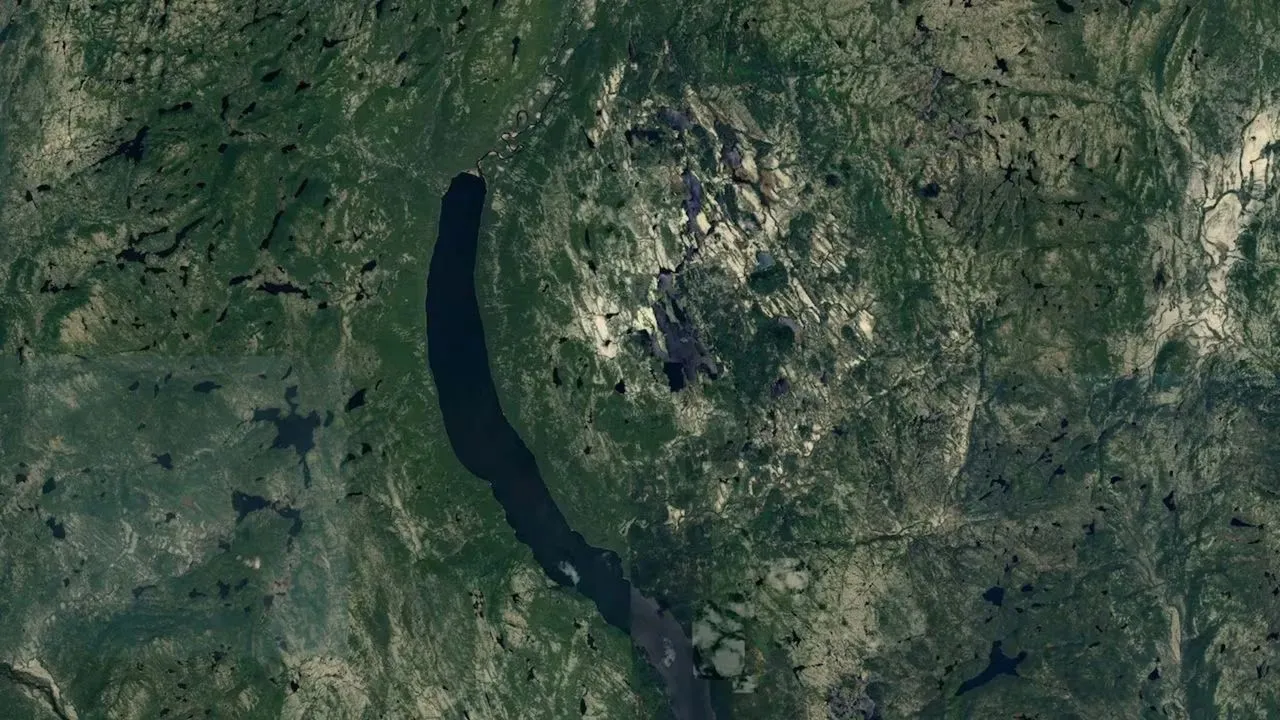
Amateur astronomer Joël Lapointe spotted the suspected impact crater on Google Maps in Quebec’s Côte-Nord region, centered on Lake Marsal, while planning a 2024 camping trip. Western planetary geologist Gordon Osinski (known as “Oz”) visited in 2025, provisionally confirming the crater and finding shock evidence consistent with a meteorite impact.
A camping-trip detour on Google Maps just produced a scientific find big enough to matter: Uhackatik, a likely impact crater in Canada’s north that is roughly 15 miles (25 kilometers) wide and about 390 million years old. The “maybe” started with amateur astronomer Joël Lapointe using Google Maps to plan his 2024 vacation, and it’s now at the point where the decisive work is microscopic checks for preserved shock signatures.
Lapointe reported the odd terrain to Impact Earth, a crowdsourcing website for craters, in a process that connected a hobbyist find to professional fieldwork. In 2025, Western planetary geologist Gordon Osinski (known as “Oz” by the space community) visited the region and provisionally confirmed the crater. During that expedition, Osinski’s team documented shock metamorphic effects, including impact melt rocks and shatter cones, both of which are hallmark evidence of a meteorite impact. The crater, called Uhackatik with approval from the Innu Council of Ekuanitshit, sits in the traditional lands where it is studied.
So why should executives and decision-makers care about a crater in Quebec? Because the way this discovery is progressing is a neat microcase of how science actually gets funded, validated, and scaled. First there is the crowd-sourcing layer, where patterns only trained eyes can later verify. Then there is field validation, where geology teams look for specific physical evidence. Finally there is the lab or microscopic stage, where chemistry and mineral deformation can either lock in the story or force a rethink. This isn’t “science as vibes.” It is a funnel with gates, and missing a gate means you do not get to claim certainty.
Timing matters too. The research is not yet peer-reviewed, and the next milestone is not a press release. It will be presented at the 88th Annual Meeting of the Meteoritical Society in Frankfurt, Germany in August. That means the crater’s classification is still technically provisional, even though Osinski says the impact origin is straightforward in the sense that the field observations align with known impact processes. For leadership audiences, the second-order lesson is familiar: credibility is built through review pipelines and scheduled venues, not through first sightings.
Osinski’s team found evidence that usually survives early in a crater’s life cycle, before erosion starts eating the record. “Impact melt rocks” are rock volumes melted by the impact event, then cooling and crystallizing so they can resemble volcanic rocks at first glance. In this case, Osinski said finding these preserved rocks was a big surprise, and that while much of the features are microscopic, his team could also see “shatter cones” in the field. Shatter cones are branching features in rock layers created by the shockwave of impact, and their presence is hard for other explanations to match.
The size of Uhackatik also sharpens the stakes. Osinski said that, to his knowledge, the last discovery of that scale was the approximately 31-km (19-mile) Hiawatha structure in Greenland, spotted in 2018. There is a catch: Hiawatha is completely buried by ice, so its diameter is uncertain and there is still some controversy about its origin. That contrast is crucial. Uhackatik does not sit under a blanket that obscures the evidence, which is why Osinski is confident about where the crater came from, even as microscopic work remains the final checkpoint.
For context, the article places Uhackatik inside a broader playbook of how Earth impact evidence helps scientists study other worlds. Earth’s 400-million-year-old craters are hard to find because geologic activity and erosion reshape them over time. Yet the preserved evidence is precious because it helps researchers understand meteorite impacts on the moon, Mars, and other rocky bodies. Age comparisons are part of that logic too: Osinski noted that the moon’s prominent Tycho crater best represents what Uhackatik probably looked like 390 million years ago. And for “template” comparisons on Earth, he points to Kamestastin (also known as Mistastin) in northern Labrador, Canada, described as a moon-like crater used to help Artemis II astronauts get ready for their moon mission this year.
The Artemis II connection matters for another reason: it shows how analog sites on Earth are used to train and validate expectations for extraterrestrial geology. Osinski regularly runs expeditions to Kamestastin in consultation with the Mushuau Innu First Nation. In 2023, Artemis II astronauts Jeremy Hansen (from the Canadian Space Agency, or CSA) and Christina Koch (NASA), along with CSA backup astronaut and lunar-flyby capcom Jenni Gibbons, joined Oz and collaborators there. Osinski said Kamestastin is a great comparative crater because the size is very similar, and he uses it as a “template” while exploring the new potential crater.
For now, Uhackatik’s extraterrestrial origin is being tested with a clear, practical plan: Osinski and collaborators are examining samples microscopically for more evidence of shock effects, such as chemistry indicating a high-temperature melt or deformation effects in quartz. The strategic implication for leaders in science-adjacent roles, from funding bodies to program managers, is direct: the work that creates certainty is not glamorous, but it is decisive. A crater can be spotted on a screen in minutes, but it becomes a documented impact record only when shock signatures survive microscopic scrutiny and the results pass through community review.
Finally, Osinski’s lunar work continues in parallel. He will be part of geology teams supporting the moon-landing astronauts during the Artemis 4 and 5 missions, which will touch down as soon as 2028. That means the same scientist shaping lunar mission geology training is also doing the crater detective work on Earth. If there’s a theme executives should carry out of this story, it’s that research pipelines run on disciplined verification, not on raw excitement. The click is only the start. The proof is the product.
This story's Key Insights and Take-aways are locked.
Create a free account to unlock Executive Actions for one credit.
Register to UnlockAlways free for Executives Club members. Join the Club
More in Science

Alaska's 1,580-foot tsunami had warning signs. Scientists just found them.
Rapid glacier retreat, heavy rainfall, and thousands of tiny tremors preceded Alaska's 1,580-foot tsunami, a warning for every coastal community in a warming world.

The rare mutation that lets high-risk brains dodge Alzheimer's
Scientists found a natural defense against protein buildup, opening a new path to preventive treatments.

3,000 steps a day may halve Alzheimer's decline, study finds
New research links a modest daily walk to less tau buildup and nearly half the cognitive and functional decline, even for those with early signs.