

Google’s app store billing rules shift next week, replacing the 30% flat cut
Even without court approval of Epic’s settlement, Google will roll out “lower, decoupled fees” that change how developers pay.
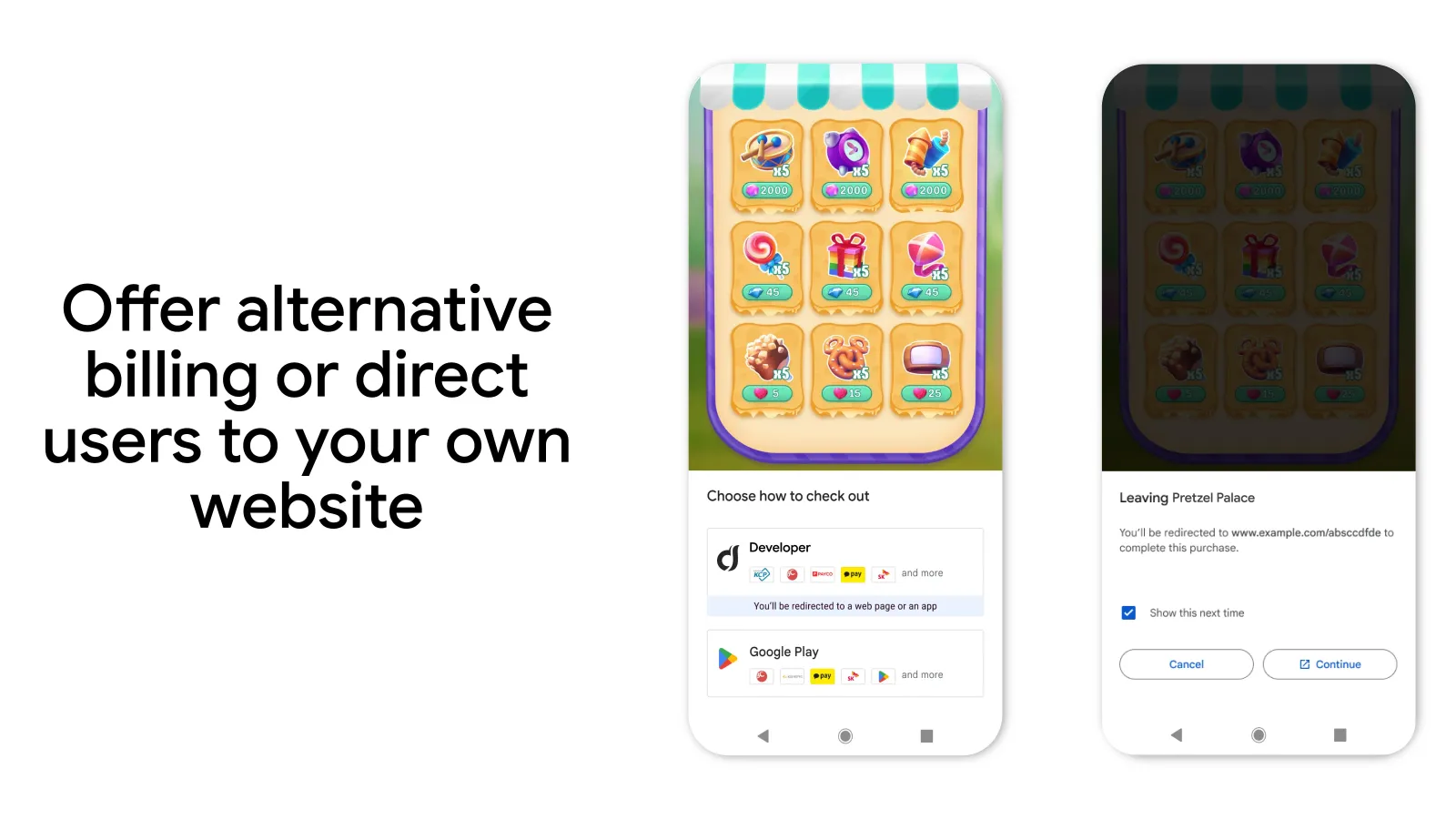
Google says it will begin rolling out next week changes to how developers are charged for app store billing worldwide. The shift replaces the flat 30% billing fee with “lower, decoupled fees,” but how much Google takes depends on user install timing and developer earnings.
Google says it will start rolling out changes to app store billing next week, even though the court has not yet signed off on the massive settlement ending Epic’s antitrust lawsuit. The reason decision-makers should care is simple: Google is moving away from a flat 30% billing fee and toward “lower, decoupled fees” that partially separate billing from the Google Play app store.
In March, Google announced this shift. Now it is ready to operationalize it, and the amount Google takes from transactions will depend on multiple variables, including whether the user’s first install happened before or after the new billing structure, how much the developer has earned, and whether the transaction falls into the newly defined categories. Translation: your revenue forecasts can no longer assume one universal “30% cut,” and the economics of app monetization will vary depending on your audience and your history.
This all lands in the middle of a regulatory fight that still is not fully closed. Epic’s lawsuit alleged Google had a monopoly over Android’s app store through Google Play, and the court still has not signed off on the settlement that resolves those claims. That matters because, even without a final rubber stamp, Google is taking the practical step of changing billing mechanics for developers worldwide. In other words, the product and policy changes are happening in parallel with legal resolution, which is a common pattern when a regulator-driven outcome is expected, or at least when market pressure makes timing crucial.
Under the previous system, the flat 30% fee gave developers a clear rule to build on. That clarity is exactly what regulators and challengers often target, because a single rate can become a convenient proxy for “what the platform extracts.” The new approach, described by Google as “lower, decoupled fees,” is designed to reduce and reorganize that extraction. It also signals something subtler: Google is trying to make the fee less directly tied to app store access and more tied to the billing relationship itself.
The new fee logic is not just a tweak. It introduces what finance teams hate: more segments, more thresholds, and more dependence on historical and user-specific conditions. The source specifically says Google’s cut now depends on whether it is a user whose first install came before or after the new structure, how much a developer has earned, and whether the fee setup applies in a given situation. For operators and CFOs, that means internal models need at least three layers instead of one. You can no longer treat the store as a single channel with a single margin.
For boards and senior leadership, there is a governance angle too. When legal outcomes are still pending, platform policy changes often become the de facto standard because they are rolled into product flows. Even if the settlement has not been fully signed, developers will have to adapt now. That creates leverage for whoever can move fastest: the companies that adjust pricing, packaging, and user migration strategies first will feel less pain later.
There is also a competitive second-order effect. If fees vary by user install timing and developer earnings, developers may try to influence which cohort they serve and how they structure monetization. You should expect more attention on lifecycle design, promotional acquisition timing, and how subscription migrations are handled, because those choices can determine which fee regime a user ends up in. The fee system is no longer just “platform tax,” it becomes a policy-driven variable inside product design.
Finally, the strategic stakes go beyond app developers. The Android ecosystem is large, and billing mechanics influence how consumer apps price subscriptions, run offers, and balance app revenue against other distribution or payment options. Google is essentially laying groundwork for a world where app store billing is not governed by one simple percentage. For peers across mobile commerce, payments, and platform partnerships, this is a signal to revisit assumptions now, not after the court signs off.
This story's Key Insights and Take-aways are locked.
Create a free account to unlock Executive Actions for one credit.
Register to UnlockAlways free for Executives Club members. Join the Club
More in Technology

Nvidia's $89B data center quarter: the 9 companies cashing in
The AI buildout is minting fortunes beyond GPUs, and memory, cloud, and cooling suppliers are riding the same wave.

Google quietly links your phone number to every Android account on your SIM
Adding a SIM now ties your phone number to all Google accounts - and future accounts inherit it. Here's the security and privacy stakes.

Hijacker AI 'Skynet mode' runs 100,000 attack steps against exposed models
Symantec caught a criminal AI agent that borrows other models, steals data, and mines crypto; the only relief is no confirmed victims yet.