
Google says electricity use jumped 37% in 2025 as AI data centers expanded
The spike is biggest in its history, but Google points to clean power purchases and argues emissions control is possible.
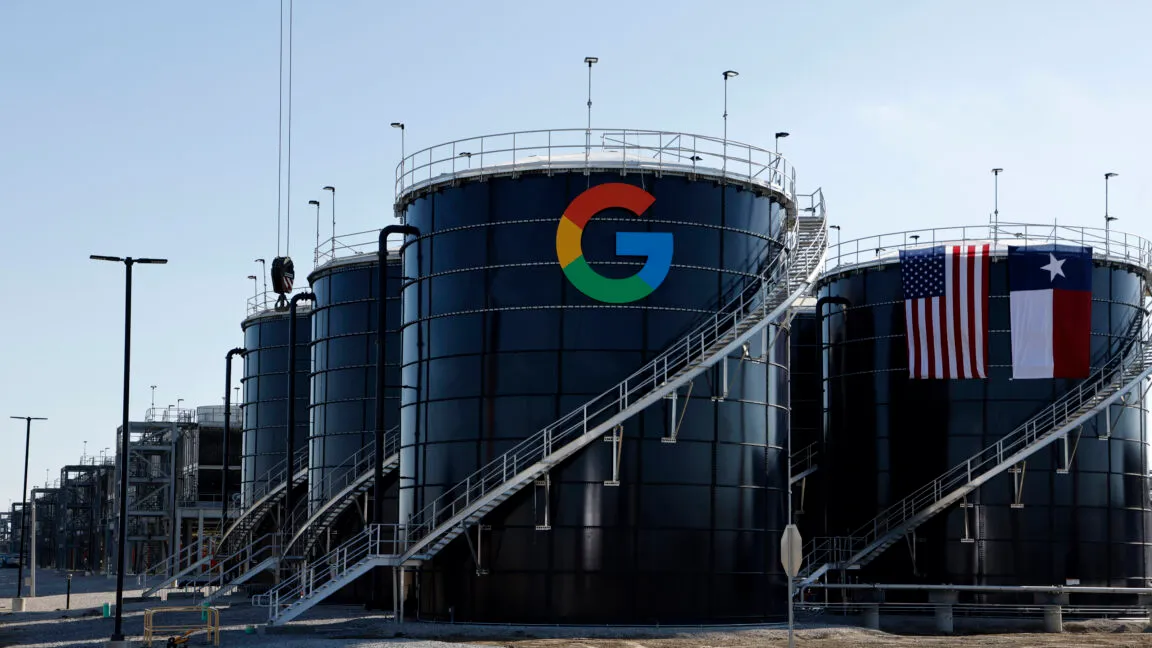
Google reported that its annual electricity consumption rose 37% in 2025, the largest increase in the company’s history, tied to Silicon Valley AI data center buildout. For decision-makers, the implication is clear: even leaders committed to decarbonization are facing accelerating grid demand, and climate targets now hinge on scaling clean power faster than the grid.
Google’s annual electricity consumption rose 37% in 2025, the largest increase in the company’s history, and it is being driven by the ongoing AI data center buildout. Google also says it managed to keep operational carbon emissions down by continuing to purchase massive amounts of clean energy, even as its power draw accelerates.
The most important detail for anyone tracking AI’s real-world costs is that this 37% annual jump does not live in isolation. Google’s sustainability reporting says its total electricity usage has increased by more than 250% since 2019, and it expects that growth is tied directly to ongoing expansion in Google Cloud and YouTube, plus data center construction and operations supporting various AI products and services.
Why this matters now is simple: AI infrastructure is turning electricity into a board-level constraint. When data centers expand, they do not just add compute capacity. They add a steady, energy-hungry load that must be planned for, contracted for, and paid for. Google’s numbers show how quickly that load can rise when the business bets heavily on AI. The company also notes the pattern is already underway, citing that total electricity consumption grew by 27% in 2024.
On the incentives side, Google is trying to thread a needle that regulators and customers increasingly care about: reduce carbon while still scaling computing. In its latest sustainability report, the company acknowledges the timing problem created by AI infrastructure buildout currently accelerating faster than the grid is decarbonizing. That sentence is doing heavy lifting, because it signals that Google is not just reporting an outcome. It is framing the constraint as structural: the electricity system is decarbonizing, but at a slower pace than the AI buildout is growing.
Operational carbon emissions, at least according to Google’s approach, are treated differently than electricity consumption. The company says it kept operational carbon emissions down by continuing to purchase massive amounts of clean energy. In other words, Google is separating the demand problem (more power required) from the emissions problem (what kind of power gets used). That distinction is critical for decision-makers because it explains why you can see both: rising electricity usage and reduced operational carbon emissions, at least in how Google reports them.
This is also where policy and scrutiny enter the picture. Climate reporting standards and buyer expectations have been moving toward full accountability across energy use, emissions accounting, and supply chain impacts. Even if Google’s operational carbon emissions are controlled through clean power purchases, the optics of a 37% electricity increase matter. Utilities and grid operators feel the demand. Regulators and watchdogs often ask whether clean energy procurement keeps pace, whether contracts are truly incremental, and what happens when new capacity arrives faster than the clean grid.
There is also a competitive angle. Google’s latest disclosed trend is likely to become a reference point for other large cloud and AI infrastructure operators. If peers see electricity draw climbing at similar rates, the practical question shifts from “can we build AI?” to “can we secure clean power at scale fast enough?” That is not just an engineering timeline issue. It affects commercial deals, data center siting, procurement budgets, and how sustainability metrics are interpreted by investors and customers.
Google’s sustainability report sums up the reality in plain language: while achieving climate ambitions will not be linear, it says the company remains focused on scaling abundant and affordable clean power globally and on progressing technological innovations that drive down emissions across operations and the broader industry. If you run a company with AI ambitions, the boardroom takeaway is that decarbonization is becoming a race against both time and electricity demand. The grid is the shared battleground, and the only way to win is to line up power, contracts, and technology so growth does not automatically translate into emissions backsliding.
This story's Key Insights and Take-aways are locked.
Create a free account to unlock Executive Actions for one credit.
Register to UnlockAlways free for Executives Club members. Join the Club
More in Technology

Nvidia's $89B data center quarter: the 9 companies cashing in
The AI buildout is minting fortunes beyond GPUs, and memory, cloud, and cooling suppliers are riding the same wave.

Google quietly links your phone number to every Android account on your SIM
Adding a SIM now ties your phone number to all Google accounts - and future accounts inherit it. Here's the security and privacy stakes.

Hijacker AI 'Skynet mode' runs 100,000 attack steps against exposed models
Symantec caught a criminal AI agent that borrows other models, steals data, and mines crypto; the only relief is no confirmed victims yet.