

Great apes hug before stressful moments to reduce tension and build trust, study finds
A new study suggests cuddling rituals may be an ancient trust-building tool, long before humans named it psychology.
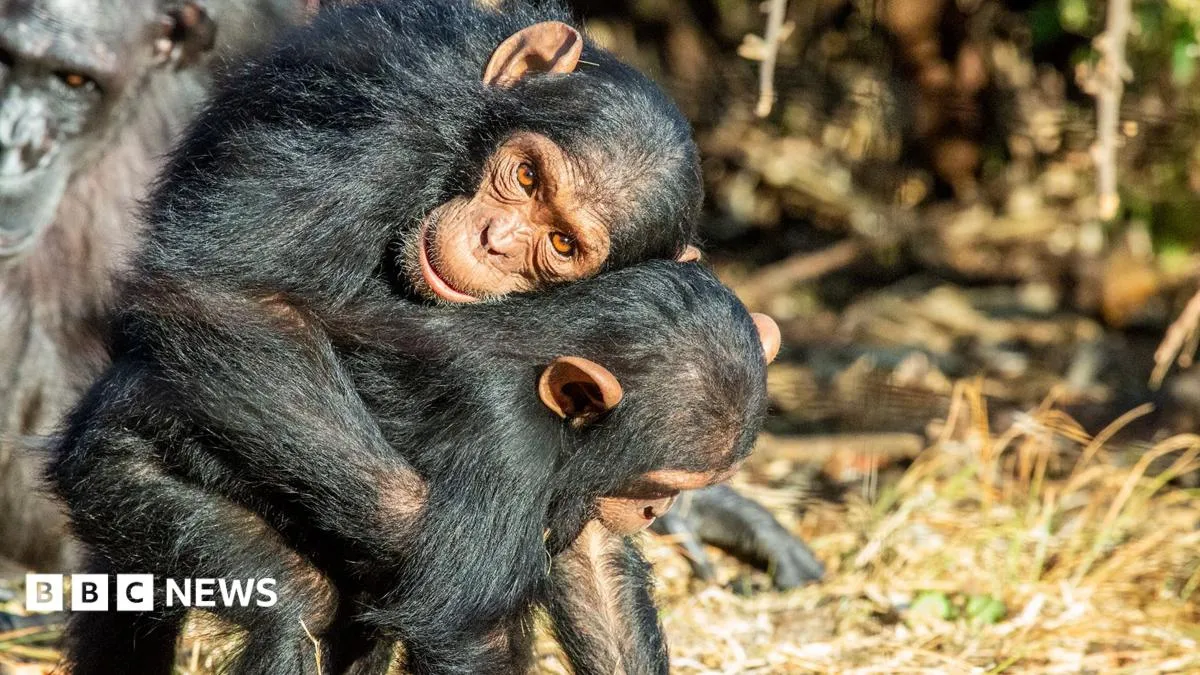
Scientists studying apes found that hugging and cuddling before stressful events appears to help reduce tension. For decision-makers, the implication is bigger than animal trivia: it points to deep, repeatable mechanisms of trust under pressure.
A study of great apes found that hugging and cuddling before stressful moments helps keep the peace. In other words, the animals do not just display affection after the fact. They seem to use it as a preemptive move, before pressure hits.
That timing matters. The research frames hugging before stressful events as a possible ancient behavior for building trust. So if you have ever watched a team member de-escalate conflict with a quick kindness before a hard meeting, you are not imagining patterns. The study suggests something similar may exist across species, built into social biology rather than taught in a slide deck.
To understand why this is interesting to executives and boards, zoom out from the animals and into the problem: stress changes behavior. When people feel threatened, they tend to narrow attention, escalate quickly, and trust less. In organizations, that shows up as faster blame, slower collaboration, and meetings that turn into courtroom dramas. The study's core idea is that a small, socially meaningful behavior can shift the emotional baseline before the difficult moment arrives. If that is true in apes, it supports the idea that trust is not only a policy. It can be a mechanism triggered by repeated signals.
Great apes are not humans, and this is not a claim that a hug replaces strategy. The study does not ask you to rewrite your HR handbook with a cuddle schedule. It points to a behavioral sequence: hug and cuddle before stress, then peace is more likely. That distinction is crucial. It is the order of operations that reads like a “process improvement” for social dynamics. Stress comes. Then the group has an established way to lower tension and re-stabilize relationships.
Why would this kind of ritual matter over time? Trust is expensive to build and cheap to destroy. Once a team or group is in a conflict spiral, it takes more time, energy, and often third-party intervention to pull it back. A recurring calming behavior, delivered right before a stressful event, could function like an internal circuit breaker. That is the second-order implication for leaders: not all trust-building is long speeches and values posters. Some of it is micro-behavior, timed to the moments when teams usually crack.
This also connects to how governance and compliance teams think, even if indirectly. Regulators and boards often focus on how organizations prevent harm: de-escalation protocols, escalation pathways, whistleblower protections, and culture controls. These frameworks typically treat “risk” as something you manage after signals appear. The study suggests a different angle. If trust-building actions can occur before stress peaks, then prevention can be behavioral, not just procedural. That means leaders should ask where in their own systems the de-escalation happens, and whether it happens early enough.
There is a further organizational angle: board dynamics and executive teams live in a constant undercurrent of pressure. Mergers, layoffs, earnings, litigation, and regulatory deadlines compress time and heighten sensitivity. When stress ramps up, even strong teams can misread intent and overreact to ambiguous actions. If a pre-stress “peace signal” exists in apes, the analogy is not about copying cuddling. It is about designing leadership behaviors that reliably lower tension before high-stakes interactions: structured check-ins, fast clarity, explicit acknowledgment of uncertainty, and culturally safe ways to reset when emotions rise.
So what should decision-makers actually take from a BBC News science report about great apes? The honest answer is that the takeaway is conceptually simple but operationally sharp: trust can be built with timing. The study says hugging and cuddling before stressful events may be an ancient way of building trust. For executives, that raises a practical question for their next stressful meeting: do your team norms include a pre-stress reset, or do you only try to repair relationships after things already feel out of control?
This story's Key Insights and Take-aways are locked.
Create a free account to unlock Executive Actions for one credit.
Register to UnlockAlways free for Executives Club members. Join the Club
More in Science

Alaska's 1,580-foot tsunami had warning signs. Scientists just found them.
Rapid glacier retreat, heavy rainfall, and thousands of tiny tremors preceded Alaska's 1,580-foot tsunami, a warning for every coastal community in a warming world.

The rare mutation that lets high-risk brains dodge Alzheimer's
Scientists found a natural defense against protein buildup, opening a new path to preventive treatments.

3,000 steps a day may halve Alzheimer's decline, study finds
New research links a modest daily walk to less tau buildup and nearly half the cognitive and functional decline, even for those with early signs.