
Gremlins Museum curator Ian Grant reconstructed a 3-hour ‘Gremlins’ cut unseen in 40+ years
His fan-led discovery turned into a newly unveiled assembly version at a secret screening for horror filmmakers.
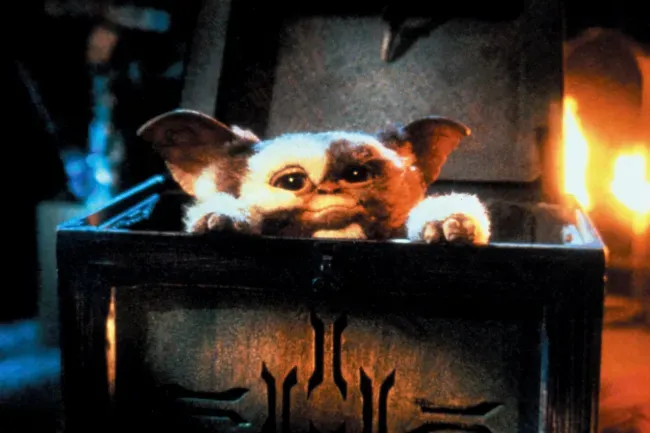
Ian Grant, founder and curator of Gremlins Museum, recently discovered and reconstructed an assembly cut of Joe Dante’s 1984 classic “Gremlins.” The reconstructed three-hour cut was unveiled at a secret screening for prominent horror filmmakers, creating a rare new window into studio-era film material.
If you care about what gets preserved, what gets lost, and who gets to decide what “counts” in entertainment history, this story is a bit of a wrecking ball. Gremlins Museum founder and curator Ian Grant has reconstructed an assembly cut of Joe Dante’s 1984 classic “Gremlins” that has reportedly been unseen in over 40 years. And recently, that three-hour cut was unveiled at a secret screening for prominent horror filmmakers.
That first detail matters because it reframes the usual version of film history. Instead of treating the released movie as the only canonical artifact, Grant’s work surfaces something closer to the film’s working draft, the “in-progress” version that existed before final shaping. In other words: the three-hour cut is not a fan re-edit or a rumor. It is a reconstructed assembly cut, discovered and put back into view by a museum curator, then shown publicly in a controlled, insider setting to horror’s power users.
Why would “assembly cuts” and “three hours” suddenly matter beyond movie nerd gravity? Because entertainment markets run on scarcity of access. Once the theatrical cut is the only widely circulating version, it becomes a closed feedback loop for creators, critics, and audiences. An assembly cut punches a new hole in that loop. Filmmakers get to see what sequences existed, how the rhythm might have been different, and what narrative logic the studio (and the filmmakers) were potentially exploring before the final version locked in. That can influence everything from how directors think about pacing to how genre historians frame “how the sausage got made.”
From an incentive standpoint, Grant’s story also highlights an unusual but increasingly visible model: private curation as a kind of rights-adjacent cultural infrastructure. Museums do not just display; they curate context. In that role, Grant is not competing on streaming catalogs or box office recency. He is operating in the archive ecosystem, where the real asset is access to materials that most people will never see. That is a different kind of value creation, and it can matter to decision-makers who live in the world of “what is available” rather than “what could exist.”
The unveiling at a secret screening adds another layer. A controlled screening for prominent horror filmmakers suggests a calculated reveal, where the discovery is introduced through the community that has the highest density of relevant stakeholders: directors, producers, and creative influencers who can immediately interpret what an assembly cut means for craft and legacy. If you are a studio executive or a board member thinking about brand stewardship, this is a reminder that entertainment heritage can be activated strategically. You do not always need mass-market rollouts to create impact. Sometimes you start with the gatekeepers of genre culture, then let that credibility travel.
There is also a regulatory-adjacent angle worth noting, even though the source does not lay out legal terms. Film rights, distribution permissions, and archival material handling often involve contracts and clearances. Assembly materials can sit in complicated places historically, especially when physical elements survive unevenly. The fact that this cut was reconstructed and then unveiled implies coordination and feasibility, even if the details are not spelled out in the coverage. For executives, that matters because it signals that “unknown” content can become “presentable” when the right operational and clearance pathways exist.
Zooming out: what Grant did is a reminder that the entertainment pipeline is not purely linear. Projects can fork, versions can multiply, and artifacts can go dormant for decades. When something resurfaces, it can create second-order effects that reach beyond the title itself. Horror filmmakers, in particular, are a community that constantly metabolizes past influences. A three-hour “in-progress” “Gremlins” reconstruction gives creators a fresh lens on pacing, scene construction, and the tonal choices available in the early version of a mainstream classic.
For peers in similar roles, the strategic stakes are simple. Archives are not just storage; they are optionality. If you lead an entertainment company, a museum, a rights-holding entity, or an investment vehicle that touches media, you should treat discoveries like this as more than headlines. The operational question is whether the systems for preservation, reconstruction, and curated access are strong enough to turn buried materials into cultural events. Grant’s assembly cut shows the potential upside when someone with deep passion also has the curatorial discipline to reconstruct history and get it in front of the people who will use it.
This story's Key Insights and Take-aways are locked.
Create a free account to unlock Executive Actions for one credit.
Register to UnlockAlways free for Executives Club members. Join the Club
More in Entertainment

Russell Brand's accuser 'bewildered and confused' as he denies 7 sex charges
The criminal case against the comedian is a live test of how media companies manage talent risk when serious allegations go public.

'It's a Magic Trick': Ballet Experts Say Rosalía's SNL Pose Is Impossible
Three ballet experts tell Rolling Stone Rosalía's gravity-defying SNL stillness shouldn't be possible - and why the debate is now part of the show.

Activision CMO: GTA 6 Will Boost Call of Duty, Not Bury It
Activision's top marketer says Rockstar's blockbuster will drive players back to consoles and into Modern Warfare 4, even as the company admits its recent strategy failed.