
GWAR say Secret Service only reached them after Trump took office
The band claims it staged faux presidential executions for decades, but only heard from the Secret Service during the Trump era.
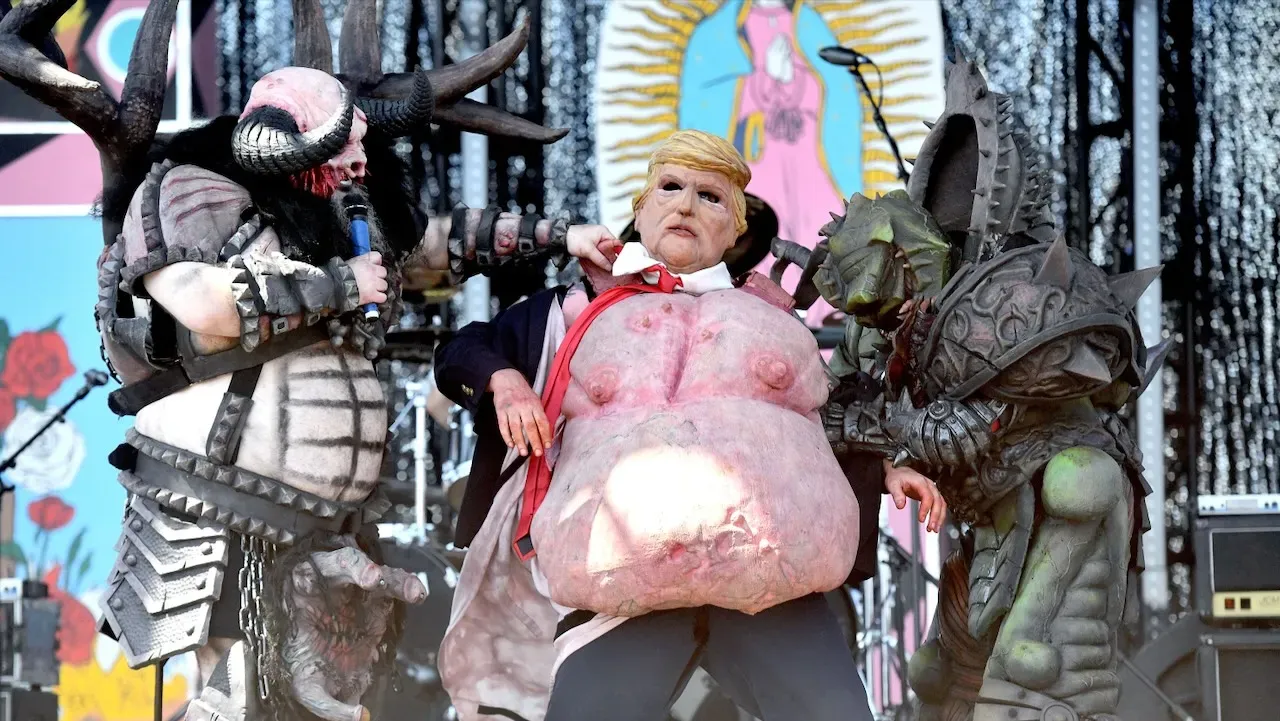
GWAR, the shock rockers known for faux executions of presidents and other public figures, say they never heard from the Secret Service until Donald Trump became president. The consequence for decision-makers is a reminder that security and enforcement posture can shift quickly with political leadership, turning long-running spectacle into a compliance question overnight.
GWAR have staged faux executions of presidents and other heads of state for four decades. But the band says they did not receive a visit from the Secret Service until Donald Trump assumed the presidency. In GWAR's telling, the “weird timing” matters: not because the performance itself changed overnight, but because the agency’s attention did.
That claim is the whole story, and it starts with a straight line between a long-running act and a suddenly active security apparatus. GWAR say they were met by the Secret Service after Trump took the Oval Office, following decades of carrying out the same type of theatrical, fictitious “kill” scenes. Their public description includes the idea that they “fictitiously” killed someone, underscoring that this was supposed to be understood as performance rather than threat.
So what changed? The source does not detail internal decision memos, legal standards, or operational thresholds. What it does surface is a real-world governance reality: enforcement is not only about the underlying text of a policy or the existence of a rule. It is also about posture, risk management, and who is in charge. When the presidency changes hands, security agencies can recalibrate how they interpret potential risks tied to public figures. Even when an act has existed for years, the “target environment” can shift the moment a new administration begins.
That recalibration has second-order consequences far beyond GWAR as a band. In normal operations, creative companies, promoters, brands, and event organizers often rely on a kind of institutional memory: “We’ve done this before. It was tolerated. It never escalated.” But security and law enforcement agencies can treat risk as dynamic, especially when the people on the receiving end are different. In other words, the question may not be whether the act is new. The question may be whether the current office holder or current political climate increases the perceived likelihood of harm, misunderstanding, or copycat behavior.
This is where the regulatory background matters, even if the source stays high level. The Secret Service’s mandate is protective security for high-profile political figures, and in practice that typically means a constant balancing act. Agencies must consider intent, context, and how an action might be interpreted by different audiences. A theatrical execution that reads clearly as satire to longtime fans might be received differently by someone else, especially in a charged media environment. That’s the compliance trap: not everyone consumes content the same way, and agencies tend to plan for the worst plausible interpretation.
For boards and executive teams in media, entertainment, and live experiences, the GWAR claim points to a governance issue that is easy to miss when you are focused on bookings and production. When enforcement attention arrives, it can force organizations to answer questions they thought were settled. Who approved the creative concept? Was there any legal or security review? Are there escalation protocols with venues, promoters, and local authorities? And if a performance involves public officials or public-facing mock “killings,” what guardrails are in place to prevent misunderstandings or operational disruptions.
The strategic stakes are simple: a company does not only risk headlines. It risks operational friction, sudden scrutiny, and time-consuming coordination. Even if the underlying activity is long-standing and framed as fictitious, an agency visit can turn a creative schedule into a legal schedule. That is the real cost center hidden inside “just a show.”
Finally, the GWAR story is a reminder for anyone in executive leadership roles: institutional tolerance is not a permanent contract. The band says it waited decades for contact from the Secret Service, then got it only after Trump became president. That timing suggests that risk perception and enforcement intensity can pivot with political leadership. For peers, the takeaway is to treat long-running creative formats as living compliance surfaces, not static traditions, and to be ready when attention shifts, even if your script hasn’t.
This story's Key Insights and Take-aways are locked.
Create a free account to unlock Executive Actions for one credit.
Register to UnlockAlways free for Executives Club members. Join the Club
More in Entertainment

Russell Brand's accuser 'bewildered and confused' as he denies 7 sex charges
The criminal case against the comedian is a live test of how media companies manage talent risk when serious allegations go public.

'It's a Magic Trick': Ballet Experts Say Rosalía's SNL Pose Is Impossible
Three ballet experts tell Rolling Stone Rosalía's gravity-defying SNL stillness shouldn't be possible - and why the debate is now part of the show.

Activision CMO: GTA 6 Will Boost Call of Duty, Not Bury It
Activision's top marketer says Rockstar's blockbuster will drive players back to consoles and into Modern Warfare 4, even as the company admits its recent strategy failed.