

Haberman says Trump’s fixation on male looks started alarm bells in 2016
In a podcast interview, Maggie Haberman links Trump’s “type” to rising, overt behavior and staff unease.
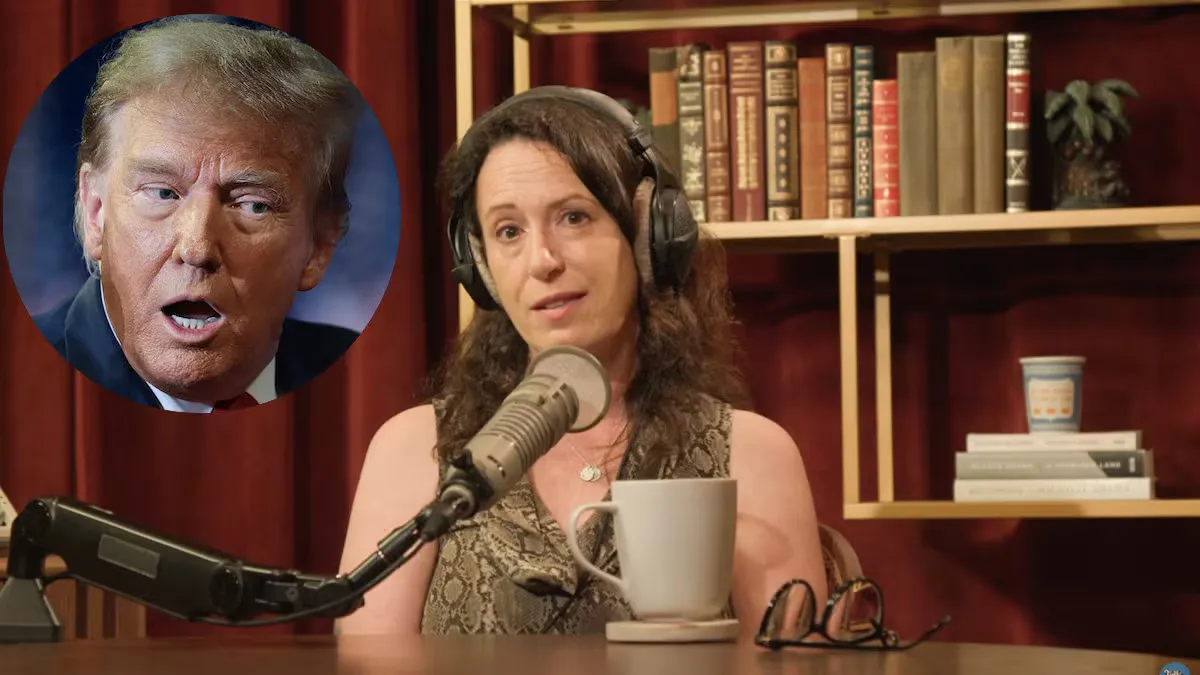
Maggie Haberman, a New York Times journalist and author of “Regime Change: Inside the Imperial Presidency of Donald Trump,” said President Donald Trump’s fixation on male looks alarmed people inside his administration early on. She argued it startled staff in Term One in 2016, then became more overt in the campaign and his second term.
President Donald Trump’s fixation on male looks did not just register as an offbeat personality detail for Maggie Haberman. In a Sunday podcast interview, the New York Times journalist and author said the behavior alarmed people inside his administration, especially at the start of his presidency.
The trigger, in Haberman’s telling, was not subtle. When “Talk Easy” host Sam Fragoso pressed Haberman directly on whether Trump’s fascination with attractive men and classic masculinity went beyond objectification, she answered that it clearly had a “fixation and fascination with male looks.” Fragoso referenced Haberman’s reporting that Trump has called men names “straight out of central casting,” and described how he has called men “handsome” and “beautiful.” The conversation also pointed to Trump’s comments about Arnold Palmer, and Fragoso asked whether Trump celebrates Pride after June. Haberman deadpanned that she did not know Trump “has ever celebrated pride, period,” then returned the focus to the broader pattern: this fixation exists, and people noticed.
Here is what makes this matter beyond tabloid-level intrigue: Haberman described it as something that escalated in Trump’s second term. She said it “was something that startled a lot of people in his administration in Term One,” and added that Trump has become “much more overt about it.” In other words, this was initially a cause for concern in 2016, then it grew more visible as the campaign continued and as his second term began. That kind of trajectory is exactly what executives and boards should clock when assessing risk inside leadership cultures. When a pattern stops being private chatter and turns into public practice, it changes how staff calculate incentives, image risk, and internal safety.
The interview also got specific about a political figure who sits close to Trump’s orbit: New York City Mayor Zohran Mamdani. Fragoso asked whether Trump’s reported fascination with male beauty extends to Mamdani. Haberman said Trump has invited Mamdani to the Oval Office, while also labeling him a “hardcore communist bastard.” Haberman then reframed the question around perception. “He certainly talks about women’s looks a lot, too,” she said, but “yes, Mamdani is generally viewed as a young, handsome man,” and Haberman added that she thinks the president “has a type on that front.”
That word, “type,” is doing a lot of work here. It implies consistency in attention, not just randomness in comments. And Haberman’s larger point is that the attention has become more overt over time. For decision-makers, the second-order question becomes: what does a leader do when staff see they can gain access, approval, or traction through the kinds of signals being rewarded? Organizations run on incentives, even when the incentive is social. When leadership makes appearance and conventional masculinity a visible part of the reward system, it can shape who feels protected, who gets engaged, and who takes the emotional toll of managing up.
It also matters because the interview describes this as part of a broader difference between Trump’s first term and his second. Haberman’s latest book, co-written with her Times colleague Jonathan Swan, chronicles “the first year of Trump’s second term as president and how the current administration differs from the first.” Even though this podcast segment focuses on the human side of the presidency, the business translation is straightforward: personnel norms and informal culture often show up before policy outcomes. If staff are alarmed by leadership conduct early, they may respond by tightening processes, reducing discretionary exposure, or changing how they brief and signal internally. Those changes can affect execution, coordination, and ultimately the predictability of government action.
For executives outside politics, there is also a governance lens. Boards and senior leaders spend real time building guardrails around conduct, communications, and workplace culture because they know what happens when “tone at the top” becomes “rules at the bottom.” Haberman’s framing suggests that in Term One, staff treated Trump’s fixation as a concern. In her view, it later became more overt in the campaign and now. That escalation is the part that should trigger an internal memo in any organization that cares about compliance, reputational risk, and employee retention, because it indicates not only a personal pattern, but a pattern that leadership is comfortable amplifying.
And while this story is about a president, it is really about leadership attention as a form of power. If a leader’s preferences are public enough, they become a map for the rest of the organization. They influence what gets taken seriously, what gets overlooked, and which staff members decide whether to stay in the room. Haberman’s interview lands on a blunt conclusion: people were startled in 2016, and the president has become “much more overt” over time. That is not a quiet detail. It is a culture signal, and culture signals tend to travel quickly from private conversations to public outcomes.
This story's Key Insights and Take-aways are locked.
Create a free account to unlock Executive Actions for one credit.
Register to UnlockAlways free for Executives Club members. Join the Club
More in Politics

LA County: DOJ's 20,000 'noncitizen' voter list is 'unreliable,' includes U.S.-born
Preliminary review by Los Angeles County election officials finds errors in the federal list, raising the stakes for voter roll integrity ahead of November.

Trump's $1.5B Pentagon chip investment lands in North Carolina
A $1.5 billion defense infusion for North Carolina chipmaking signals a new era of Pentagon-backed reshoring - here's what it means for the industry.

Nigeria confirms first Ebola case in Abuja, a woman just off a Uganda flight
Health Minister Muhammad Ali Pate says the patient flew in from Uganda, putting Africa's latest outbreak on Nigeria's doorstep.