

Maine Democrats seize Biddeford ICE shooting to pressure Susan Collins in Senate race
A deadly shooting in Biddeford becomes a campaign accelerant, as Democrats try to connect Susan Collins to Trump’s immigration crackdown.

Democratic Senate candidates in Maine are denouncing a deadly ICE shooting in Biddeford and using it as an issue in the Senate race against Senator Susan Collins. The political fight matters to decision-makers because it shows how immigration enforcement events get rapidly translated into accountability narratives around federal policy.
A deadly ICE shooting in Biddeford has quickly become a live grenade in Maine’s Senate race, and Democrats are trying to turn it into a direct line of accountability aimed at Senator Susan Collins. The pitch is straightforward: tie Collins to President Trump’s immigration crackdown by forcing voters to connect a specific killing on the ground to the federal enforcement approach that Democrats say drives it.
That strategy matters because campaigns do not just compete on policy platforms anymore. They compete on speed, emotional salience, and narrative control. In this case, the killing in Biddeford became an issue quickly, and Democrats moved to frame it as more than a local tragedy. The aim is to pressure Collins by suggesting her voting record and posture on immigration enforcement align with the crackdown Democrats associate with Trump.
Even without getting into details of the incident itself beyond what the source provides, the political mechanics are clear. Immigration enforcement is one of those policy areas where the gap between legislation and lived experience is small. When something happens in a community, it becomes shorthand for a broader system. That is why a single event can dominate hours and then days of media and messaging. Democrats can use the story to compress a complicated debate about border policy, detention, and enforcement priorities into one visceral image.
For Collins, the challenge is that “tying” is not just a rhetorical act. It is a governance test. Voters and reporters often interpret Senate influence through the easiest available lens, especially in high-salience election cycles. If Democrats can present the ICE shooting as evidence of harms they associate with the Trump administration’s approach, Collins has to work harder to separate herself from the broader crackdown story. That means the campaign has to fight on two fronts at once: acknowledging public safety and grieving the loss, while also contesting the claimed causal link to federal enforcement.
For decision-makers watching from outside politics, this is a reminder of how quickly regulatory and enforcement frameworks become reputational risk. Federal immigration enforcement is governed through a mix of statutory authority, administrative policy, and operational execution. When Democrats frame an event as the outcome of a crackdown, they are effectively pointing at the “system,” not just the moment. That matters because the system narrative influences how stakeholders expect future enforcement to behave, and how political leaders are held accountable for that behavior.
There is also a strategic implication for boards, investors, and executives in regulated industries, even if they are not directly involved in immigration policy. When administrations shift enforcement posture, organizations across sectors often feel the spillover through changes in compliance requirements, HR practices, eligibility rules, litigation risk, and public contracting environments. The Senate race is not merely a spectacle; it is a signal about how likely immigration policy is to remain contentious and how quickly enforcement outcomes can be politicized. In other words, campaign messaging can foreshadow policy instability, and policy instability is the kind of uncertainty that forces companies to plan for more scenarios, not fewer.
The second-order effect inside the political ecosystem is the way opponents seek to “own” the meaning of unfolding events. Democrats are not only denouncing the deadly ICE shooting; they are treating it as campaign fuel to connect Collins to Trump’s immigration crackdown. That framing puts Collins on the defensive, because the longer she focuses on procedural nuance, the easier it is for opponents to keep the spotlight on the human impact. Campaigns are competitions over attention, and this incident gives Democrats a compelling attention hook.
So the stake in Maine is not just who wins a Senate seat. It is whether Democrats can successfully align a senator’s record with a broader national enforcement narrative tied to President Trump. If they do, it can shape voter perceptions beyond Maine in future races. If they fail, Collins gains room to contest the causal story. Either way, the Biddeford shooting shows how quickly enforcement events become political leverage, and how difficult it is for any incumbent to keep a distance once an opponent has anchored the story to a larger crackdown narrative.
This story's Key Insights and Take-aways are locked.
Create a free account to unlock Executive Actions for one credit.
Register to UnlockAlways free for Executives Club members. Join the Club
More in Politics
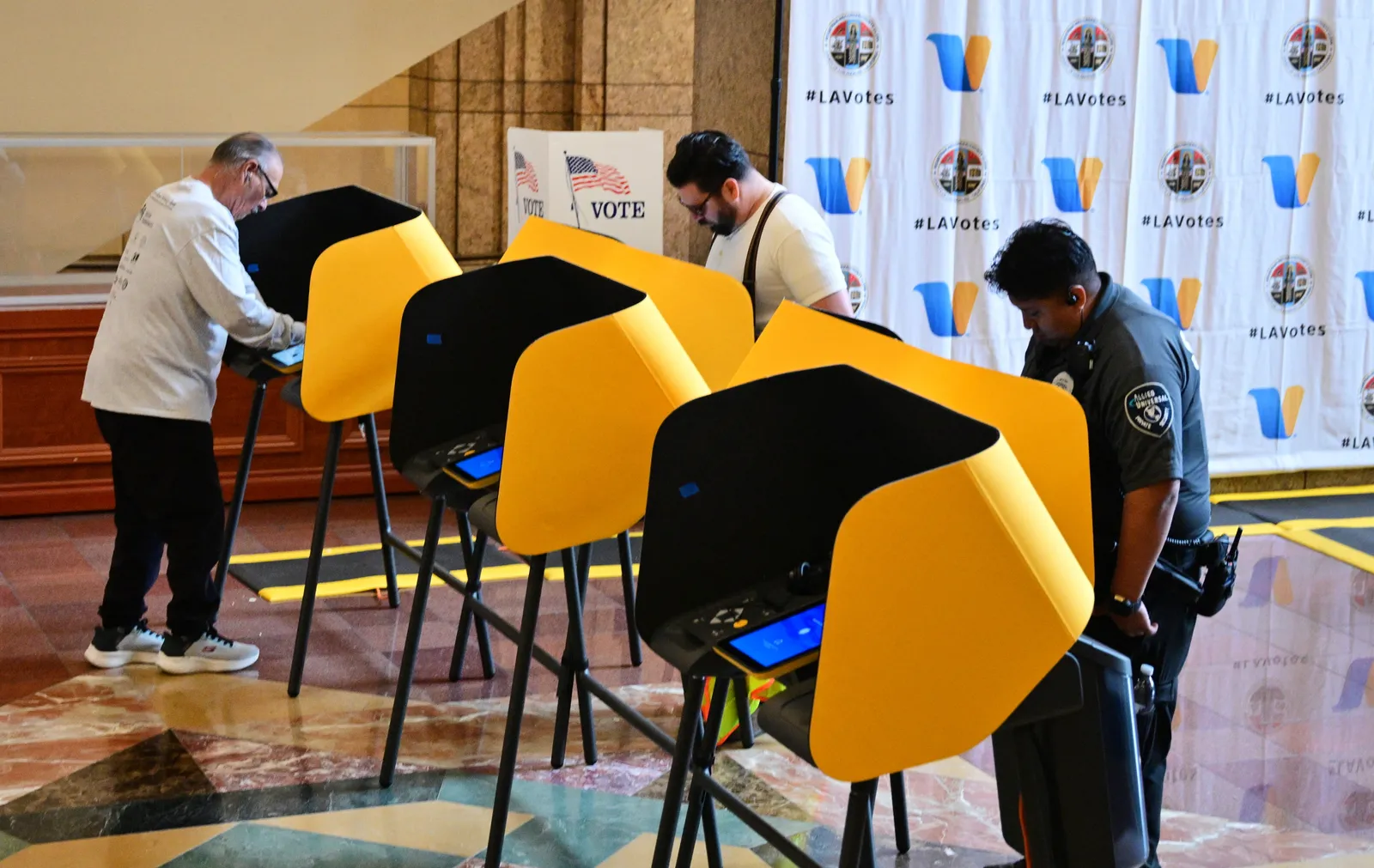
LA County: DOJ's 20,000 'noncitizen' voter list is 'unreliable,' includes U.S.-born
Preliminary review by Los Angeles County election officials finds errors in the federal list, raising the stakes for voter roll integrity ahead of November.
Trump's $1.5B Pentagon chip investment lands in North Carolina
A $1.5 billion defense infusion for North Carolina chipmaking signals a new era of Pentagon-backed reshoring - here's what it means for the industry.

Nigeria confirms first Ebola case in Abuja, a woman just off a Uganda flight
Health Minister Muhammad Ali Pate says the patient flew in from Uganda, putting Africa's latest outbreak on Nigeria's doorstep.