
Hadestown’s live capture cleared $18.2M cume, $2M week 2 on 1,567 screens
Weekend box-office momentum gets a Broadway boost as Hadestown outpaces Hamilton in week 2 results.
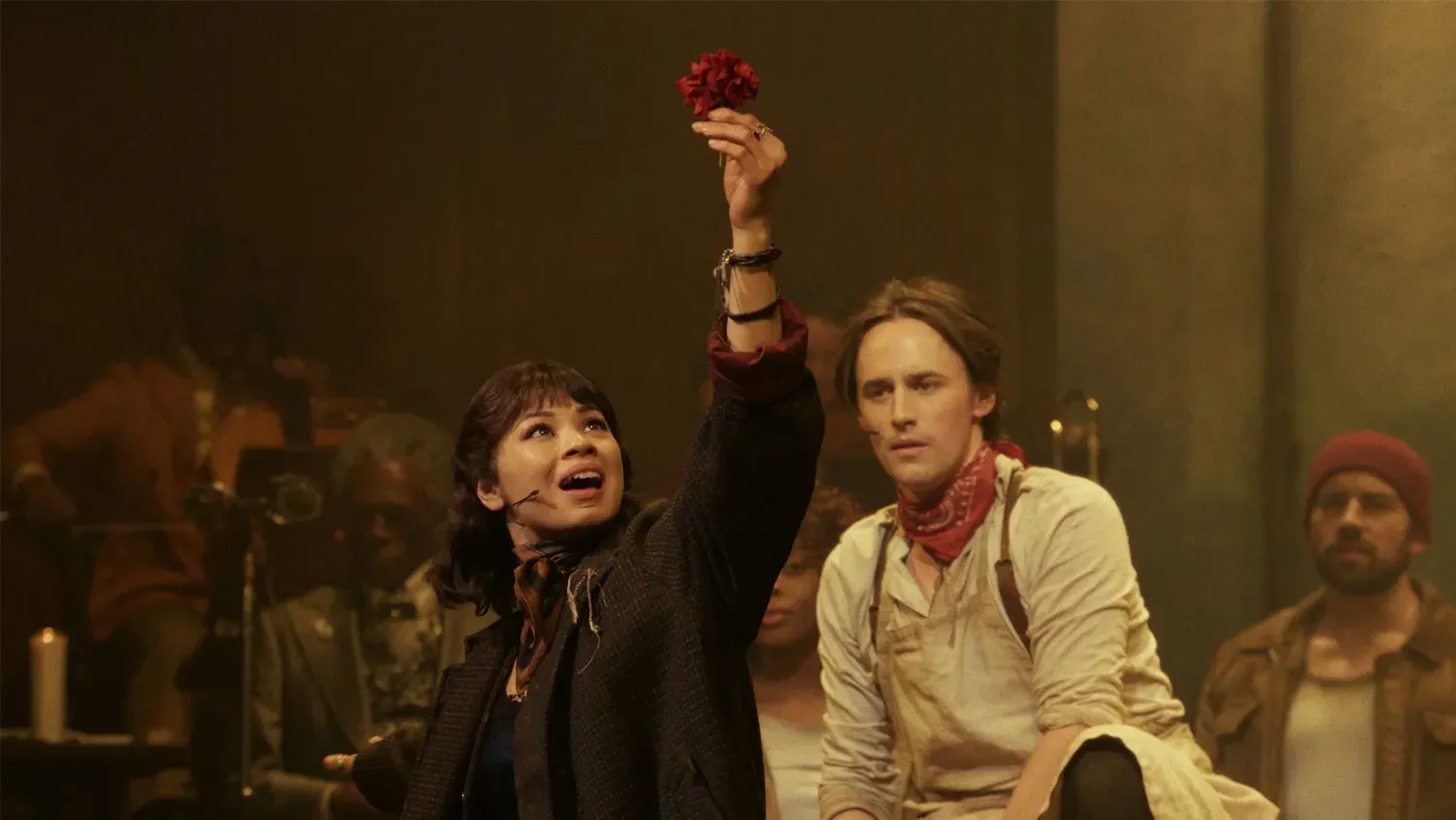
Hadestown: The Musical, the live theater capture distributed by Bleecker Street, grossed $2 million in week 2 on 1,567 screens and reached $18.2 million in cumulative gross. For decision-makers, the result signals live-capture demand is strong enough to compete with heavyweight studio releases on the same weekend.
Hadestown: The Musical is doing something box office analysts usually associate with studio tentpoles. In its second week, the live theater capture from Bleecker Street grossed $2 million across 1,567 screens. That performance pushed its cumulative gross (cume) to $18.2 million.
And the headline number matters for one reason: it let Hadestown surpass Hamilton, according to the Deadline box office write-up. When a niche category like live theater capture beats a previously dominant title, it stops being a curiosity and starts looking like a repeatable demand curve.
This weekend momentum is also being framed by the broader theatrical marketplace, where independents from Hadestown to The Invite helped fuel one of the biggest weekends in box office history. The same Deadline report places Spider-Man: Brand New Day, The Odyssey, and other studio heavyweights at the center of the weekend, with these specialty releases adding oxygen around the edges. In other words, Hadestown is not just posting numbers in isolation. It is benefiting from a theater ecosystem that is actively paying attention, which is when marginal audiences decide whether to spend their entertainment budget.
Live theater captures have an economic profile that is different from typical films, and executives should care about why that matters. The theatrical value proposition is usually less about opening-week frenzy and more about programming confidence, repeat viewing, and a clear “event” narrative that audiences understand instantly. A musical like Hadestown has built-in storytelling gravity. But translating that into an efficient nationwide rollout depends on screen count and distributor execution, and here the data point is blunt: 1,567 screens in week 2. That is distribution at scale, not a museum-run niche.
There is also a strategic implication in how theater captures slot into a multiplex. When studios dominate screens, specialty titles can get squeezed out, or they can become a deliberate scheduling alternative. The Deadline framing that “independents from Hadestown to The Invite did their part” suggests theater operators and distributors are still finding room to diversify what is on offer, even when the weekend headline is clearly carried by studio brands. That matters to decision-makers because diversification reduces dependence on one audience segment. It also gives theaters a way to smooth demand across showtimes when blockbuster intensity ebbs or concentrates.
On the financial and operating side, the key second-order question for executives is whether this is a one-off spike or an execution-backed slate that can keep compounding. Hadestown’s cume at $18.2 million, after posting $2 million in week 2, implies the run has not collapsed after the initial novelty window. Surpassing Hamilton adds another layer: it suggests competitive positioning inside the same category is shifting toward the current capture.
Regulatory background is not the headline of a theater capture box office story, but the compliance angle shows up indirectly in the distribution machinery that makes screen counts possible. For capturable live events to be shown widely, rights, licensing terms, and reporting requirements have to be handled in a way that allows national rollout through theater circuits. That is not “regulation” in the headline sense, but it is governance in practice: the kind of paperwork and rights execution that either enables broad distribution or limits it. The fact pattern in Deadline, with week 2 expansion to 1,567 screens, points toward that infrastructure working.
For boards, investors, and operators watching this category, the strategic stake is clear: if live theater captures can repeatedly achieve audience traction strong enough to outperform prior leaders, then specialty distribution ceases to be a side project. It becomes a measurable asset class inside the theatrical P and L, one that can be acquired, packaged, and scheduled with the same seriousness as other “event” programming. Hadestown’s week 2 performance and its $18.2 million cume are not just Broadway bragging rights. They are evidence that audiences will show up for theater storytelling when the rollout is big enough and the weekend calendar gives them a reason to choose it.
This story's Key Insights and Take-aways are locked.
Create a free account to unlock Executive Actions for one credit.
Register to UnlockAlways free for Executives Club members. Join the Club
More in Entertainment

'It's a Magic Trick': Ballet Experts Say Rosalía's SNL Pose Is Impossible
Three ballet experts tell Rolling Stone Rosalía's gravity-defying SNL stillness shouldn't be possible - and why the debate is now part of the show.

Activision CMO: GTA 6 Will Boost Call of Duty, Not Bury It
Activision's top marketer says Rockstar's blockbuster will drive players back to consoles and into Modern Warfare 4, even as the company admits its recent strategy failed.

Justice to Score GTA 6, Share New Song with Tame Impala, SZA, King Gizzard
Rockstar taps the French duo for the GTA VI score, and the first taste is a genre-melting collab with Tame Impala, SZA, and King Gizzard & The Lizard Wizard.