
Haiti’s 1.5 million displaced as aid convoys miss their routes
Violence keeps humanitarian deliveries from local people while a new international security force stalls on the ground.
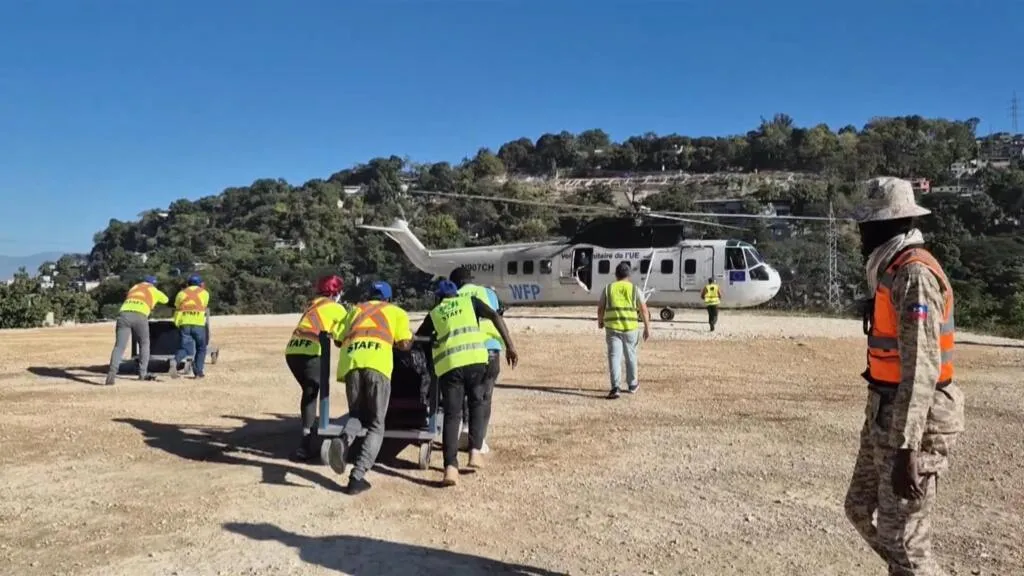
Haiti remains trapped in a long-running battle against armed gangs in the capital and some provinces, according to France 24. With 1.5 million people internally displaced and malnutrition widespread, humanitarian aid deliveries struggle to reach local populations as an international security force is deployed but not yet making widespread progress.
Haiti is now home to 1.5 million people who are internally displaced, and humanitarian aid deliveries are still failing to reach the local population they are meant to serve. France 24 reports that the country remains in the grips of a long-running battle against armed gangs, concentrated in the capital and also present in some provinces.
This is not just a “needs are high” story. It is a “deliveries do not arrive” story. France 24 says malnutrition is widespread, while aid convoys struggle against the same violence that is driving displacement. Even as an international security force is being deployed, it has not yet made widespread progress, leaving relief organizations to operate in an environment where access can be patchy and unpredictable.
Zoom out one level and the shape of the crisis becomes clearer. In places where armed groups control territory, humanitarian operations often face a harsh reality: logistics are not only about trucks and storage. They also depend on security conditions that can shift quickly, routes that can be blocked, and local coordination that becomes harder when communities are repeatedly uprooted. For displaced families, time matters because malnutrition can deteriorate fast, and every delay increases the risk that the “aid pipeline” becomes a “pain cycle.”
Now add the governance and security angle. France 24 describes a new international security force being deployed, but notes it has yet to make widespread progress. That matters because international missions are frequently judged on whether they can create the conditions for sustained freedom of movement, not whether they appear in uniform. When the security footprint is still limited, aid delivery tends to remain episodic, with gaps that can be invisible in headlines but deadly in practice.
For executives, boards, and investors who track humanitarian and crisis response through a risk lens, the Haiti coverage highlights a familiar second-order problem: operational risk can overwhelm program design. Many plans assume that demand is the limiting factor. Here, the limiting factor is access. When violence constrains movement, even well-funded programs can under-deliver relative to their targets. The result is a credibility hit that is not about intent, it is about throughput.
There is also a capital allocation lesson for anyone overseeing budgets in adjacent sectors such as logistics, procurement, or impact investing. When the environment is unstable, costs rise at the same time that delivery timelines lengthen. That increases the burden on internal governance: finance teams need better visibility into where supply chains are breaking, and boards need clearer reporting on assumptions, not just expenditures. If 1.5 million people are displaced and malnutrition is widespread, the operating model must be able to handle the mismatch between “money sent” and “goods received.”
Regulatory background matters too, because crises like Haiti often intersect with cross-border rules for humanitarian assistance, sanctions screening, and compliance obligations for partners and suppliers. While this France 24 report does not detail specific legal hurdles, the broader point is that violence can force organizations into more complex, slower due diligence, especially when armed actors influence local markets or checkpoints. That complexity can further delay deliveries, which then amplifies the humanitarian spiral France 24 describes.
The strategic stakes for decision-makers who work in similar roles are straightforward. Haiti’s situation shows how quickly violence can turn a response operation into an access operation, and how security deployments can lag behind urgent need. Until international security efforts produce widespread, durable progress on the ground, humanitarian organizations may continue to face the same constraint: getting aid from point of origin to the local population that is already running out of time.
This story's Key Insights and Take-aways are locked.
Create a free account to unlock Executive Actions for one credit.
Register to UnlockAlways free for Executives Club members. Join the Club
More in Politics

LA County: DOJ's 20,000 'noncitizen' voter list is 'unreliable,' includes U.S.-born
Preliminary review by Los Angeles County election officials finds errors in the federal list, raising the stakes for voter roll integrity ahead of November.

Trump's $1.5B Pentagon chip investment lands in North Carolina
A $1.5 billion defense infusion for North Carolina chipmaking signals a new era of Pentagon-backed reshoring - here's what it means for the industry.

Nigeria confirms first Ebola case in Abuja, a woman just off a Uganda flight
Health Minister Muhammad Ali Pate says the patient flew in from Uganda, putting Africa's latest outbreak on Nigeria's doorstep.