

Hang Seng drops 11% in H1, Hang Seng Tech sinks 19% on Fed pivot
HK’s first-half stock slump shows how rate expectations and AI exposure gaps can dominate returns.
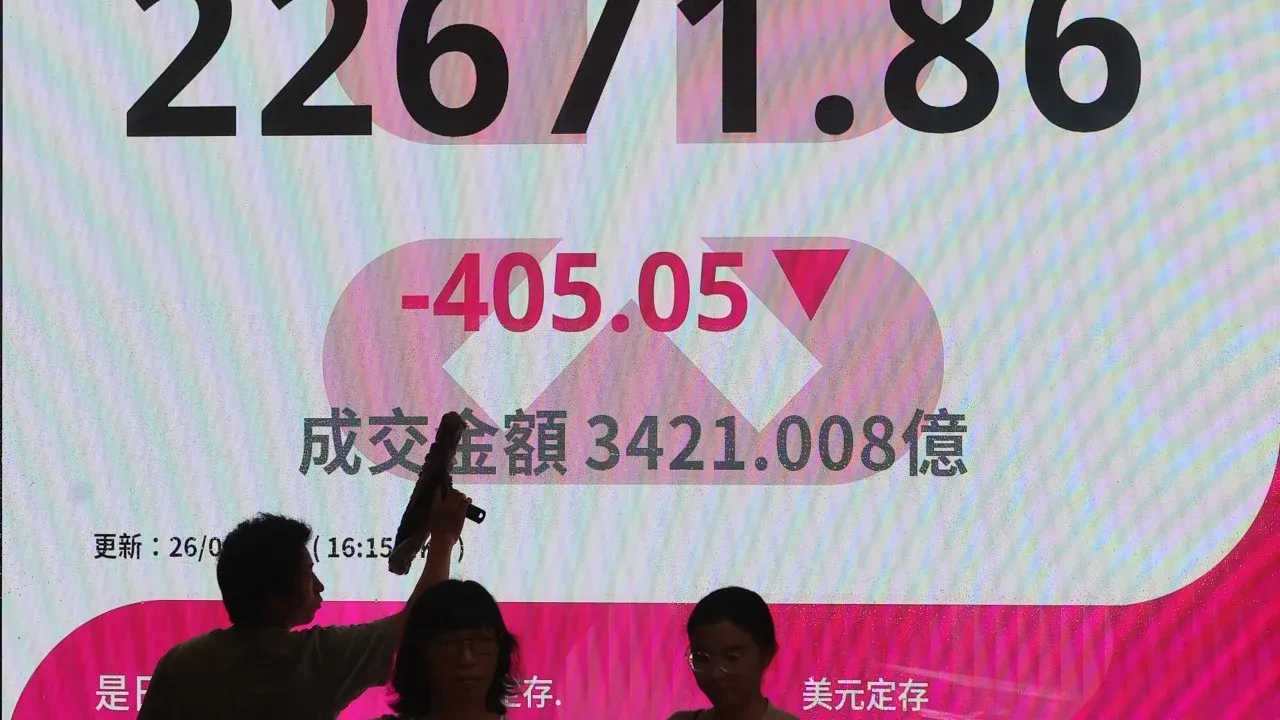
Hong Kong’s Hang Seng Index fell 11% from January to June, while the Hang Seng Tech Index declined 19% over the same period. The shift by the Federal Reserve and a lack of pure-play artificial intelligence exposure left investors exposed and markets lagging globally.
Hong Kong stocks closed out the first half with a loss, and the scoreboard is blunt. The Hang Seng Index dropped 11% in the January-to-June period, landing the city’s market among the worst performers globally. The Hang Seng Tech Index did even worse, falling 19% over the same six months.
This wasn’t just local mood music. The report ties the slump to two big forces: a shift by the Federal Reserve and a dearth of pure exposure to artificial intelligence. Put differently, when the global rate narrative changes, markets that are not positioned for the AI trade can get punished twice, once through discount rates and again through investor preference.
To understand why this matters, you have to picture what drives momentum in equity markets. When the Federal Reserve shifts its stance, it changes expectations for how expensive money will be, and that ripples through valuation frameworks for growth and tech. In practice, that means investors often rotate toward companies that look like they benefit immediately from the next growth wave, and away from sectors or listings that do not. When HK has fewer “clean” AI plays, it becomes harder for investors to express that theme in a concentrated way. That gap can matter even if parts of the market have AI exposure, because markets reward clarity, not “maybe.”
The report explicitly frames the underperformance as global relative performance. It says the Hang Seng Index underperformed most of the world’s key equity benchmarks, from the S&P 500 to the Nikkei 225, in the same January-to-June window. That comparison is where the pressure lands for executives and boards. If a market loses ground while major benchmarks hold up better, it suggests investors are not just de-risking, they are also reallocating attention elsewhere. In environments like this, capital is mobile and narratives can switch quickly.
Then there is the “Fed pivot” angle, which is about timing and expectations. The source attributes the market’s second-half feel to the Federal Reserve’s shift, implying investors were forced to reprice risk during the half. For decision-makers in HK-listed companies, the operational consequence is straightforward: financing, investor targeting, and even how quickly the market rewards earnings or guidance can get tied to macro headlines rather than company execution alone. Boards have to think about how much of their stock story depends on external variables they cannot control.
The second driver, “lack of pure exposure to artificial intelligence,” is more nuanced, but still very real. Artificial intelligence has become a dominant theme for many equity investors because it can plausibly touch revenues across multiple industries. When a market lacks companies that investors can label as pure-play AI, money that wants AI exposure may not find a clean home locally. That can weaken demand for equities that are otherwise defensible, because portfolio managers prefer holdings that map cleanly to their thesis.
If you sit on a board or run IR, this is where the stakes sharpen. A 19% decline in Hang Seng Tech is not a subtle signal. It indicates that even within the tech slice, investors were not willing to pay the same price for exposure during the half. If you compare that to the broader Hang Seng drop of 11%, you get a sense of concentration risk: tech can amplify both upside and downside, especially when the market is searching for the “right” type of tech narrative.
The strategic implication for peers is to separate what you can influence from what you cannot. You cannot control the Federal Reserve’s policy shift, but you can control how clearly your company can be categorized within the investor’s current worldview. You cannot manufacture “pure-play AI” overnight, but you can evaluate whether your disclosure, product positioning, and business mix actually let investors understand the AI angle without doing extra homework. In markets where expectations move fast, ambiguity can be punished.
Taken together, the first-half performance paints a tough lesson for Hong Kong’s investment ecosystem: macro shifts and theme availability can combine into a one-two punch. With the Hang Seng Index down 11% and Hang Seng Tech down 19% across January to June, the report suggests investors were on tenterhooks about rates and frustrated by the absence of pure AI exposure. For executives and board members, the takeaway is clear. In the current regime, your valuation sensitivity is not just about your earnings, it is also about whether investors can confidently place you inside the theme that the market is chasing.
This story's Key Insights and Take-aways are locked.
Create a free account to unlock Executive Actions for one credit.
Register to UnlockAlways free for Executives Club members. Join the Club
More in Business
Comcast shares jump 25% as it plans to split NBCUniversal and Sky
The tax-free spin-off could reshape focus, funding, and competition across media and tech for years.

Bungie cuts most Destiny 2 staff as Sony says Marathon still matters
Herman Hulst confirms layoffs affecting most Destiny and some Marathon teams after Bungie admits Destiny fell short.

SK Hynix jumps 11% after seeking up to $29.4B in Nasdaq listing
The chip giant filed for a Nasdaq listing plan that could raise $29.4 billion, instantly reshaping investor expectations.