

Hank Green admits he relied “too heavily” on AI research in a fan apology
The YouTube science educator says he’ll slow or pause uploads and games, while promising clearer disclosure going forward.
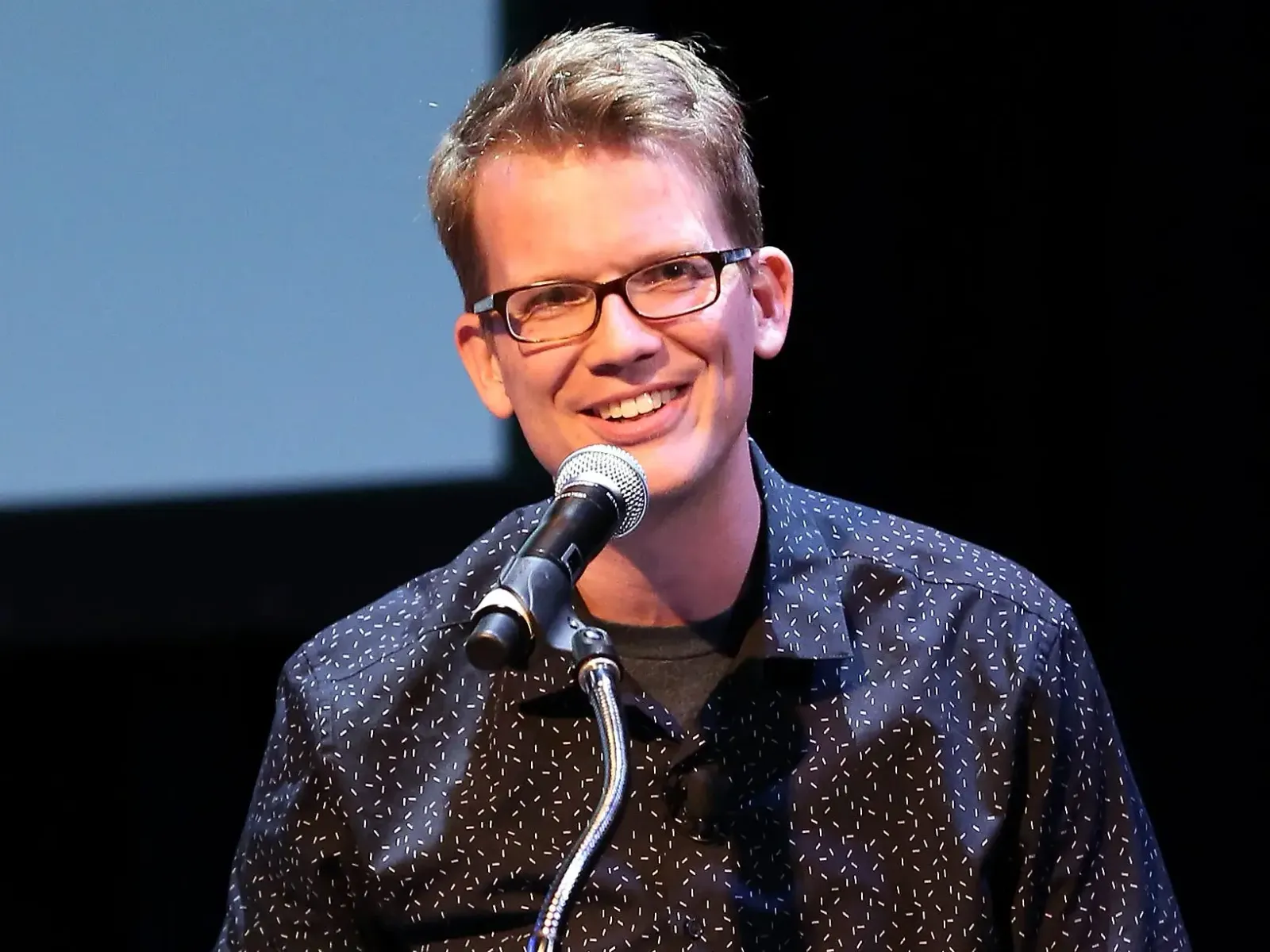
Hank Green, who runs major educational YouTube channels including SciShow and Crash Course (and the Vlogbrothers with John Green), apologized after fans criticized his use of AI for research. He said he will slow down or pause content and online word games, and he described his AI usage as both helpful and unhealthy.
Hank Green is doing a rare reset: the YouTube educator apologized to fans for relying “too heavily” on AI as a research aid, and he says he will slow down or pause making content for his YouTube channels and web games.
In a lengthy Reddit comment on Friday, Green framed the issue as more than a behind-the-scenes workflow choice. He wrote that he’s “been relying too heavily on AI as a research aid,” saying it can be “very useful” because it gives him access to papers he might not find quickly, but that it has “been to the detriment of my work” by limiting his ability to “find all of my own ways into and around a topic.” That apology followed a spark on X earlier that day, where he told users he had used OpenAI’s ChatGPT to research a script, prompting backlash over whether he undermined his credibility by not disclosing AI involvement to viewers.
If you are an executive, operator, or investor watching AI adoption spread across every workflow, this is a telling case study. It shows what happens when a creator with a reputation for clarity and credibility uses AI in a way the audience interprets as opaque. Green is not claiming AI is evil. He explicitly says he is not anti-AI and understands concerns ranging from how the tech is trained to environmental implications and the consolidation of economic power by tech companies. But he still takes the hit, then changes behavior. That combination is the real signal: even highly visible brands can lose trust fast when disclosure norms are unclear, and even respected practitioners are willing to constrain output to regain alignment.
Green’s content footprint also matters. He hosts educational YouTube channels SciShow and Crash Course. SciShow is described as a set of YouTube channels focused on different scientific disciplines, while Crash Course breaks down topics like Latin American literature and reading statistics. He also created the Vlogbrothers YouTube channel with his brother, John Green. So when Green says “Expect less hankschannel,” and adds, “It may need to pause for a while,” the impact is not limited to one niche creator. It touches a broader ecosystem of science and learning content where viewers have built expectations about how facts are researched and presented.
In that same Reddit comment, Green said specific projects will be paused: SMUSH and 4x3, two online daily word games he produces. He also said his channel output could reduce in multiple ways, writing that “It may be that Hankschannel comes back with writing and research support” or “It may be that Hankschannel comes back with just way fewer videos.” The operational takeaway is blunt: when trust friction reaches a breaking point, the remedy can be resource reduction and process redesign, not just a clarification post.
The tech context behind this story is bigger than creator drama. The Business Insider report places the controversy within a wider set of AI concerns, including critical thinking and mental health. It notes that a 2025 survey published by Workday found nearly half of respondents worried the tech would cause a decline in critical thinking. It also points to concerns around mental health, including OpenAI facing several lawsuits related to users' mental health, among them claims that a chatbot encouraged suicide. A separate development cited: in June, a coalition of states launched an investigation into ChatGPT's impact on young users.
Then there is the issue of reliability. The report mentions AI hallucinations, defined as when large language models generate inaccurate outputs. It says hallucinations have appeared in court documents, forcing lawyers and law firms to apologize for including false or misleading information, and they have also shown up in reports from some of the world’s largest consulting firms. Green’s specific critique is different from those legal anecdotes, but it rhymes with the broader reliability and reasoning theme: he argues that his accelerated research loop and growing engagement with LLMs has not only shaped his work, but also shaped him. He described AI interactions as creating pressure and an unhealthy feedback loop. He said he needs to “come to terms with the fact that the level of dopamine” he’s gotten from “interacting with LLMs” and doing “more and more and more and more” is “not healthy for me or good for the world.”
Green also tried to set a clearer boundary going forward: fans deserve to know when his words are his own or a chatbot’s. He said he wants to make his process a “guarantee moving forward” because he believes his speed has made his own process “isn’t actually clear to me.” That is the governance idea hiding under the apology: disclosure is not a courtesy, it is part of quality control for audiences.
For boards and leadership teams, this story is a reminder that AI usage is not just a technical integration question, it is a trust management question. When reputations are built on accessibility and reliability, the cost of perceived opacity can be immediate, public, and output-changing. Green’s response shows one path: slow down, pause the highest-visibility outputs (his videos and games), and redesign disclosure so audiences can distinguish between human work and AI assistance. The strategic stake for anyone in similar roles is clear. The market may reward speed, but audiences and regulators are increasingly asking for proof of accountability, especially when AI is involved in the research and creation pipeline.
This story's Key Insights and Take-aways are locked.
Create a free account to unlock Executive Actions for one credit.
Register to UnlockAlways free for Executives Club members. Join the Club
More in Science

Alaska's 1,580-foot tsunami had warning signs. Scientists just found them.
Rapid glacier retreat, heavy rainfall, and thousands of tiny tremors preceded Alaska's 1,580-foot tsunami, a warning for every coastal community in a warming world.

The rare mutation that lets high-risk brains dodge Alzheimer's
Scientists found a natural defense against protein buildup, opening a new path to preventive treatments.

3,000 steps a day may halve Alzheimer's decline, study finds
New research links a modest daily walk to less tau buildup and nearly half the cognitive and functional decline, even for those with early signs.