

Hannibal’s elephants and troops lost weight on the Alpine crossing, Nature reports
A new Nature study estimates how mountain travel would have depleted pachyderms, horses, and soldiers.
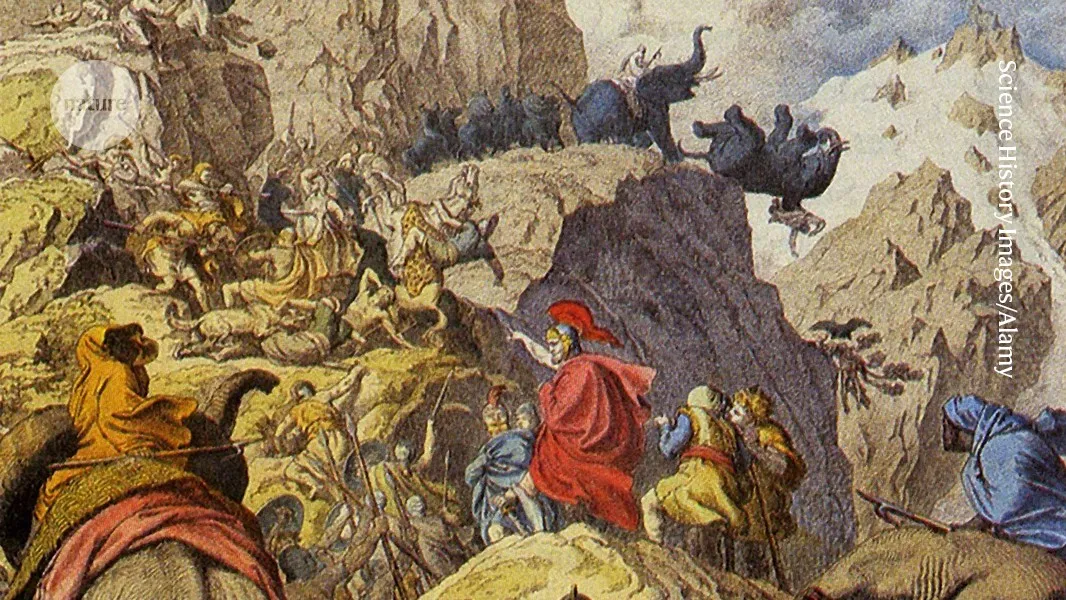
Nature reports that Hannibal’s Alpine crossing would have taken a heavy toll on elephants, horses, and troops through substantial weight loss. For decision-makers, it is a reminder that operating conditions and biology can overpower strategy in extreme moves.
Nature’s new report looks backward at one of history’s most dramatic military logistics problems, and it is brutally physical. Hannibal’s Alpine crossing, the study suggests, would have forced his elephants, horses, and soldiers to lose substantial amounts of weight traversing mountains. The headline issue is simple: when your entire operation depends on animals and people getting through extreme terrain, the environment is not scenery. It is a consuming machine.
The core claim is that the crossing would have meant meaningful weight loss for multiple groups in the column: pachyderms would have lost substantial weight, and so would horses and soldiers. In other words, this was not just a tactical story about routes and enemy action. It was also an endurance and energy balance story. Mountains change what your body can do. They raise the cost of movement, intensify stress, and make each day of progress more expensive than planners might assume.
Why this matters beyond the ancient world is how it maps onto modern executive decision-making. Whether you run a supply chain, a logistics network, a field operation, or an organization that depends on key “assets” that can fail under stress, you face the same fundamental challenge: the plan assumes a certain capability to absorb friction. But friction is real. In nature, it often shows up as heat, altitude, limited water, and reduced ability to convert energy into motion. In business, it shows up as bottlenecks, compliance delays, labor constraints, and maintenance cycles that quietly turn “possible” into “expensive.”
The Nature piece is published online 10 July 2026, with the DOI: 10.1038/d41586-026-02113-3. Even though the article is historical in subject, its framing has a contemporary resonance: it treats biological and physical constraints as measurable drivers. That stance is important because it cuts through two temptations that hit boards and operators. One is overconfidence in “strategy” when the real constraint is operational realism. The other is underinvestment in stress-testing because the model looks fine on paper.
There is also an institutional angle. Modern organizations are governed by incentives and oversight mechanisms, but risk often gets externalized. Teams may focus on the headline objective, while ignoring the second-order effects of operating under extreme conditions. If Hannibal’s crossing would have depleted elephants, horses, and troops, then the environment did not merely slow them. It reallocated resources inside the system, pulling weight from the very components that enabled movement. That logic generalizes: when conditions get harsher, the “fuel” changes shape. You pay in capacity, not just time.
For regulators and policy-makers, this kind of evidence is a reminder of why rules exist in high-stakes domains. When movement affects animal welfare or human health, the environment becomes part of compliance. The practical question becomes: what happens to individuals when you push them through extreme conditions? Even without modern legal frameworks in the ancient setting, the biological premise still holds. If traversing mountains causes substantial weight loss, then any modern analogue would need to treat physiological stress as a risk factor, not an afterthought.
Second-order implications for executives are also easy to miss. Weight loss in animals and troops can cascade into everything else: mobility slows, recovery worsens, and the throughput of the whole system drops. In modern terms, that resembles a network where each node under stress reduces downstream performance. Boards that ask for “growth plans” without demanding hard evidence on operating stress may be repeating the same mistake, just with different actors.
So the strategic stakes are clear for leaders facing extreme execution. The lesson is not about ancient conquest. It is about recognizing that extreme transitions have biological and operational physics. Hannibal’s Alpine crossing was not only a battle of will. Nature’s report highlights that the mountains would have exacted substantial weight loss across elephants, horses, and soldiers. If you are running any mission where the resource is living capacity, you should expect the environment to charge you, often relentlessly, and usually in ways that show up after the moment of decision, not before.
This story's Key Insights and Take-aways are locked.
Create a free account to unlock Executive Actions for one credit.
Register to UnlockAlways free for Executives Club members. Join the Club
More in Science

Alaska's 1,580-foot tsunami had warning signs. Scientists just found them.
Rapid glacier retreat, heavy rainfall, and thousands of tiny tremors preceded Alaska's 1,580-foot tsunami, a warning for every coastal community in a warming world.

The rare mutation that lets high-risk brains dodge Alzheimer's
Scientists found a natural defense against protein buildup, opening a new path to preventive treatments.

3,000 steps a day may halve Alzheimer's decline, study finds
New research links a modest daily walk to less tau buildup and nearly half the cognitive and functional decline, even for those with early signs.